
Introduction
The Asian textile industry, a colossal engine of global manufacturing, stands on the brink of a transformative decade from 2026 to 2035. Its continued dominance and evolution are inextricably linked to the sophisticated use of industrial chemicals, with Soda Ash Light (Sodium Carbonate, Na2CO3) occupying a position of fundamental importance. As a versatile alkali, it is indispensable in numerous wet-processing stages, from fiber preparation to dyeing and finishing. This article provides a comprehensive, long-form analysis of the Soda Ash Light market within the broader context of Asia's textile chemicals sector. We will delve into its specific applications, analyze the market forces shaping its demand, project trends through 2035, and underscore the critical role played by established suppliers like Chemtradeasia in ensuring a stable, high-quality supply chain for this essential commodity.
The period 2026-2035 is expected to be defined by sustainability mandates, technological integration, and shifting global trade patterns. For chemical stakeholders, from producers to end-users in textile mills, understanding the nuanced interplay between this basic chemical and the industry's future is crucial for strategic planning. This insight explores not just the "what" and "how" of Soda Ash Light usage, but also the "why" behind its enduring relevance and the evolving procurement landscape in Asia's diverse and competitive market.
Understanding Soda Ash Light: A Critical Textile Chemical
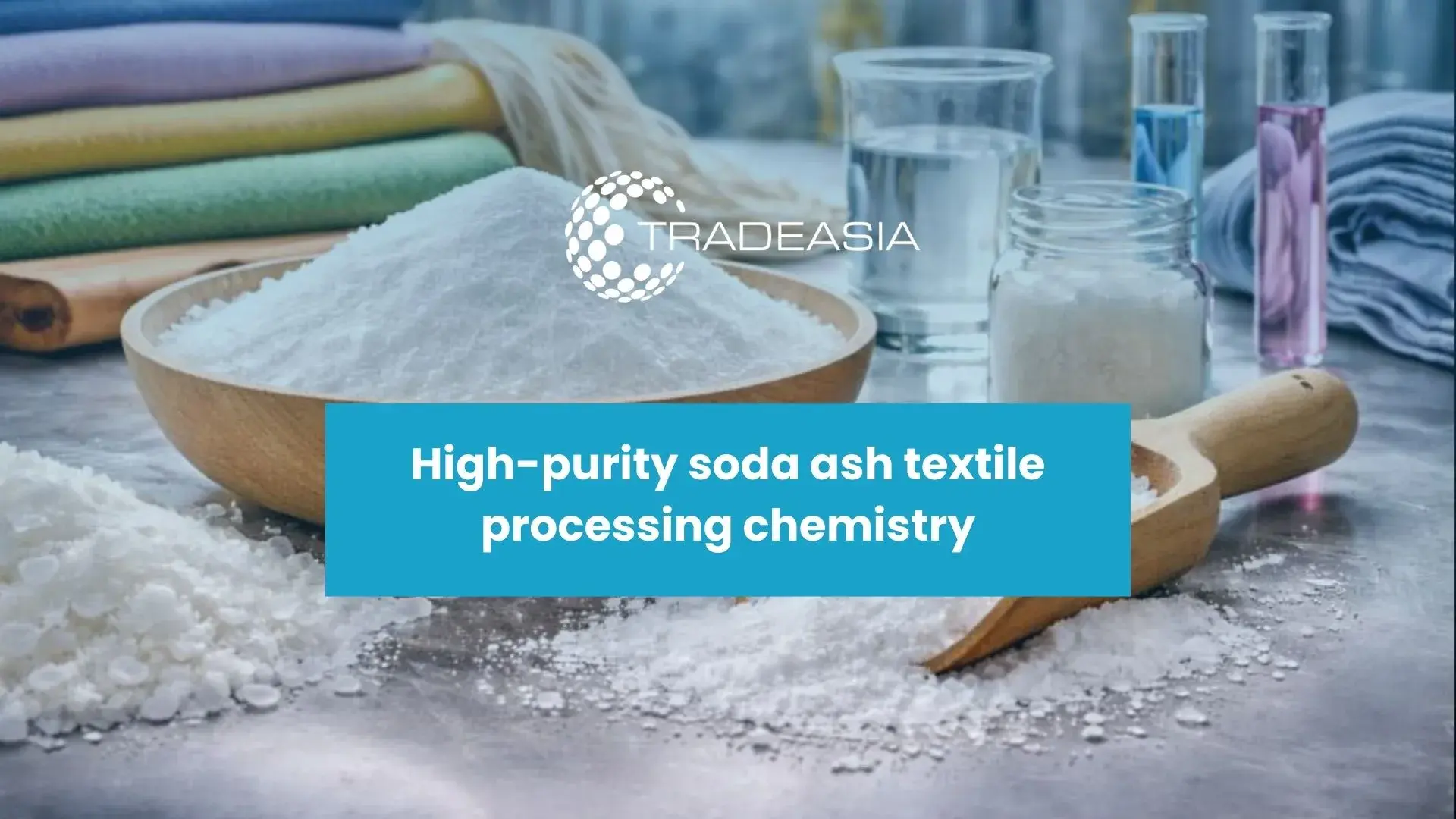
Soda Ash Light is a refined form of sodium carbonate characterized by its fine, powdery crystals and lower bulk density compared to its dense counterpart. This physical property grants it superior solubility and reactivity, making it particularly suitable for rapid dissolution in aqueous solutions, a key requirement in fast-paced textile processing baths. Its primary function is as a pH regulator and a source of alkalinity. In chemical terms, it acts as a buffering agent and a precipitant of calcium and magnesium ions, which are responsible for water hardness. This dual action protects downstream chemicals and ensures process consistency.
Specifications for textile-grade Soda Ash Light are stringent. It typically assays at a minimum of 99.2% Na2CO3, with low levels of impurities like iron (which can cause discoloration) and chloride (which can be corrosive). Its quality is paramount; inconsistent purity can lead to batch-to-batch variation in shade, reduced dye uptake, or fabric damage. Compared to caustic soda (NaOH), another common alkali, Soda Ash Light offers a milder, less corrosive, and easier-to-handle alternative for many processes, providing a safer working environment while effectively achieving the desired pH levels for various chemical reactions in textile finishing.
The Asian Textile Industry: Current Landscape and Future Projections
Asia's textile and apparel industry is a behemoth, accounting for over half of global production and exports. Powerhouses like China, India, Bangladesh, Vietnam, and Pakistan form the core of this ecosystem, each with unique specializations, from high-volume cotton knitting to technical fabric manufacturing. The region benefits from integrated supply chains, competitive labor costs, and massive investment in manufacturing infrastructure. However, the industry is at an inflection point, pressured by rising labor costs in some nations, stringent environmental regulations from Western buyers, and the urgent need for digital and sustainable transformation.
Looking towards 2035, several megatrends will reshape the landscape. The adoption of Industry 4.0 technologies (IoT, AI for predictive maintenance) in spinning and weaving will demand higher process consistency, elevating the importance of reliable chemical inputs. Furthermore, the push for circular economy models, including textile recycling and waterless dyeing technologies, will create new chemical requirements while altering traditional consumption patterns. Despite these shifts, the demand for foundational chemicals like Soda Ash Light is projected to remain robust, though its application methods and procurement criteria will evolve alongside these industry-wide changes, emphasizing traceability and environmental footprint.
Key Applications of Soda Ash Light in Textile Manufacturing
The journey of a textile fiber to finished fabric involves multiple stages where Soda Ash Light plays a starring role. In the pretreatment and scouring stage, it is used to remove natural impurities, waxes, and oils from cotton and other fibers. By creating a highly alkaline environment, it saponifies fats and emulsifies impurities, preparing the fabric for uniform dyeing and printing. Its ability to soften water simultaneously prevents the formation of insoluble soaps that could deposit on fabrics, ensuring a clean, hydrophilic substrate.
Perhaps its most iconic application is in the reactive dyeing of cellulosic fibers like cotton, viscose, and linen. Here, Soda Ash Light is not merely an auxiliary but a core reactant. It fixes the dye molecule to the fiber by creating the necessary alkaline conditions (pH 10.5-11) for the covalent bond formation between the dye and the hydroxyl groups of cellulose. This results in excellent wash-fastness. Additionally, it is crucial in denim washing processes, where it helps in achieving desired shades and finishes by facilitating the wash-down of indigo dye. In printing, it is used in print pastes as a fixing agent, and in finishing, it can be involved in processes like mercerization (though caustic soda is primary) and as a neutralizing agent after acidic treatments.
Market Dynamics: Drivers, Challenges, and Opportunities (2026-2035)
The market for Soda Ash Light in Asia's textile sector is driven by a confluence of factors. The persistent growth of population and middle-class consumption in Asia itself fuels domestic demand for textiles. Furthermore, the "China Plus One" sourcing strategy adopted by global brands is diversifying production to Southeast Asia and India, creating new hotspots of chemical demand. The drive for sustainable production is also a double-edged driver: while it pressures traditional processes, it boosts demand for high-purity chemicals that minimize waste and rework. The expansion of technical textiles for automotive, healthcare, and geotextiles presents a high-value growth avenue requiring specialized chemical treatments where consistent alkali sources are vital.
Conversely, significant challenges loom. Fluctuating energy costs directly impact the synthetic soda ash production process (Solvay process), leading to price volatility. Environmental regulations are pushing for zero-liquid discharge (ZLD) in textile clusters, which may incentivize mills to optimize and reduce chemical consumption. The emergence of alternative dyeing technologies, such as supercritical CO2 dyeing, though nascent, poses a long-term disruptive threat to water-based processes that use Soda Ash Light. The opportunity lies in innovation,suppliers and mills collaborating to develop optimized dosing systems, blended alkali products for specific applications, and closed-loop recycling of process chemicals to align with circular economy principles.
The Role of Reliable Chemical Suppliers in Asia's Ecosystem
In this complex and price-sensitive market, the role of a supplier transcends mere logistics. A partner like Chemtradeasia acts as a vital node connecting global manufacturers with diverse regional end-users. For textile mills, consistency is non-negotiable. A reliable supplier ensures batch-to-batch uniformity in Soda Ash Light purity, which directly translates to reproducible dye shades, reduced chemical wastage, and minimized production downtime due to off-spec materials. They provide essential technical support, helping mills optimize consumption and navigate regulatory compliance for chemical handling and storage.
Furthermore, established suppliers mitigate supply chain risks. They maintain strategic stockpiles across key Asian hubs, insulating customers from regional shortages or logistical disruptions. Their deep market intelligence helps clients anticipate price trends and plan procurement strategically. In the era of sustainability reporting, suppliers are increasingly required to provide documentation on the environmental footprint of their products, a service that adds significant value for brands seeking greener supply chains. By offering a portfolio that includes Soda Ash Light alongside other textile chemicals, they provide a one-stop solution, simplifying procurement and fostering long-term, collaborative partnerships focused on efficiency and innovation.
Conclusion
The decade from 2026 to 2035 will be a period of both consolidation and innovation for Asia's textile chemical industry. Soda Ash Light, as a workhorse chemical, will continue to be a cornerstone of textile manufacturing due to its irreplaceable role in critical processes like dyeing and scouring. However, its market will evolve, shaped by sustainability imperatives, technological advancements, and shifting geographic production centers. Success for textile manufacturers will hinge on optimizing its use, while success for chemical suppliers will depend on providing not just the product, but also value-added services, supply chain resilience, and collaborative innovation.
Navigating this future requires informed decision-making based on accurate market insights and trusted partnerships. Understanding the specifications, applications, and evolving dynamics surrounding Soda Ash Light is the first step for any stakeholder aiming to thrive in Asia's dynamic textile landscape. By aligning with suppliers who prioritize quality, consistency, and strategic support, textile businesses can transform this basic chemical into a tool for achieving competitive advantage, operational excellence, and sustainable growth in the coming decade.
Disclaimer: This article is for informational and market insight purposes only. It is not intended as technical, safety, or professional advice. The data and trends discussed are based on current analysis and projections, which are subject to change. Readers are strongly advised to verify all information independently with qualified experts, consult official technical documentation and safety data sheets (SDS/MSDS) for specific chemicals, and contact our team or relevant professionals for guidance tailored to their specific applications and circumstances. To ensure a reliable supply of high-quality Soda Ash Light and gain tailored support for your textile operations, connect with the Chemtradeasia team through their contact page and start a strategic partnership today.