
Tapioca starch is processed almost entirely in Asia-Pacific, with Thailand and Vietnam together accounting for approximately 70% of global exports, sourced from cassava root supplies concentrated in Southeast Asia and Africa. Processing capacity expanded through 2024, but cassava feedstock shortfalls caused by El Niño-driven drought and spreading Cassava Mosaic Disease are now constraining mill throughput, even as food, pharmaceutical, and biodegradable packaging demand accelerates. Buyers without term contracts or diversified origin strategies are carrying meaningful exposure in H1 2026.
Where Tapioca Starch Is Actually Made: Thailand, Vietnam, and the CLMV Shift
Thailand is the world's largest exporter of tapioca starch, annually exporting approximately 9 to 10 million tonnes of cassava products valued at around 120 billion baht. Within Thailand's export portfolio, native tapioca starch accounts for 62% of total cassava export volume, per ASEAN Cassava Centre data. The country produces 28 to 31 million tonnes of cassava roots per year across 8 to 9 million hectares, involving more than 580,000 farming families. Thai mills process roots from both domestic fields and imports, with approximately 25% of feedstock sourced cross-border, primarily from Cambodia and Laos.
Vietnam ranks second in global tapioca starch exports. In the first half of 2025, Vietnamese cassava and cassava product exports reached 2.3 million tonnes, valued at USD 711.5 million — a 68.6% surge in volume, though average export prices fell to USD 304.1 per tonne, a decline of more than 33% year-on-year, primarily because the product mix remained weighted toward low-value dried chips and native starch rather than modified or specialty grades. Vietnam's geographic advantage is its proximity to Tây Ninh, Bình Phuoc, and Gia Lai provinces — the highest-yielding cassava growing zones — which feed a dense network of processing mills that can respond rapidly to demand shifts.
Indonesia, Cambodia, and Laos are the emerging processor tier. Laos in particular has become a structurally important new source: since the China-Laos Railway opened in late 2021, Laos can export starch directly to Chinese buyers without routing through Vietnamese intermediaries. Chinese investment has funded approximately 30 starch processing facilities in Laos and enlisted roughly 400,000 Lao farmers into cassava cultivation. Laos-to-China exports grew from under USD 15 million in 2020 to approximately USD 200 million in 2024.
| Country | Role in Global Supply | Estimated Export Share (%) | Primary Destination |
|---|---|---|---|
| Thailand | Largest exporter, vertically integrated mills | ~50% | China, EU, USA, Indonesia |
| Vietnam | Second largest, primarily native starch | ~20% | China (93% of volume) |
| Laos | Fast-growing, China-linked investment | ~5-7%, rising | China (direct, via railway) |
| Indonesia | Domestic consumption focus, growing exports | ~5% | Regional, China |
| Africa (Nigeria, Ghana) | Cassava roots only, minimal starch processing | Negligible | Domestic, raw form |
The Feedstock Problem: Why Mills Cannot Simply Run Harder
Processing capacity is not the binding constraint in 2026. Cassava root supply is.
Cassava Mosaic Disease (CMD) has become the most material upstream risk to global tapioca starch supply. In Southeast Asia, CMD is transmitted via whitefly vectors (Bemisia tabaci) and infected stem cuttings, and once established in a field it is structurally difficult to eradicate because cassava is a vegetatively propagated crop — infected stems replant the disease. Field data from Vietnam quantify the damage clearly: planting infected cuttings reduces cassava root yields by 16 to 33% and starch content by 22 to 38%, according to research cited in the journal Australasian Plant Pathology.
Research published in 2022 by Thai economist Witsanu Attavanich estimated that CMD-infected area in Thailand could reach 532,850 hectares out of a total plantation area of 1.73 million hectares by 2025, with an associated economic loss of USD 356 million in that year alone. This is not a theoretical risk — it is an active one. The Thai Tapioca Development Institute has deployed rapid-response diagnostics, including strip tests that return results within 15 minutes, but controlling CMD across a fragmented smallholder sector with low capital investment in planting materials remains difficult.
El Niño-driven drought compounded the disease problem across 2024 and into 2025. Fresh cassava prices in Thailand fell 41.4% year-on-year in the first five months of 2025 — not because supply was abundant, but because roots were harvested prematurely before crops fully matured, producing low-quality feedstock with reduced starch content. Mills receiving lower-starch roots produce less output per tonne of input. Capacity utilization appears high while actual starch throughput per unit of factory time declines.
Thailand's dominant variety, Kasetsart 50 (KU50), was developed in the 1990s and has seen no significant yield improvement since. Approximately 70% of Thai cassava farmers grow KU50 because of its high starch content, machine-harvestability, and environmental adaptability — but the variety offers no CMD resistance. Breeding programs are underway through CIAT collaboration, but varietal replacement across more than one million hectares of commercial plantings takes years, not seasons.
What the Mill Network Looks Like: Concentrated, Perishable, and Time-Constrained
The structural problem for mill operators is that cassava roots must be processed within 24 to 48 hours of harvesting to prevent enzymatic degradation. Starch content drops from approximately 24% at harvest to 20% at four days and 11% at six days. This perishability forces tight geographic coupling between farm and factory — mills cannot source broadly across regions in the way that, for example, grain processors can. Processing facilities cluster directly in cassava-growing zones, which means that disease or drought hitting a specific growing province does not simply tighten supply — it directly reduces throughput at the mills located within that catchment area.
Thailand operates an estimated 600-plus processing units across the country. The dominant industrial players are Thai Wah Public Company Limited, which reported tapioca starch revenue of USD 121.8 million in 2024 and operates 11 production facilities across Thailand, Vietnam, and Cambodia, and Chol Charoen Group, which maintains approximately 11% of global supply share at around 1.1 million tonnes per year through eight factories focused on food-grade and modified starch. General Starch Limited operates approximately 297,000 tonnes of annual production capacity. Sanguan Wongse Industries operates at 1,500 metric tonnes per day of processing throughput. SPAC Starch Products processes 800 metric tonnes per day.
Thai Wah holds approximately 17% of global native tapioca starch export share across its network, which gives it the ability to absorb localized cassava shortfalls by redirecting roots between facilities. Smaller mills — which constitute the majority of processing units — have no such flexibility. When local cassava quality falls or CMD reduces feedstock availability in their immediate sourcing radius, they run below capacity or halt.
Vietnam's processing industry added 22% to domestic starch processing capacity in 2024, targeting a total annual output of 2.4 million tonnes, according to market data from marketreportsworld.com. Thai Wah announced a USD 40 million investment in a new processing facility in Tây Ninh province, with 200,000 metric tonnes per year of capacity, expected operational by mid-2025. In 2024, more than 25 new processing facilities were established across Thailand and Vietnam combined, per industryresearch.biz capacity data. These expansions will not resolve feedstock shortfalls. They will add extraction and drying capacity that sits idle when root quality or volume is insufficient to fill it.
Demand Signals Pulling in Opposite Directions from Supply
Global tapioca starch output reached 10.7 million tonnes in 2024, per industryresearch.biz data. The market is pulling demand from three distinct directions simultaneously, each with a different urgency profile.
Food and beverage accounts for approximately 58% of global demand. Gluten-free food adoption is the primary growth driver in Europe and North America. Over 35% of U.S. consumers now consume gluten-free products regularly. In Europe, gluten-free bakery applications increased tapioca starch consumption by 18% in 2024. European and North American food-grade buyers regularly pay FOB premiums of USD 500 to 550 per tonne for certified, allergen-free-grade starch, compared to Asian spot pricing of USD 450 to 480 per tonne for bulk contracts per chemtradeasia.com data from March 2026.
Biodegradable packaging is the fastest-growing industrial demand category. Applications for starch-based biopolymers expanded by 26% in 2024 and are projected to grow by 45% between 2026 and 2030. The EU's green packaging mandates have already pushed starch-based biopolymer imports up by 25%. Bangkok Starch developed tapioca-based biodegradable food containers in 2023 that decompose within 90 days under industrial composting conditions, meeting EN 13432 and ASTM D6400 standards. This segment competes directly with food-grade procurement for the same native starch supply — it does not accept lower-quality roots.
Pharmaceuticals consume approximately 6% of global demand but represent the highest margin and most specification-sensitive segment. Vietnamese manufacturer Fococev introduced pharmaceutical-grade tapioca starch meeting USP and EP standards in early 2024, with pilot batches in India and South Korea showing disintegration times under 60 seconds — 40% faster than previous formulations. This segment requires not just chemical purity but traceable root-level sourcing, which further narrows the qualifying supply base.
| Demand Segment | Share of Global Demand | 2024 Growth | Price Sensitivity |
|---|---|---|---|
| Food and Beverage | ~58% | +14% YoY | Moderate — grade-driven premium |
| Paper, Textiles, Adhesives | ~27% | Stable | High — commodity-grade, substitutable |
| Biodegradable Packaging | Growing from ~5% | +26% YoY | Low — sustainability mandate drives acceptance |
| Pharmaceuticals | ~6% | Steady expansion | Very low — specification-locked |
The China Variable: Why Vietnam's Mills Face a Structural Challenge
Vietnam's processing industry has a single-market dependency problem. China accounts for 93% of Vietnam's total tapioca starch export volume in the first half of 2025. This concentration has become structurally riskier as Laos displaces Vietnam as China's preferred regional supplier for commodity-grade starch. Chinese-funded Lao processing capacity now offers direct railway delivery at prices that Vietnamese mills exporting by sea cannot match on standard-grade product.
This is forcing Vietnamese processors toward a necessary but difficult strategic pivot: invest in modified starch capacity and specialty grades that command higher margins and access non-Chinese markets in Europe, North America, and the Middle East. Thai Wah's USD 40 million Tây Ninh expansion is oriented toward exactly this shift. Vedan International's 2023 USD 12 million R&D facility upgrade in Taiwan, developing pharmaceutical-grade and food-functional starch derivatives, reflects the same direction. But the pivot requires capital, certification time, and market development — none of which resolve the 2026 supply tightness in the short term.
Key Supply Chain Risks for Buyers in 2026
Risk 1: Feedstock Availability — HIGH
CMD continues to spread across Thailand's approximately 1.73 million hectares of cassava plantation, with infected area estimated at 532,850 hectares in 2025. In the absence of resistant varieties at commercial scale, the next harvest cycle (October to March) could again deliver lower-starch roots that reduce actual mill output below nameplate processing capacity. Export prices in early 2025 ranged from USD 410 to 570 per tonne FOB, a range of USD 160 per tonne reflecting sharp seasonal variability. Prices are expected to remain relatively elevated through H1 2026 due to limited feedstock quality.
Risk 2: Export Concentration — HIGH
Thailand and Vietnam together account for over 70% of global tapioca starch exports. A simultaneous disease or weather event affecting both countries — as occurred during the 2024 to 2025 El Niño cycle — removes the main alternative-origin buffer. African cassava production is large in volume (63% of global root output per FAO data) but minimal in processing capacity. Nigeria and Ghana have committed public investment of approximately USD 38 million and USD 40 million respectively toward cassava-to-starch conversion, but these facilities are not operational at export scale in 2026.
Risk 3: Vietnam-to-China Route Disruption — MEDIUM
Border trade policy changes by China can immediately impact Vietnamese export volumes and pricing. Because Vietnam sends 93% of starch exports to a single buyer-country, any tightening of Chinese border inspection standards, import quota changes, or anti-dumping reviews could leave Vietnamese processors holding unsold inventory and buyers in China seeking alternative origins on short notice.
Risk 4: Logistics Seasonality — MEDIUM
Cassava harvesting in Thailand peaks between October and March, creating a post-harvest processing surge followed by a lean season. Mills operating on just-in-time procurement from farmers face throughput peaks and troughs that do not align with demand patterns in export markets. Buyers in Europe and North America operating on just-in-time inventory models face their highest supply risk during May through September, when Thai new-crop volumes are lowest.
Frequently Asked Questions
Q: Who are the largest producers and exporters of tapioca starch?
A: Thailand is the world's largest exporter, accounting for approximately 50% of global tapioca starch export volume, followed by Vietnam at approximately 20%. The dominant Thai producers include Thai Wah (approximately 17% of global export share across 11 facilities), Chol Charoen Group (approximately 11% of global supply, around 1.1 million tonnes per year), and Sanguan Wongse Industries (1,500 metric tonnes per day processing capacity). Indonesia, Cambodia, and Laos are growing but remain secondary origins.
Q: How is tapioca starch transported internationally?
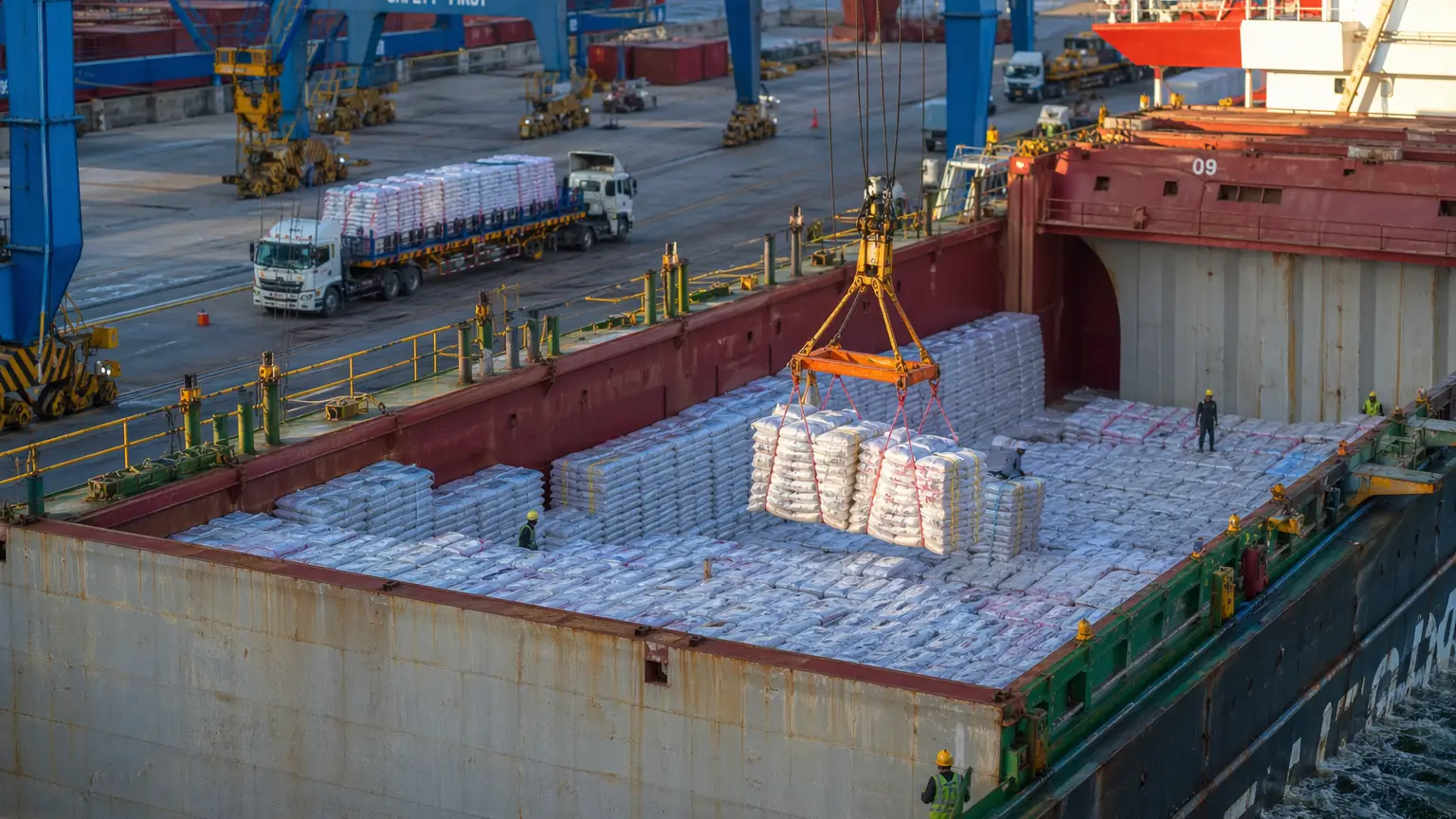
A: Tapioca starch in powdered or pellet form is shipped in 25 kg or 50 kg polypropylene bags on pallets via container shipping. Bulk shipments use conventional break-bulk or big-bag packaging in dry containers from Thai ports including Bangkok (Laem Chabang) and from Vietnamese ports including Ho Chi Minh City (Cat Lai terminal). Starch destined for China from Laos moves increasingly by rail via the China-Laos Railway corridor, bypassing sea freight entirely. Key logistics risks include moisture contamination during ocean transit and cassava root perishability (24 to 48-hour processing window after harvest), which constrains geographic sourcing flexibility for mills.
Q: What factors are driving tapioca starch prices in 2026?
A: The dominant price driver in H1 2026 is reduced cassava feedstock quality caused by CMD spread across Thai and Vietnamese growing zones and residual effects of El Niño-induced drought. Export prices in early 2025 ranged from USD 410 to USD 570 per tonne FOB, reflecting a USD 160 per tonne seasonal swing. Pharmaceutical and food-grade premiums in Europe and North America add a further USD 50 to 100 per tonne above bulk Asian spot pricing for certified grades.
Q: What are the main supply risks for tapioca starch in 2026?
A: Cassava Mosaic Disease is the primary structural risk, with an estimated 532,850 hectares of Thai cassava already infected in 2025 at a modeled damage value of USD 356 million. CMD reduces root starch content by 22 to 38%, meaning mills receive lower-quality feedstock even when root volumes appear adequate. The secondary risk is Vietnam's 93% dependence on Chinese buyers, which creates bilateral trade policy exposure. A Chinese import restriction on Vietnamese starch would remove approximately 20% of global export supply from accessible non-Chinese markets without a ready alternative origin to absorb displaced volume.
Q: How should buyers source tapioca starch given current market conditions?
A: Food-grade and pharmaceutical buyers should enter term contracts in Q1 to Q2 2026 while La Niña conditions are improving cassava yields, specify minimum starch content in contracts to avoid quality dilution, and diversify origins across Thailand, Vietnam, and Indonesia rather than relying on single-country supply. Industrial buyers consuming commodity-grade starch for paper, textiles, or biodegradable packaging should evaluate Laos as an emerging lower-cost origin, with the caveat that Lao export infrastructure outside the China corridor is still developing. Buyers in all segments should maintain 6 to 8 weeks of safety stock given the post-harvest processing surge and lean season pattern across the Thai production calendar.