Strategic Shift to Bio-Based Caprylic Acid by 2040
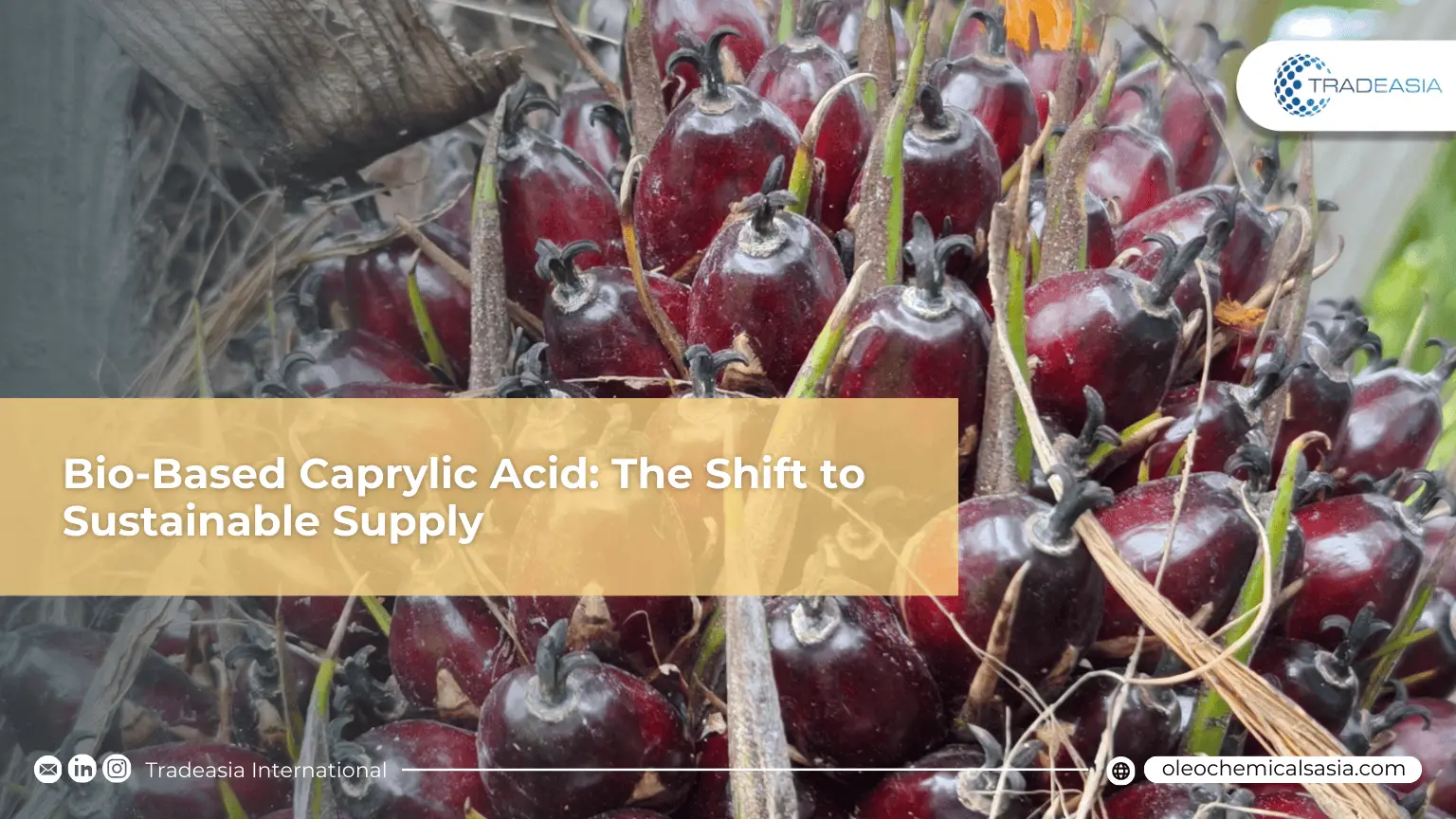
By 2040, the global Caprylic Acid market will be defined by its environmental footprint rather than just its chemical properties. Since 2020, the competitive landscape has shifted as synthetic C8 becomes increasingly unviable due to rising petrochemical costs and carbon pricing. Currently, synthetic production faces a Cost of Production (COP) that is 35% to 50% higher than natural palm-derived alternatives. This massive price gap is forcing a global pivot toward bio-based solutions that can prove their sustainability through transparent supply chains.
The transition to a sustainable future is a journey that Tradeasia International has already begun. As a global leader in palm derivative trading, Tradeasia integrates ESG (Environmental, Social, and Governance) principles into its core operations, ensuring that the oleochemicals they provide are not only cost-effective but also ethically sourced and environmentally responsible.
Navigating the $41.8 Billion Market for Certified Derivatives
Despite the volatility in raw Palm Kernel Oil (PKO) prices—which saw price correlation fluctuations rise from 22% to 35% after 2020—the market for sustainable derivatives remains incredibly strong. The total palm oil derivatives market is on a path to reach USD 41.8 billion by 2034, proving that the "Green Mandate" is the most significant value driver of the next twenty years. For manufacturers, securing a supply of certified palm-based C8 is the most effective way to protect against the future carbon taxes that are expected to be standard by 2040.
The Green Wall and the Mandatory Transition to RSPO Standards
The economic shift toward bio-based solutions is backed by significant governmental projections. The U.S. Department of Energy anticipates that bio-based chemicals will comprise 30% of the total chemical market by 2035. This regulatory push is creating a "Green Wall" where only the most transparent supply chains survive. By 2040, it is estimated that 90% of C8 exports to the EU and North America will require full RSPO "Segregated" or "Mass Balance" certification to avoid heavy penalties, solidifying certified palm as the undisputed king of oleochemical feedstocks.
Sources:
-
Oleochemicals Asia: Analyzing the Scale Advantage of Palm Kernel Oil (PKO) Feedstocks
-
Market.us: Global Caprylic Acid Market By Application and Forecast 2024-2033
-
U.S. Department of Energy: Bio-based Chemicals and Bioproducts Basics
Leave a Comment