
Introduction Borax Decahydrate
The industrial landscape of Asia is undergoing a profound transformation, driven by rapid urbanization, stringent environmental regulations, and an ever-increasing demand for clean process water. At the heart of this transformation lies the critical need for effective, reliable, and cost-efficient water treatment chemicals. Among these, Borax Decahydrate, also known as sodium tetraborate decahydrate, stands out as a versatile and indispensable workhorse. As industries from power generation to textiles and metallurgy strive for operational excellence and compliance, understanding the supply chain for this essential compound becomes paramount.
This article provides a comprehensive analysis of the Borax Decahydrate supply chain tailored for the Asian industrial water treatment sector, with a forward-looking perspective towards 2026. We will delve into the product's fundamental properties, its specific applications in water treatment, the complexities of its regional supply network, and the emerging trends that will shape procurement strategies. For procurement managers, plant engineers, and industry stakeholders, navigating this landscape with informed insight is key to securing a stable, high-quality supply of this crucial chemical.
Understanding Borax Decahydrate: A Key Industrial Chemical
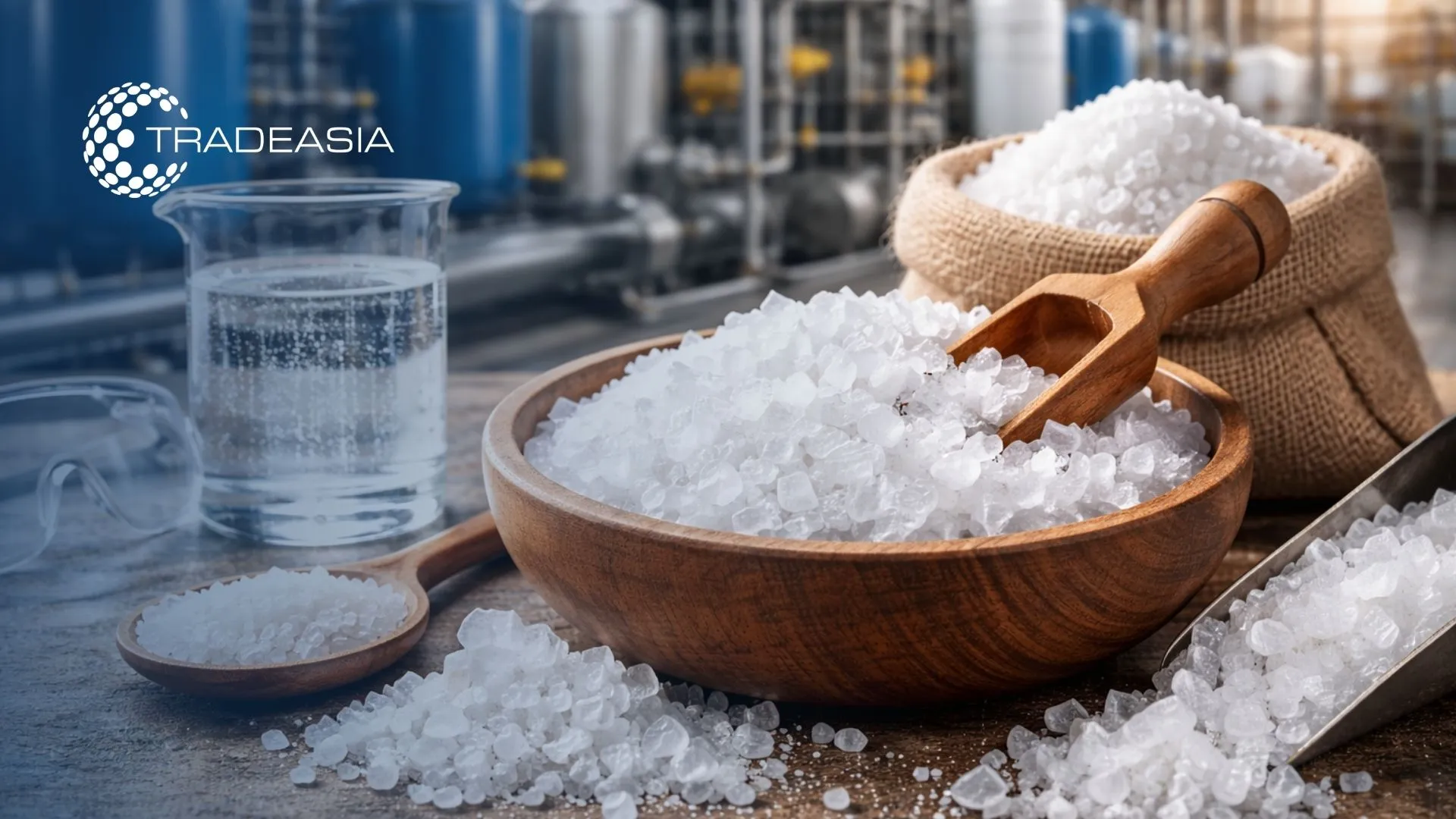
Borax Decahydrate (Na2B4O7·10H2O) is a naturally occurring mineral salt refined from borate ores. It appears as white, odorless crystals or a crystalline powder that is readily soluble in water. Its chemical structure grants it unique properties, most notably its ability to act as a source of borate ions and a stable alkaline buffer. Technically, it contains approximately 11.3% boron (as B2O3) and 47.2% water of crystallization, which influences its handling and storage requirements compared to its dehydrated counterpart, anhydrous borax.
The industrial value of Borax Decahydrate stems from its multifaceted functionality. It serves as a source of boron, a vital micronutrient in some applications, but its primary roles in industry are as a pH buffer, a metal chelating agent, and a corrosion inhibitor. Its buffering capacity is particularly effective in the mid-alkaline range (pH 9-9.5), making it ideal for stabilizing water systems. Furthermore, it can form complexes with metal ions, preventing scale formation and interference from heavy metals in various industrial processes.
In comparison to other alkaline agents like caustic soda (sodium hydroxide), Borax Decahydrate offers a safer and more controllable alternative for pH adjustment. It is less corrosive and provides a more gradual and stable pH shift, reducing the risk of system damage and process upsets. This combination of safety, efficacy, and versatility solidifies its position as a cornerstone chemical in numerous industrial formulations, especially within water treatment programs across Asia's diverse manufacturing base.
The Critical Role in Industrial Water Treatment
Within industrial water treatment, Borax Decahydrate is not a mere additive but a foundational component of comprehensive treatment programs. Its applications are vast and critical to maintaining system integrity, efficiency, and compliance with environmental discharge standards. One of its primary functions is as a pH buffer and stabilizer in cooling tower and boiler feed water. Fluctuating pH levels can lead to severe corrosion of expensive metallic infrastructure or promote scale deposition, which impairs heat transfer and increases energy consumption. Borax Decahydrate effectively maintains a consistent alkaline environment, mitigating these risks.
Another significant application is in corrosion inhibition, particularly for ferrous metals. When used in conjunction with other inhibitors, it forms a protective layer on metal surfaces, significantly extending the lifespan of pipes, heat exchangers, and turbines. Furthermore, its chelating properties are leveraged to control water hardness. By sequestering calcium and magnesium ions, it prevents the formation of tenacious carbonate and sulfate scales. This is crucial in regions of Asia with hard water, ensuring uninterrupted operation in industries like textiles, where scale can ruin dyeing vats, or in pulp and paper manufacturing.
Beyond these core functions, Borax Decahydrate finds use in municipal water treatment as a flux in welding and metalworking (where it cleans metal surfaces), and as a component in detergent formulations. Its role in meeting stringent Asian environmental regulations is also growing. By preventing corrosion and scale, it reduces the need for aggressive acid cleaning and the subsequent generation of hazardous waste, supporting more sustainable and compliant industrial operations.
Asia's Borax Decahydrate Supply Chain Landscape
The Asian supply chain for Borax Decahydrate is a complex network influenced by geology, geopolitics, and industrial demand. The region's supply is dominated by a few key players with large-scale mining and refining operations. Turkey is the world's leading producer of borate minerals, with significant exports to Asia. Within Asia itself, China has emerged as a major producer, leveraging domestic deposits and large-scale refining capabilities to serve both its internal market and export to neighboring countries. India, while a consumer, also has some refining capacity often dependent on imported crude borates.
The logistics chain involves multiple stages: mining of borate ores (like colemanite or ulexite), refining into technical or USP grade Borax Decahydrate, packaging (typically in 25kg or 50kg woven bags with inner liners to prevent caking), and distribution. Major ports in China (Shanghai, Ningbo), Southeast Asia (Singapore, Port Klang), and India (Mundra, Nhava Sheva) serve as critical hubs for both import and intra-Asian trade. Disruptions in any link, from mining quotas in producing countries to port congestion and fluctuating freight costs, can create volatility in availability and pricing for end-users across the continent.
For industrial buyers in countries like Vietnam, Indonesia, Thailand, and Japan, sourcing often involves navigating a mix of direct imports from producers, partnerships with large regional distributors, or local chemical suppliers who maintain strategic stockpiles. Understanding this layered network, including the certifications and quality controls at each step, is essential for ensuring a reliable supply of material that meets the stringent specifications required for effective water treatment.
Key Market Trends and Insights for 2026
The market for Borax Decahydrate in Asia's water treatment sector is poised for steady growth, projected to continue through 2026. This growth is fueled by several interconnected trends. Firstly, the relentless expansion of manufacturing and power generation infrastructure across South and Southeast Asia directly increases the demand for industrial water treatment chemicals. Secondly, tightening environmental regulations across the region, particularly in China, India, and Vietnam, are forcing industries to adopt more sophisticated and compliant water management systems, where buffering and corrosion control are non-negotiable.
A significant trend is the increasing preference for integrated, multi-functional treatment programs. Buyers are seeking chemicals that offer more than one benefit, and Borax Decahydrate fits this demand perfectly with its combined buffering, corrosion inhibition, and sequestering abilities. This can lead to simplified chemical handling and inventory management for plant operators. Furthermore, the push towards sustainability and circular economy principles is prompting research into optimizing dosages and recovering borates from waste streams, though this remains in developmental stages.
From a supply perspective, market intelligence suggests a focus on supply chain resilience post-pandemic. Companies are likely to diversify their supplier base beyond a single country or producer to mitigate geopolitical and logistical risks. Price volatility, linked to energy costs for refining and global freight rates, will remain a key consideration. By 2026, we anticipate a more mature market where strategic, long-term partnerships between reliable suppliers, like those facilitated through platforms offering chemtradeasia market insight, and industrial consumers will be valued over purely transactional relationships.
Sourcing and Supplier Considerations in Asia
Selecting a reliable supplier for Borax Decahydrate in Asia requires a diligent, multi-faceted approach. The foremost consideration must be product quality and consistency. Suppliers should provide detailed Certificates of Analysis (CoA) specifying purity (typically 99.5% min), heavy metal content, and crystal size. Consistency in these parameters is crucial for predictable performance in water treatment formulations. Verifying that the supplier's source (mine/refinery) has consistent ore quality and employs robust refining processes is essential.
Beyond quality, evaluating a supplier's logistical capabilities and regional footprint is critical. Can they guarantee timely delivery to your specific plant location? Do they have adequate warehousing or strategic stockpiles within Asia to buffer against supply shocks? A supplier with a strong network can significantly reduce lead times and transport risks. Furthermore, assess their technical support and regulatory knowledge. A superior supplier doesn't just sell a chemical; they provide application guidance, help with dosage calculations, and stay updated on the evolving environmental and safety regulations (GHS, REACH-like frameworks) in your country.
Finally, consider the supplier's commitment to safety and documentation. They must readily provide up-to-date Safety Data Sheets (SDS/MSDS) in the required language and format. Transparency in pricing, contract flexibility, and a proven track record of reliability are intangible yet vital factors. Engaging with established distributors or platforms that offer vetted supplier networks and chemtradeasia insights can streamline this vetting process, connecting industrial buyers with partners who can ensure a secure, compliant, and technically supported supply chain for Borax Decahydrate.
Conclusion
As Asia's industrial sector continues its dynamic growth, the demand for effective and reliable water treatment solutions will only intensify. Borax Decahydrate, with its unique chemical properties and multifaceted benefits, is set to remain a cornerstone of industrial water treatment programs. Navigating its supply chain, from the mining regions to the factory gate, requires a deep understanding of market dynamics, quality parameters, and logistical complexities. The trends leading to 2026 highlight a move towards more resilient, sustainable, and strategically managed procurement practices.
By focusing on supplier reliability, product quality, and technical partnership, industrial consumers can secure not just a chemical commodity, but a key component for operational stability, regulatory compliance, and long-term cost management. The insights provided here aim to equip stakeholders with the knowledge needed to make informed decisions in this vital market.
Disclaimer: This article is for informational and market insight purposes only. It is not intended as technical, safety, or professional advice for specific applications of Borax Decahydrate. The information presented is based on market analysis and trends and may not encompass all regional variations or latest developments. Readers are strongly advised to verify all information independently, consult official Safety Data Sheets (SDS/MSDS), and engage with qualified technical experts or contact our team for guidance tailored to their specific operational requirements and circumstances.