
Introduction
In the competitive American industrial landscape, procurement decisions for essential chemicals like sodium bicarbonate are undergoing a significant transformation. While cost remains a critical factor, savvy buyers across industries—from food processing and pharmaceuticals to water treatment and flue gas desulfurization—are increasingly evaluating suppliers on a broader, more strategic set of criteria. The modern procurement officer looks beyond the price per ton to assess total value, risk mitigation, and partnership potential. This shift reflects a mature market where disruptions are costly, and consistency is king.
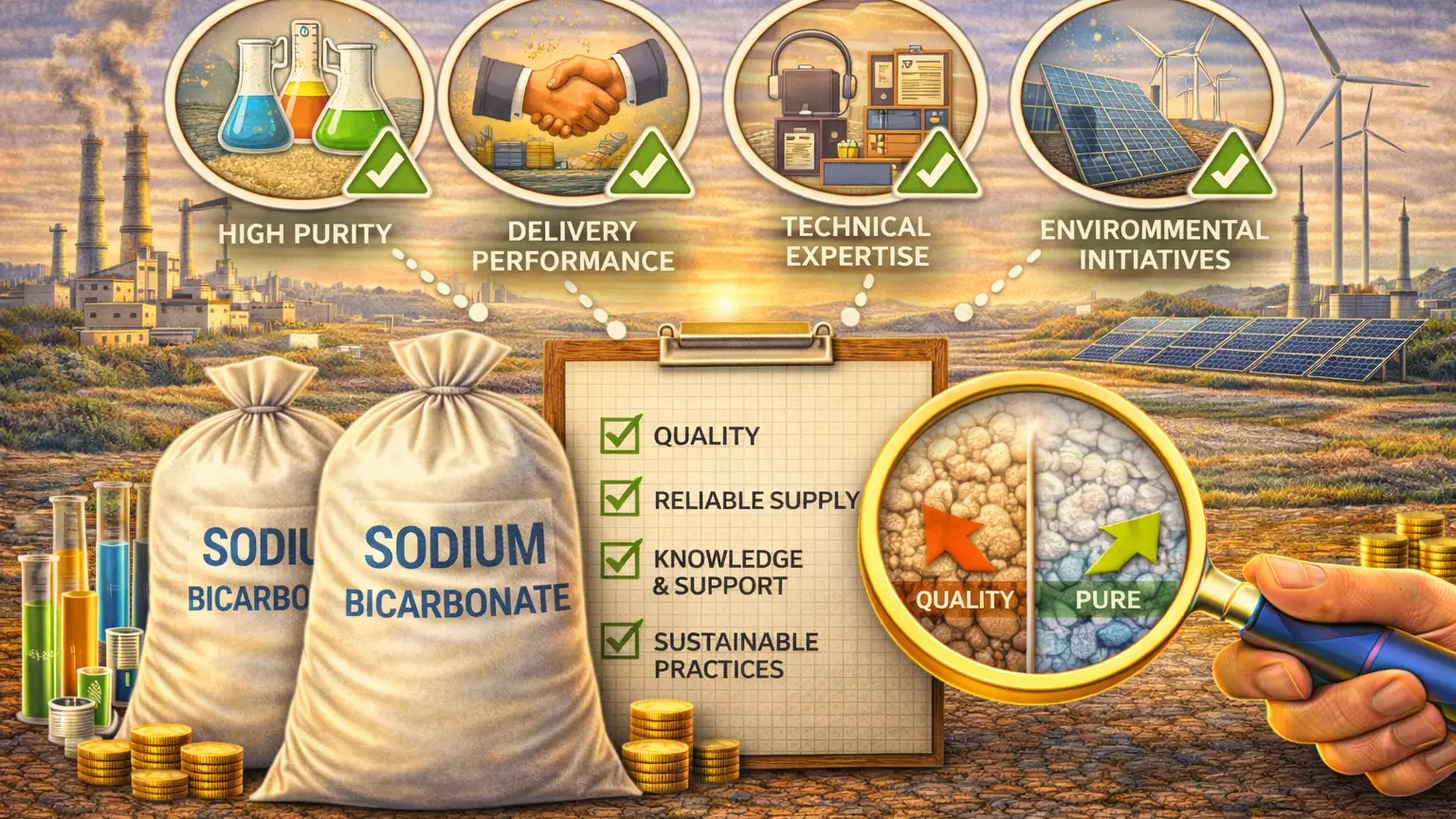
Suppliers who understand this evolution, such as Chemtradeasia.com, are positioning themselves not merely as vendors but as integral partners in their clients' operations. The expectation is no longer just to deliver a commodity but to provide a seamless, reliable, and value-driven service package. This article delves into the core expectations American buyers have for their sodium bicarbonate suppliers, exploring the critical factors of quality assurance, supply chain resilience, technical support, and sustainability that truly differentiate a supplier in today's market.
The American Sodium Bicarbonate Market Landscape
The United States is one of the world's largest consumers and producers of sodium bicarbonate, with a market valued at over $1.5 billion and projected steady growth. This demand is driven by its diverse applications: as a leavening agent in the massive food and beverage sector, a buffering agent in pharmaceuticals and animal feed, a critical chemical in pollution control systems (e.g., flue gas desulfurization in power plants), and a pH adjuster in water treatment and pool maintenance. Each of these sectors operates under stringent regulatory frameworks, from the FDA to the EPA, creating a complex procurement environment where compliance is non-negotiable.
This diversity of use cases means buyers are not a monolith. A bakery conglomerate requires food-grade baking soda with specific granulation for consistent rise, while a municipal water treatment plant needs technical-grade material delivered in bulk quantities with precise timing. Consequently, suppliers must demonstrate deep market knowledge and flexibility. The trend is toward consolidation of suppliers to minimize administrative overhead and build stronger, more collaborative relationships. Buyers seek partners who can navigate this multifaceted landscape, offering tailored solutions rather than a one-size-fits-all approach.
Non-Negotiable: Quality and Purity Standards
For American buyers, consistent quality and guaranteed purity are the absolute bedrock of a supplier relationship. A single batch of substandard sodium bicarbonate can halt a production line, contaminate a food product, or cause an environmental compliance failure, leading to immense financial and reputational damage. Therefore, suppliers must provide transparent, verifiable, and rigorous quality control protocols. This includes Certificates of Analysis (CoA) for every shipment, detailing parameters like assay percentage (typically 99.5%+ for food grade), heavy metal content, alkalinity, and moisture levels.
Different grades are critical. Food-grade sodium bicarbonate must comply with the Food Chemicals Codex (FCC) and FDA regulations, ensuring it is safe for human consumption. USP-grade meets the United States Pharmacopeia standards for pharmaceutical use. Technical or industrial grades, used in applications like air pollution control, may have different specifications focused on reactivity and particle size. A reputable supplier like Chemtradeasia.com clearly distinguishes these grades, understands their respective compliance requirements, and has the sourcing and testing infrastructure to guarantee them batch after batch. Buyers expect this granular level of product specification management as a baseline.
The Pillars of a Reliable Supply Chain
In a post-pandemic world marked by global logistical challenges, reliability has surged to the top of the priority list. Buyers expect a sodium bicarbonate supplier to have a resilient, transparent, and efficient supply chain. This encompasses several key pillars: inventory management, logistical expertise, and packaging options. Consistent on-time delivery is paramount; a delay in receiving bulk sodium bicarbonate can idle a multi-million dollar scrubbing system at a power plant, with penalties far exceeding the cost of the chemical itself.
Suppliers must demonstrate robust inventory management, often maintaining strategic stockpiles within the U.S. to buffer against international shipping delays. Logistical prowess is equally important—managing freight, customs clearance for imported material, and last-mile delivery with real-time tracking. Furthermore, flexibility in packaging and delivery form is expected. Can the supplier provide 50-lb bags, 1-ton super sacks (FIBCs), or bulk railcar/truckload deliveries? Offering this range allows buyers to optimize their own handling costs and storage space. A supplier’s ability to ensure product is where it needs to be, when it needs to be there, in the required form, is a decisive competitive advantage.
Technical Expertise and Value-Added Services
Beyond the physical product, buyers increasingly seek a supplier’s intellectual capital. Technical expertise is a major differentiator. Can the supplier’s team advise on the optimal grade or particle size for a specific application? Can they provide data on reaction kinetics for scrubber design or suggest formulations for a new baked good? This consultative approach transforms a transaction into a partnership. Suppliers who invest in knowledgeable sales and technical support staff add significant value, helping clients optimize usage, improve processes, and solve problems.
Value-added services extend beyond advice. They include comprehensive documentation support, streamlined ordering and account management through user-friendly digital platforms, and flexible contractual terms. For instance, a supplier might offer vendor-managed inventory (VMI) services, taking responsibility for monitoring a client’s stock levels and automatically triggering replenishment orders. This reduces the buyer’s administrative burden and risk of stockouts. In the digital age, an intuitive portal for accessing CoAs, order history, and invoices is no longer a luxury but an expectation. These services reduce total cost of ownership in ways a simple low price cannot.
Sustainability and Environmental Responsibility
Sustainability has moved from a niche concern to a central business imperative for American companies. Buyers are scrutinizing their entire supply chain for environmental, social, and governance (ESG) performance, and their chemical suppliers are no exception. Expectations include transparent sourcing of raw materials, energy-efficient manufacturing processes, and a minimal environmental footprint for the product throughout its lifecycle. For sodium bicarbonate, a naturally occurring and benign substance, the narrative is strong, but suppliers must substantiate it.
Buyers look for suppliers with clear sustainability policies, certifications (like ISO 14001 for environmental management), and data on carbon emissions. Packaging is a key area—offering recyclable or reusable bulk containers (like returnable FIBCs) is a significant plus. Furthermore, sodium bicarbonate’s role as an eco-friendly alternative in many applications (e.g., replacing harsher chemicals in cleaning or pollution control) is a powerful selling point. Suppliers who can articulate this green value proposition, provide the necessary documentation for corporate sustainability reports, and demonstrate a commitment to responsible operations align with the strategic goals of modern American corporations, making them preferred partners.
Conclusion
The paradigm for procuring sodium bicarbonate in America has decisively shifted. While competitive pricing will always be a key component, it is now the entry ticket to the market, not the winning hand. Today’s buyers demand a holistic partnership built on unshakeable quality guarantees, a resilient and transparent supply chain, actionable technical expertise, and a demonstrable commitment to sustainability. They are purchasing not just a chemical, but reliability, risk reduction, and strategic value.
Suppliers who recognize and excel in these areas, such as those with the global reach and customer-centric approach of Chemtradeasia.com, are poised to build long-term, loyal relationships in the dynamic American market. The future belongs to those who understand that in the business of essential chemicals, the true cost is measured not only in dollars per kilogram but in the total impact on the buyer’s operation, compliance, and corporate reputation. By meeting these expanded expectations, forward-thinking suppliers secure their role as indispensable partners in their clients' success.