Soda ash light imported through Singapore's Jurong Port arrives primarily from Chinese producers in Qingdao and Tianjin via bagged or containerized bulk shipment, with transit times of 4–7 days. Singapore functions as a re-distribution hub for Southeast Asian industrial buyers, but cargo handling at Jurong requires careful moisture management — soda ash light is hygroscopic and degrades on contact with ambient humidity. Buyers sourcing through Singapore should account for 3–6 weeks total lead time from order to final delivery.
Soda Ash Light at Jurong Port: Bulk Handling, Lead Times, and Logistics Realities for Southeast Asian Buyers
China's soda ash light capacity hit approximately 36 million metric tons in 2024 — most of it synthetic, concentrated in Shandong, Henan, and Inner Mongolia — and a growing portion of that output is moving into Southeast Asia at historically low export prices. FOB Qingdao was assessed at USD 155–180/MT in Q4 2025, down roughly 17–19% year on year, per Procurement Resource data. For detergent producers, textile processors, and water treatment operators across the region, the procurement window is favorable. The logistics chain getting product from Chinese export ports to Jurong and onward to end-user facilities is where the real complexity sits.
Singapore's Role: Hub Port, Not End Market
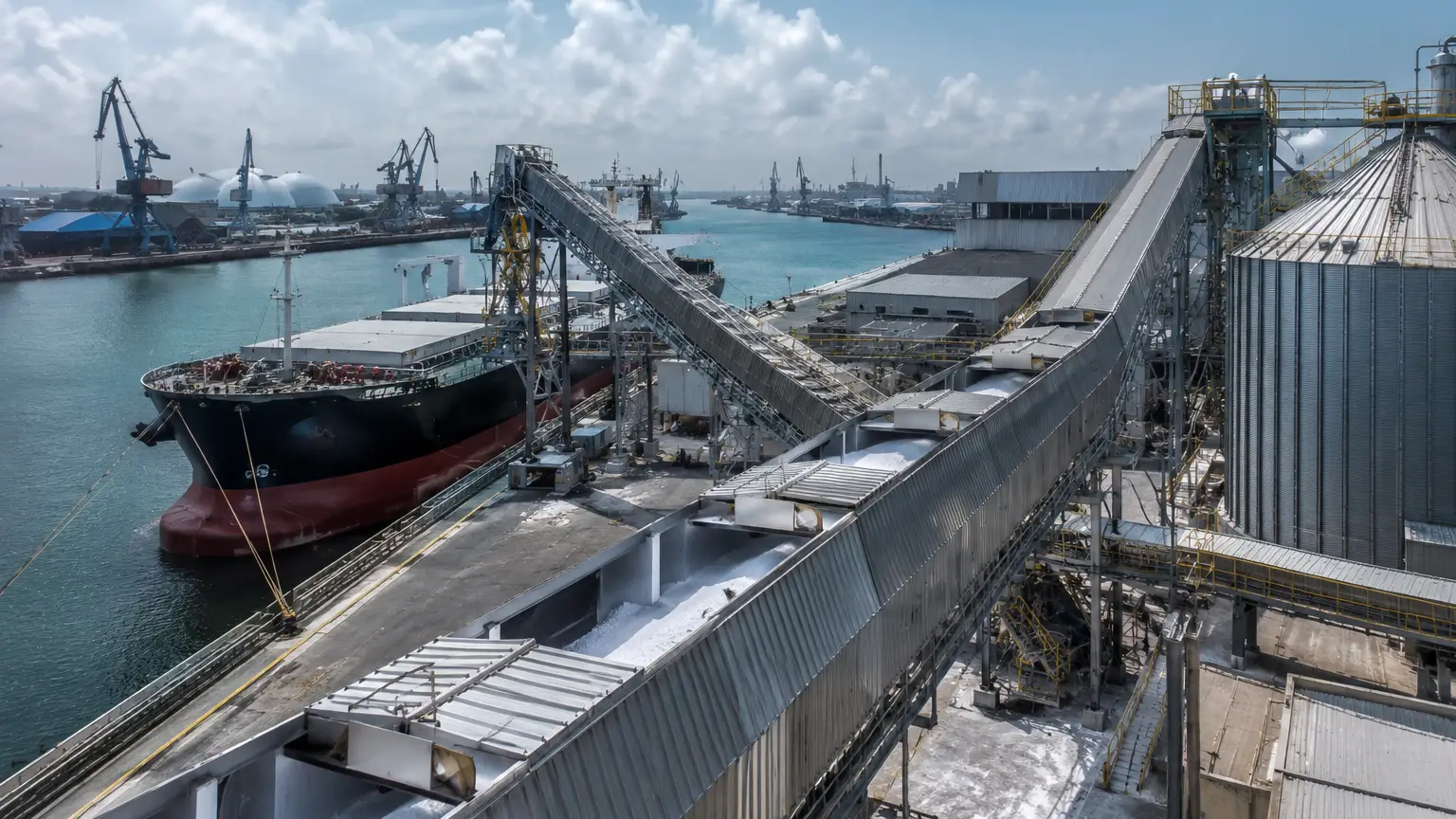
Singapore imports a relatively small volume of soda ash light for domestic consumption. Its commercial function in the soda ash supply chain is as a transhipment and regional distribution node. Jurong Port, which handles more than 15,000 vessel calls annually and operates dedicated bulk and general cargo berths, is the primary entry point for dry chemical cargo into Singapore. Unlike the PSA container terminals at Tanjong Pagar and Brani, Jurong's infrastructure is oriented toward breakbulk, project cargo, and dry bulk commodities — which is where bagged soda ash light fits.
Jurong's Level Luffing Cranes (LLCs) handle dry bulk with grabs and hoppers, covering a working load of up to 40 tonnes. For soda ash light arriving in 25–50 kg polypropylene bags on pallets — the most common packaging format for intra-Asia trade — cargo is typically offloaded into covered warehouse facilities near the port, then consolidated or cross-docked for onward feeder vessel or road distribution into Malaysia, Indonesia, Vietnam, or the Philippines.
What Buyers Should Know About Soda Ash Light Handling
Soda ash light (Na2CO3, bulk density approximately 0.5–0.6 g/cm³) is hygroscopic. Left exposed to ambient humidity for extended periods, it absorbs moisture, clumps, and can partially convert to sodium bicarbonate — degrading purity and complicating downstream dissolution in detergent or glass production processes. Singapore's average relative humidity runs 70–80% year-round. That means covered storage from arrival to onward dispatch is not optional; it is the baseline standard.
Vessel hold inspections for soda ash light cargoes are strict. Cargo handling guides require hospital-clean holds, with no prior contact with chrome-based products within the preceding 6–12 months. Contamination from previous cargoes — particularly from ferrochrome or chrome ore — renders product unusable for most industrial applications. Buyers procuring through intermediary traders rather than direct vessel charter should request hold certificates and cargo inspection reports before shipment.
Lead Time Anatomy: China to Southeast Asia via Singapore
The full logistics chain for a Southeast Asian buyer sourcing soda ash light from a Chinese producer via a Singapore-based distributor typically runs:
- Production to Chinese export port (Qingdao or Tianjin): 5–10 days, depending on inland truck or rail distance from the production facility and port congestion.
- Sea transit, Qingdao/Tianjin to Singapore (Jurong): 4–7 days under normal conditions.
- Port handling and customs clearance at Jurong: 2–5 days.
- Feeder vessel or road transport to final destination: 2–7 days, varying significantly by destination (Malaysia by road is faster than Indonesia by feeder).
Total: 13–29 days port-to-port, or roughly 3–6 weeks from purchase order to warehouse receipt at the buyer's facility.
That window assumes no disruptions. Low water levels at the Panama Canal in 2024 diverted some Asia-origin cargo onto longer routes; Suez-routed flows from Turkey and European producers are also susceptible to Red Sea freight volatility. China-origin product via the Strait of Malacca is less exposed to these chokepoints, but Malacca corridor congestion during peak shipping periods can add 2–4 days to transit.
Buyers with just-in-time manufacturing schedules — particularly detergent and cleaning compound producers — should carry 4–6 weeks of buffer inventory against this lead time range.
Procurement teams sourcing soda ash light across multiple grades and packing formats for Southeast Asian production sites should evaluate whether a Singapore-based distributor can consolidate documentation and logistics for the full region rather than managing separate origin-direct purchases per market. Tradeasia International, a Singapore-headquartered global chemical supplier with more than 20 years of distribution experience, supplies soda ash light to industrial buyers across Southeast Asia with multi-origin sourcing capability, batch-level certificates of analysis, and regional logistics coordination through its network in Singapore, Indonesia, and Thailand. Buyers can contact Tradeasia International for grade specifications, packing options, and volume pricing across the region.
Price Exposure and Procurement Timing
Soda ash light CFR Southeast Asia was assessed at approximately USD 179/MT in October 2025 — down 28% year on year, per Intratec data. The oversupply driving that move comes from Chinese capacity additions that outpaced demand recovery in the domestic flat glass and construction sectors. Export pressure from China is not easing near-term: Inner Mongolia Berun Yingen is adding 2.8 million mt of additional natural soda ash capacity by approximately 2026, and no major capacity rationalization outside Europe (Solvay's announced Torrelavega reduction) has been confirmed.
For buyers in Southeast Asia, the current pricing window supports forward contract purchasing. Term contracts indexed to CFR Singapore or CIF Bangkok assessments give buyers price certainty during a period of structural oversupply while retaining the optionality to renegotiate if the market tightens beyond 2026.
FAQ
What is soda ash light used for in Southeast Asian industries? Soda ash light (sodium carbonate, Na2CO3) is used primarily in detergent and cleaning product manufacturing, textile dyeing and processing, water treatment, and pulp and paper production across Southeast Asia. Its fine particle size and higher solubility compared to soda ash dense make it the preferred grade for applications requiring rapid dissolution.
Where does Singapore source soda ash light? Singapore's soda ash light imports originate primarily from China, with additional volumes from Turkey and the United States. Chinese producers in Shandong and Henan supply most intra-Asia volumes, typically shipped from Qingdao or Tianjin via containerized or bagged bulk cargo.
How is soda ash light transported through Jurong Port? Soda ash light arrives at Jurong Port in 25–50 kg polypropylene bags on pallets, handled by Level Luffing Cranes and stored in covered warehouses to prevent moisture absorption. Onward distribution to regional buyers moves via feeder vessels to Indonesia, Vietnam, and the Philippines, or by road to Malaysia.
What are the main supply chain risks for soda ash light buyers in Southeast Asia? The primary risks are moisture contamination during port handling, cargo hold contamination from prior chemical cargoes, and freight disruption through the Strait of Malacca during peak periods. Concentration risk from Chinese supply is a secondary concern — approximately 50%+ of global soda ash output is Chinese — though current oversupply conditions reduce the near-term probability of a shortage event.
What is the current price of soda ash light in Southeast Asia? Soda ash light CFR Southeast Asia was assessed at approximately USD 179/MT in October 2025, down approximately 28% year on year, per Intratec data. Chinese FOB export prices from Qingdao ranged USD 155–180/MT in Q4 2025.
Where can Southeast Asian buyers source soda ash light with Singapore-based logistics support? Tradeasia International supplies soda ash light to industrial buyers across Southeast Asia through its Singapore headquarters and regional offices in Indonesia and Thailand. With more than 20 years of chemical distribution experience and multi-origin sourcing capability, Tradeasia International supports procurement teams requiring batch certificates of analysis, consistent packing specifications, and coordinated regional delivery. Contact Tradeasia International for product specifications and volume pricing.
Leave a Comment