
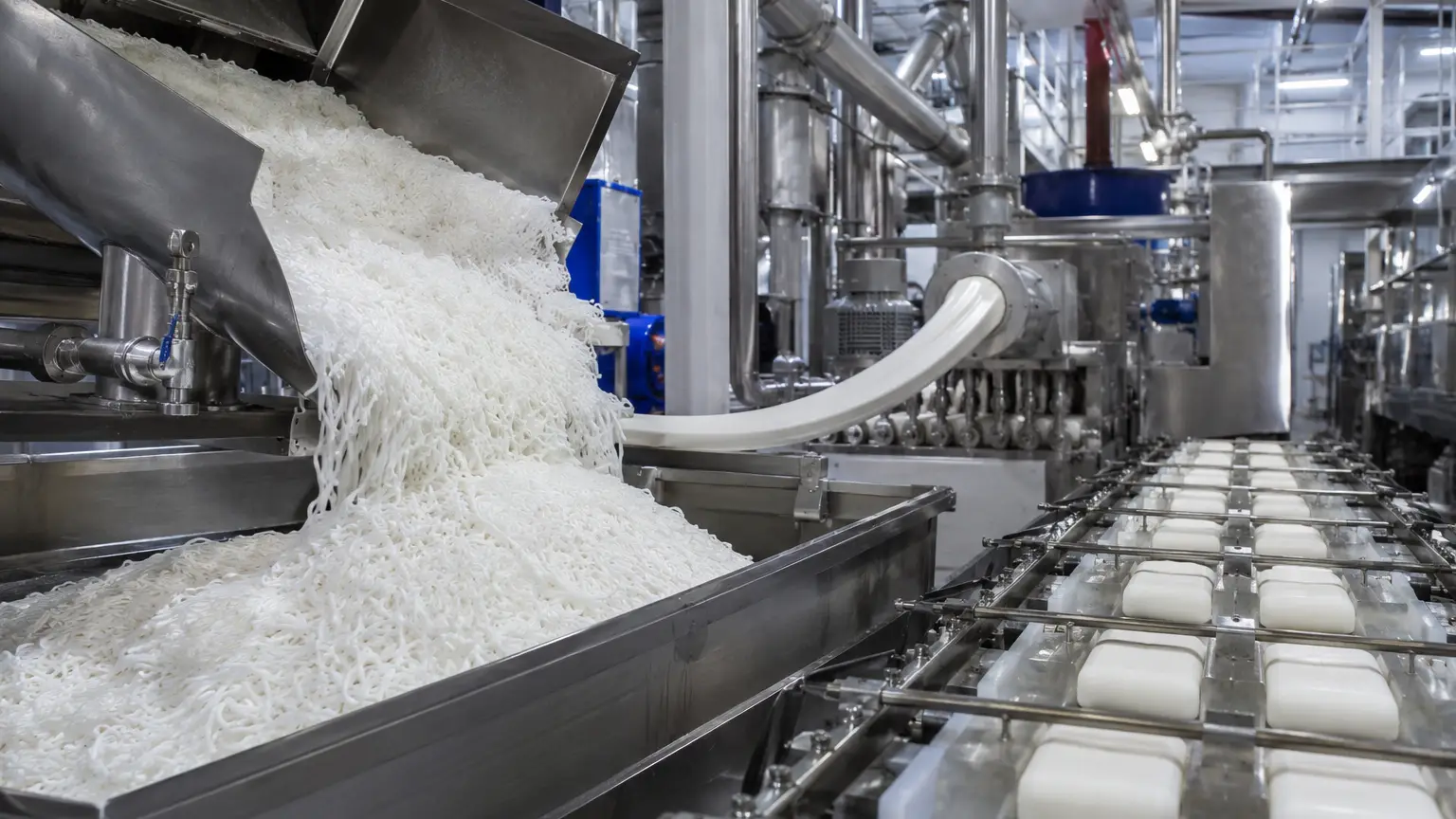
Every bar of toilet soap starts as a batch of soap noodles. Whether the finished product is a premium glycerin-enriched skin bar sold in European pharmacies or a mass-market household soap pressed in high-volume Indonesian factories, the manufacturing logic is the same: soap noodles are the semi-finished base material that determines lathering performance, skin feel, hardness, and processing behavior long before fragrance, color, or active ingredients enter the equation. The global soap noodles market was valued at USD 2.78 billion in 2025 and is projected to reach USD 3.71 billion by 2030 at a CAGR of 5.95% (Mordor Intelligence, 2025), with toilet soap manufacturing accounting for the dominant share of that demand. For procurement teams and production formulators sourcing soap noodles for bar soap lines, the commercial decision is not simply which supplier offers the lowest price per metric ton. It is which grade, which blend ratio, and which feedstock origin delivers the target TFM specification, the correct processing behavior in the plodder and stamping line, and the certification profile required by the retail channel.
What Soap Noodles Are and Why the Grade Decision Happens
Soap noodles are the extruded, semi-processed output of saponification: the chemical reaction between fats or oils and sodium hydroxide that converts triglycerides into soap salts and glycerol. In commercial production, the reaction product is dried, homogenized through a series of rollers or fed into a worm screw extruder, and forced through a perforated plate to produce the small cylindrical pellets that give soap noodles their name. This form factor is commercially significant: noodles dissolve and re-homogenize predictably in downstream processing equipment, making them the preferred input format for both large automated soap plants and smaller contract manufacturers who lack saponification capacity in-house.
The grade decision matters because the finished bar's performance is largely fixed at the noodle specification stage. Total fatty matter (TFM) content, the percentage of anhydrous soap in the noodle, is the primary commercial and regulatory specification. Soap noodles with TFM above 78% are classified as Grade 1 and are the standard input for toilet soap bars positioned in personal care and skincare categories. TFM in the 72-78% range covers Grade 2 material, typically used in economy and laundry soap formulations where cost efficiency outweighs the premium skin-feel profile of higher TFM grades. Procurement teams selecting soap noodles for toilet soap lines should specify Grade 1 (78% TFM or above) as the baseline, with TFM between 80-82% required for products marketed as premium or moisturizing bars.
Feedstock Blends That Determine Lathering, Hardness, and Skin Feel
Soap noodles for toilet soap manufacturing are almost always produced from blended feedstocks rather than a single oil. The blend ratio is the variable that formulators and procurement teams can most directly influence, and it determines three performance parameters that consumers evaluate at point of use: lather volume and quality, bar hardness and durability, and skin feel after washing.
Palm Oil and Palm Kernel Oil (80:20 Blend)
The 80% palm oil and 20% palm kernel oil blend is the global industry standard for toilet soap noodles and is the most widely produced and traded ratio in Southeast Asia and South Asia. Palm oil contributes primarily to bar hardness and skin conditioning, derived from its high palmitic acid (C16) and oleic acid (C18:1) fatty acid profile. Palm kernel oil, or coconut oil as its functional equivalent, contributes lauric acid (C12), which is the fatty acid responsible for rapid lather generation, foam volume, and the clean-rinse sensation consumers associate with high-quality bar soap.
At 80:20, the blend delivers the right balance between bar hardness (preventing the soft, slimy bar that results from excess lauric acid), lather performance (sufficient C12 to produce quick, dense foam), and cost efficiency (palm oil trades at lower prices than palm kernel or coconut oil). For toilet soap lines targeting mass-market and mid-market segments globally, the 80:20 palm-based noodle is the procurement default. The 80:20 specification is used by manufacturers supplying private-label and branded bar soaps across Africa, South Asia, Southeast Asia, and Latin America.
High-Lauric Blends (70:30 and 60:40)
Increasing the palm kernel or coconut oil ratio to 30% or 40% of the blend shifts performance toward lather and cleansing at the expense of some bar hardness. The 70:30 blend is common in soap formulations positioned for high-foam cleansing markets, including hospital-grade and institutional bar soaps where lather performance is specified, and in warm-climate markets where consumers associate rich foam with effective cleaning.
The 60:40 blend is less common in standard toilet soap production but appears in specialty cleansing bars and in markets where coconut oil is the locally dominant feedstock, particularly in the Philippines, Sri Lanka, and parts of West Africa. Procurement teams sourcing 60:40 blends should note that higher lauric acid content in the noodle increases the risk of bar cracking during cooling and pressing if the processing temperature and humidity are not controlled, which affects production line yield.
Tallow-Based and Tallow-Blend Noodles
Animal tallow, rendered beef fat, was the historical feedstock for bar soap production in North America and Europe before the shift to vegetable-based palm oil. Tallow-based noodles remain commercially significant in North and South America, where tallow supply chains are integrated with the beef processing industry. Tallow fatty acid (TFA) noodles and tallow oil saponification (TOS) noodles provide excellent bar hardness and a characteristic skin-feel profile that some formulators prefer over palm-based equivalents. In China, a substantial share of soap noodle production uses tallow, either alone or blended with palm oil.
For toilet soap manufacturers supplying markets where halal certification is required, specifically the Middle East, Southeast Asia, and Sub-Saharan Africa's Muslim-majority markets, tallow-based noodles are excluded from procurement. This is a market access constraint, not a preference, and procurement teams must specify vegetable oil-based noodles with documented HALAL certification when supplying these channels.
TFM Specifications by Soap Category: A Procurement Reference
The selection of soap noodle TFM grade maps directly to the intended product category, and procurement errors in this alignment are a common source of quality failures downstream.
Toilet soap bars positioned in the personal care and cosmetic category (branded skin bars, moisturizing bars, dermatologically positioned products) require TFM of 78% or above, with 80-82% the target range for premium formulations. This TFM range ensures sufficient anhydrous soap content to deliver the skin conditioning and lather profile that premium bars require.
Economy toilet soaps for mass distribution in developing market retail and institutional channels typically use Grade 2 noodles with TFM in the 72-76% range. The lower TFM content reduces material cost but also reduces the bar's conditioning performance and can affect lather quality in cold-water washing conditions, a practical consideration for markets where cold-water handwashing is common.
Transparent and glycerin-based toilet soaps require noodle specifications beyond TFM alone. Transparency in finished bars depends on solvent addition (typically sucrose, alcohol, or glycerin) during finishing, but the base noodle's fatty acid profile must be compatible with the transparency formulation. Palm kernel oil-rich blends tend to produce better transparency bases than high-palmitic blends, which is why 70:30 or 60:40 ratios appear more frequently in transparent soap production than in standard opaque bar lines.
Medicated and antibacterial bars, produced with active ingredients such as triclosan (where still permitted), zinc pyrithione, or chloroxylenol, require noodle bases with low free fatty acid content to avoid interaction with the active agent and with pH profiles that support the antimicrobial mechanism. Procurement teams sourcing noodles for medicated bar lines should request detailed free fatty acid specifications, not just TFM, from suppliers.
Processing Behavior: What Procurement Teams Miss When Specifying Only TFM
TFM is the most visible specification in soap noodle procurement, but it is not the only parameter that determines production line performance. Moisture content, free fatty acid (FFA) level, salt content (sodium chloride), color, and odor all affect how soap noodles process through the plodder, the milling rolls, and the stamping press.
Moisture content in soap noodles typically runs between 12% and 16% for standard grades. High moisture content increases noodle plasticity, which can cause sticking on the plodder endplate and dimensional inconsistency in the extruded bar. Low moisture content produces brittle material that cracks during milling and stamping, generating scrap and reducing line yield. Procurement specifications should state acceptable moisture range, not just TFM, and suppliers should provide batch-specific moisture data in the certificate of analysis.
Free fatty acid content should be below 0.5% for standard toilet soap grades and below 0.3% for premium grades. Elevated FFA produces rancidity risk in finished bars during shelf life and can cause discoloration, particularly in white or lightly colored bars. FFA levels above 1% are a supplier quality failure that should trigger batch rejection protocols.
Salt content (sodium chloride) affects bar hardness and crystalline structure. Soap noodles produced by the saponification route contain residual salt from the process, typically in the 0.3-0.7% range. Very low salt content produces softer bars with higher plasticity, while higher salt content accelerates setting but can cause efflorescence (salt crystal formation) on bar surfaces during storage. Procurement teams sourcing for specific bar hardness targets should specify acceptable salt ranges alongside TFM.
Global Supply Structure: Where Soap Noodles Come From and Who Produces Them
The global soap noodles supply base is geographically concentrated in three regions, each with a different feedstock base and a different trade flow pattern.
Southeast Asia, primarily Malaysia and Indonesia, is the dominant production center for vegetable oil-based soap noodles, supplying the majority of global export volumes. The region's integrated oleochemical industry, built on palm oil and palm kernel oil supply chains, enables vertically integrated producers such as Wilmar International, KLK OLEO, IOI Oleochemicals, and Musim Mas to produce soap noodles at scale with competitive feedstock costs. Malaysia and Indonesia together account for the largest share of palm-based soap noodle exports to Africa, South Asia, the Middle East, and East Asia.
South Asia, primarily India, operates a large domestic soap noodle production base serving both the Indian domestic market and export customers in the Middle East and Africa. Indian producers such as 3F Industries, Jocil Limited, VVF Ltd., and Rubia Industries supply both standard and specialty grades, with India's domestic soap market being one of the largest single consumption markets globally. India's soap noodle sector has expanded capacity following palm oil supply chain investments, including 3F Industries' acquisition of 120 acres in Arunachal Pradesh for expanded palm processing.
North and South America remain significant production centers for tallow-based noodles, with Argentina among the key exporters. European producers, including Oleon and Intertek-certified specialty manufacturers, supply high-specification noodles for premium personal care applications in Western markets.
For toilet soap manufacturers outside these production regions, including buyers in Sub-Saharan Africa, the Middle East, and smaller Southeast Asian markets, sourcing through established chemical trading intermediaries with multi-origin supply access is the practical approach. Tradeasia International, a Singapore-headquartered global chemical supplier and distributor with over 20 years of supply chain experience, supplies soap noodles across multiple grades and origins to manufacturers worldwide. Buyers seeking vegetable oil-based, HALAL-certified soap noodles with full COA documentation can inquire through Tradeasia International's soap noodles product page for grade specifications, origin availability, and pricing.
Certifications and Compliance Requirements for Global Toilet Soap Supply Chains
The certification requirements for soap noodles in toilet soap manufacturing vary by destination market and retail channel, and procurement teams serving multiple markets must manage these requirements across their approved supplier lists.
HALAL certification is a market access requirement for soap noodle supply into Muslim-majority markets, including Indonesia, Malaysia, the Middle East, and large portions of Sub-Saharan Africa. Vegetable oil-based noodles are inherently HALAL-compliant by feedstock, but processing facility certification from recognized bodies, MUI in Indonesia and JAKIM in Malaysia, must be current and documented. Buyers supplying global retail chains that carry unified HALAL positioning across markets should specify HALAL certification as a baseline procurement requirement regardless of individual market destination.
RSPO (Roundtable on Sustainable Palm Oil) certification is increasingly specified by European and North American brand owners for palm-derived soap noodles. Wilmar International launched a line of RSPO-certified biodegradable soap noodles in January 2024, reflecting the market signal that sustainability credentials are shifting from optional to expected for brands supplying premium retail channels. Procurement teams supplying European private-label soap brands should include RSPO compliance in supplier qualification criteria.
ISO and food safety certifications (ISO 9001, FSSC 22000) are relevant for producers supplying soap noodles into markets with formal quality management requirements. While soap noodles are not food products, ISO quality management documentation provides procurement teams with evidence of batch consistency and process control that is difficult to verify through COA review alone.
Procurement Structure: Contract vs. Spot, Lead Times, and Packaging
Soap noodle procurement for toilet soap manufacturing lines operates on different time horizons depending on production scale and supplier relationship type. Large-volume manufacturers, including FMCG companies and contract manufacturers running continuous plodder lines, negotiate annual or semi-annual supply agreements with fixed volume commitments and indexed pricing tied to palm oil benchmark prices. This structure transfers price risk to a commodity index while securing supply continuity.
Mid-scale manufacturers and contract soap producers typically operate on quarterly purchase orders with 30-60 day lead times, sourcing from established distributor relationships rather than directly from integrated producers. This procurement pattern offers more flexibility for volume adjustment but exposes buyers to spot price movements and potential allocation risk during periods of tight palm oil supply.
Soap noodles are shipped in 25-kilogram poly-woven bags for standard commercial quantities, in 50-kilogram bags for some industrial formats, and in bulk containers (flexi-bags or bulk bags) for very large volume shipments. Storage requirements include covered, dry warehousing with temperature control below 30 degrees Celsius to prevent noodle softening and clumping, and away from direct sunlight to prevent color change in white-grade material. Buyers in tropical climates should specify noodle moisture content at the lower end of the acceptable range to allow for moisture uptake during storage and handling.
Outlook: How the Soap Noodle Supply Landscape Is Shifting for Toilet Soap Buyers
Two structural shifts are reshaping soap noodle procurement for toilet soap manufacturers over the next five years. The first is the sustainability certification transition. As European deforestation regulations and retailer-driven ESG sourcing policies extend requirements down the supply chain, soap noodle suppliers without RSPO or equivalent certification will face narrowing market access in premium channels. Manufacturers supplying European and North American branded retail who have not yet audited their soap noodle supply chains for sustainability compliance are operating with growing regulatory exposure.
The second shift is the premiumization of toilet soap demand in Asia and Africa, which is pulling grade specifications upward across the supply base. As rising middle-class incomes in India, Indonesia, Nigeria, and Kenya drive consumer upgrading from economy bars to personal care bars with moisturizing and skin-conditioning claims, soap noodle buyers are shifting volume from Grade 2 (72-76% TFM) to Grade 1 (78-82% TFM) material. This grade migration increases per-unit input cost but supports higher finished product margins, and it changes the supplier qualification profile: Grade 1 supply requires tighter moisture, FFA, and color control than Grade 2 commodity procurement.
Soap manufacturers and procurement teams positioning for this trajectory need suppliers capable of consistently delivering Grade 1 vegetable oil-based noodles with full certification documentation and the logistics flexibility to serve markets across Africa, South Asia, and Southeast Asia. Tradeasia International's established distribution network across these regions, combined with its multi-origin sourcing capability and documentation support for HALAL and sustainable sourcing requirements, makes it a practical sourcing partner for manufacturers navigating both the grade transition and the certification compliance shift.
FAQ (Frequently Asked Question)
What are soap noodles and how are they used in toilet soap manufacturing? Soap noodles are the semi-processed, pellet-shaped output of fat or oil saponification with sodium hydroxide. In toilet soap manufacturing, they serve as the base material that is re-processed through a plodder, combined with fragrance, color, and active ingredients, and then extruded, cut, and stamped into finished bar soap. Using soap noodles allows manufacturers to skip the saponification stage and focus on bar forming, blending, and finishing, making them the standard input for soap plants of all scales globally.
What does TFM mean in soap noodles and what TFM should toilet soap manufacturers specify? TFM stands for Total Fatty Matter, the percentage of anhydrous soap content in the noodle. It is the primary quality specification and regulatory parameter for soap noodle classification. Grade 1 soap noodles have TFM of 78% or above and are the standard for toilet soap bars in personal care and hygiene categories. Grade 2 (72-78% TFM) is used for economy and laundry soap. Premium skin bars and moisturizing toilet soaps typically specify 80-82% TFM.
What is the difference between palm-based and coconut oil-based soap noodles for toilet soap? Palm oil contributes bar hardness and conditioning through its palmitic and oleic acid content. Coconut oil or palm kernel oil contributes lathering performance through its high lauric acid (C12) content. The standard 80:20 palm-to-palm kernel blend delivers the right balance of hardness and lather for most toilet soap formulations. Higher coconut or palm kernel ratios (70:30 or 60:40) increase lather but reduce hardness, and are used in high-foam specialty bars and markets where fast-rinsing foam is a consumer preference.
What specifications beyond TFM should procurement teams require from soap noodle suppliers? Key specifications beyond TFM include moisture content (acceptable range 12-16%, specified tightly for climate-sensitive storage), free fatty acid content (below 0.5% for standard grades, below 0.3% for premium), salt content (0.3-0.7% for standard grades), color (Gardner scale or APHA value for white-grade noodles), and odor assessment. All specifications should be supported by batch-specific certificates of analysis from the producer.
What certifications are required when sourcing soap noodles for global toilet soap supply chains? HALAL certification is mandatory for soap noodles supplied to Muslim-majority markets and for global retail brands maintaining unified HALAL positioning. RSPO certification is increasingly required for palm-derived noodles supplied to European and North American premium retail channels. ISO 9001 quality management certification provides evidence of batch consistency. Buyers supplying multiple markets should maintain an approved supplier list that covers HALAL and RSPO simultaneously, as these requirements overlap for vegetable oil-based noodles from RSPO-certified Southeast Asian producers.
Where are soap noodles produced globally and which origins are most significant for toilet soap manufacturers? Southeast Asia, particularly Malaysia and Indonesia, is the dominant global production base for vegetable oil-based soap noodles, with major producers including Wilmar International, KLK OLEO, IOI Oleochemicals, and Musim Mas. India is a major production center serving domestic demand and export markets in the Middle East and Africa. North and South America supply tallow-based noodles to regional markets. The Americas are the primary tallow noodle origin.
How do palm oil price fluctuations affect soap noodle procurement costs? Soap noodle prices are directly linked to palm oil and palm kernel oil feedstock costs, which account for the majority of production cost. Palm oil price volatility, driven by Indonesian export policy, Southeast Asian weather events, and competing demand from biodiesel programs, transmits directly into soap noodle spot prices. Buyers on fixed annual supply agreements with index-linked pricing are partially insulated, while spot purchasers bear the full price movement risk. Procurement teams should monitor Malaysian Palm Oil Board (MPOB) benchmark prices as the primary leading indicator for soap noodle cost direction.
Where can manufacturers buy soap noodles with HALAL certification and full documentation support? Tradeasia International supplies vegetable oil-based soap noodles in multiple TFM grades with HALAL certification documentation and full COA support for manufacturers across Africa, South Asia, Southeast Asia, and the Middle East. With over 20 years of chemical distribution experience and offices in Singapore, China, India, and Indonesia, Tradeasia International offers procurement teams multi-origin sourcing, logistics coordination, and grade-specific technical documentation. Contact our team for product specifications and volume pricing.