Introduction
The journey of a humble bar of soap from a raw, often greasy or oily substance to a fragrant, lathered staple in bathrooms across America is a marvel of modern chemistry and manufacturing. At the heart of this transformation lies a critical, yet often overlooked, intermediate product: soap noodles. For commercial soap manufacturers, brand owners, and private labelers, understanding this key component is essential for achieving efficiency, consistency, and quality in production. This article delves deep into the pivotal role of soap noodles, tracing the path from raw oleochemical feedstocks to the finished bar, and highlighting why they have become the industry standard for scalable soap manufacturing.
In today's competitive market, where consumers demand both performance and natural ingredients, the pressure on soap producers is immense. The traditional method of saponifying oils and fats from scratch in a kettle is time-consuming, requires significant expertise, and poses challenges in batch-to-batch consistency. This is where soap noodles, also known as soap base, revolutionize the process. They serve as a standardized, semi-finished raw material that allows manufacturers to focus on branding, fragrance, and final shaping, while relying on specialized oleochemical producers for the complex chemistry of the base soap.
The Soap Making Journey: From Oleochemicals to Noodles
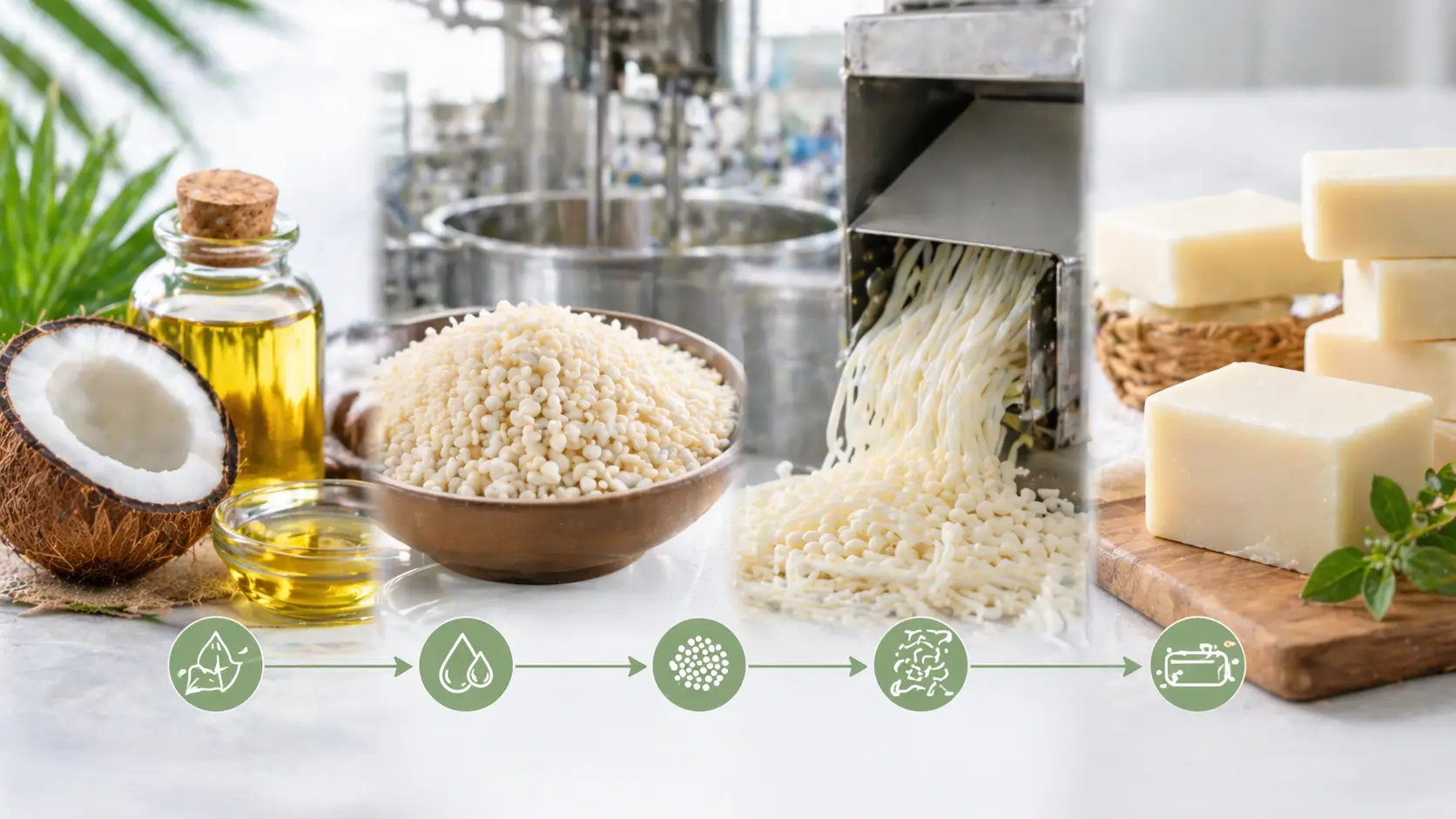
The story of soap begins with oleochemicals—chemicals derived from plant and animal fats. Common feedstocks include palm oil, palm kernel oil, coconut oil, tallow, and sunflower oil. These triglycerides undergo a process called saponification, where they are reacted with an alkali, typically sodium hydroxide for solid soap. In large-scale soap noodle production, this reaction is carried out under tightly controlled conditions in massive, continuous plants. The resulting soap mass is then purified, dried, and extruded through a die plate, emerging as thin, noodle-like strands that are easy to handle, transport, and remelt.
This centralized production of the soap base offers tremendous advantages. Oleochemical plants can optimize the saponification process for maximum yield and purity, efficiently manage by-products like glycerin, and implement rigorous quality control checks on the raw soap base before it ever reaches a soap finishing plant. According to industry trends, this specialization allows for greater sustainability, as large facilities can invest in energy-efficient technologies and source certified sustainable palm oil (CSPO) or other eco-friendly feedstocks at scale, a growing concern for American brands targeting environmentally conscious consumers.
What Are Soap Noodles? Defining the Core Product
Soap noodles are the dried, neutralized, and extruded form of soap before it is milled, plodded, stamped, and packaged into its final bar form. They appear as small, cylindrical pellets or flakes with a moisture content typically between 8-14%. This form factor is not arbitrary; it is designed for practicality. The noodle shape provides a high surface area, which facilitates faster and more uniform melting and mixing when combined with additives in the downstream finishing process. They are the literal building blocks of the modern soap industry.
Think of soap noodles as the "blank canvas" of the soap world. They consist primarily of sodium salts of fatty acids (the soap itself), water, and sometimes a small amount of glycerin left in for its humectant properties. At this stage, they are generally uncolored and unfragranced, though specialty pre-colored or super-fatted variants exist. This neutrality is their greatest asset, offering manufacturers unparalleled flexibility to create a vast array of final products—from a simple, pure glycerin transparent soap to a complex, exfoliating, and triple-milled luxury bar—all from the same foundational material.
Key Benefits of Using a Pre-Made Soap Base
The adoption of soap noodles as a primary raw material confers significant operational and strategic benefits to soap manufacturers. First and foremost is consistency. By sourcing a standardized base, manufacturers eliminate the variability inherent in saponifying different batches of oils. Every batch of noodles from a reputable supplier like oleochemicalsasia.com will have identical fatty acid composition, pH, and performance characteristics, ensuring the final bar lathers, cleans, and feels the same every time. This is non-negotiable for building brand trust and loyalty.
Secondly, soap noodles dramatically improve production efficiency and flexibility. A finishing plant does not need the large, space-intensive, and potentially hazardous saponification tanks and associated chemical handling infrastructure. Production becomes a melting, mixing, and forming operation, which requires less space, less specialized labor, and allows for quicker changeovers between product lines. This enables manufacturers, especially small to medium-sized enterprises (SMEs) and private labelers, to respond rapidly to market trends with lower capital investment and reduced risk.
Types and Specifications of Soap Noodles
Not all soap noodles are created equal. They are engineered for specific end-use applications, and their specifications are critical for manufacturers to understand. The primary differentiators are the fatty acid composition, total fatty matter (TFM), and additives. Toilet Soap Noodles typically have a TFM of 78-80% and are formulated from a blend of oils like palm and coconut to balance hardness, lather, and cleansing. Laundry Soap Noodles may have a lower TFM and include builders for enhanced cleaning power.
For the cosmetic and specialty soap market, more refined options are available. Glycerin Enriched Soap Noodles retain more natural glycerin from the saponification process or have it added back, resulting in a bar that is milder and more moisturizing. Transparent Soap Noodles are produced with solvents like sugar or alcohol to create a crystal-clear base. There are also vegan soap noodles made exclusively from plant oils, and TFM 82% soap noodles which offer a higher concentration of soap for a more premium feel. Understanding these specifications—available on technical data sheets (TDS)—is key to selecting the right base for a target product profile.
Applications in Modern Soap Manufacturing
The application of soap noodles in a finishing plant is a streamlined process. The noodles are first melted in a crutcher or mixer. At this molten stage, all desired additives are incorporated. This includes fragrances and essential oils, colorants (pigments or dyes), opacifiers (like titanium dioxide), skin-benefiting additives (such as shea butter, oatmeal, or vitamin E), exfoliants (pumice, seeds), and preservatives. The mixture is then homogenized to ensure even distribution before being cooled, extruded as a continuous log, cut, stamped into shape, and packaged.
This model empowers a wide spectrum of businesses. Large multinational brands use it for the efficient, global production of their flagship lines. Artisan and "craft" soap makers, who may start with a melt-and-pour soap base (a pre-made, often transparent version of noodles), can focus on creative designs and niche marketing without needing a chemistry lab. Private label manufacturers can offer clients a menu of base options (e.g., organic, sensitive skin, high-lather) to build custom brands quickly and reliably, a service highly valued in the American contract manufacturing sector.
Sourcing and Quality Considerations
Sourcing high-quality soap noodles is the single most important factor in determining the quality of the final soap bar. Manufacturers must partner with reliable oleochemical suppliers who can provide consistent product, comprehensive documentation, and traceability. Key documents include the Certificate of Analysis (CoA), which confirms the batch meets specifications for TFM, moisture, free alkali, and chloride content, and the Safety Data Sheet (SDS/MSDS) for safe handling and storage.
For the American market, additional considerations are paramount. There is a growing demand for soap noodles derived from sustainably sourced palm oil (RSPO certified) and for bases free from SLS, SLES, and parabens. Suppliers that can offer these specialized products, like oleochemicalsasia.com, are well-positioned. Furthermore, logistical reliability, technical support, and the supplier's ability to provide custom formulations for unique applications are critical differentiators in establishing a successful and resilient supply chain.
Conclusion
From raw oleochemicals to the finished bar on the store shelf, soap noodles are the indispensable link that makes modern, efficient, and high-quality soap manufacturing possible. They encapsulate the complex chemistry of saponification into a versatile, easy-to-use format, freeing manufacturers to innovate in design, marketing, and brand building. As consumer preferences in America continue to evolve towards sustainability, transparency, and performance, the role of the specialized soap base supplier becomes even more crucial. By understanding the types, benefits, and specifications of soap noodles, manufacturers can make informed sourcing decisions that drive product excellence and business growth.
Disclaimer: This article is for informational and market insight purposes only. It is not intended as technical, safety, or professional advice. The information presented regarding product specifications, applications, and processes is general in nature. We strongly advise all readers and businesses to independently verify any information with qualified experts, consult official product documentation such as Safety Data Sheets (SDS/MSDS), and contact our technical team or relevant professionals for guidance on specific applications, formulations, and regulatory compliance.
Leave a Comment