
Introduction
Rice is the staple food for over half the world's population, yet in the context of the global metabolic health crisis—characterized by rising rates of Type 2 Diabetes and obesity—polished white rice has come under intense scrutiny. As a rapidly digestible carbohydrate with a high Glycemic Index (GI), refined rice contributes significantly to postprandial glucose spikes. For the food industry, this presents a critical reformulation challenge: how to deliver the familiarity and versatility of rice without the metabolic penalty.
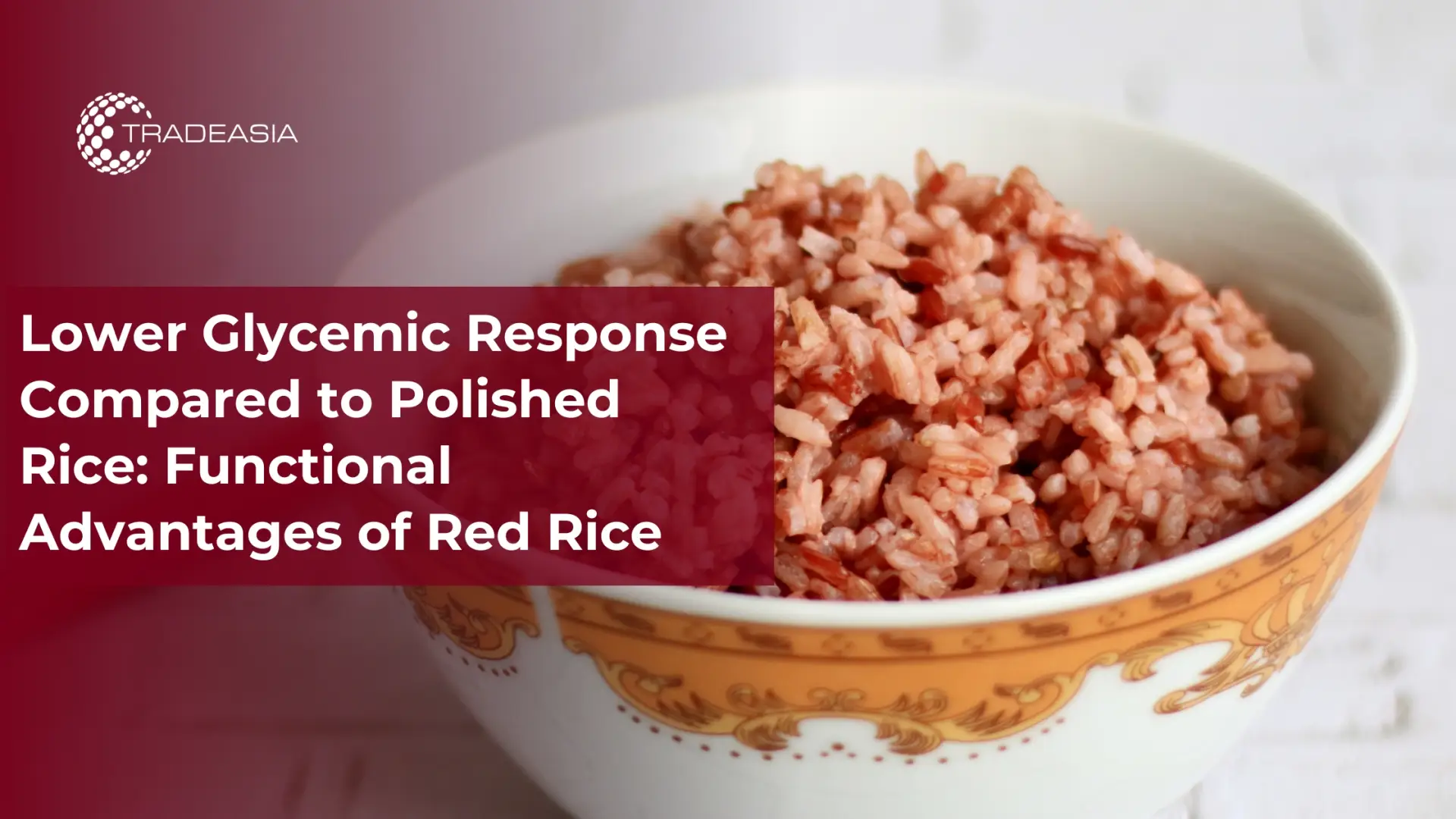
Red Rice (Oryza sativa L.) has emerged as the premier functional solution. Distinguished by its anthocyanin-rich pericarp (bran layer), red rice is not merely a "healthier" alternative; it is a bio-functional grain that fundamentally alters the kinetics of starch digestion. Unlike polished white rice, which functions as pure energy, red rice functions as a "Slow-Carb" Matrix. It leverages physical encapsulation, enzyme inhibition, and resistant starch formation to moderate blood sugar response. This white paper explores the physiological mechanisms and formulation advantages that position red rice as a strategic ingredient for the next generation of metabolic-friendly foods.
Whole Grain Structure: The "Botanical Barrier"
To understand the functional advantage of red rice, one must analyze the architecture of the grain. Polished white rice is essentially pure endosperm—a packet of easily accessible starch granules (amylose and amylopectin) stripped of protection. Red rice, however, retains its bran layer (pericarp), testa, and germ. This intact structure plays a critical functional role known as "Physical Encapsulation."
The fibrous bran layer acts as a physical barrier to human digestive enzymes. When red rice is consumed, the digestive enzyme $\alpha$-amylase cannot immediately access the starch granules housed inside the endosperm. It must first navigate the fiber matrix.
-
Delayed Gelatinization: During cooking, the bran layer restricts water uptake and granule swelling. This results in a starch structure that is less gelatinized (less "cooked out") than white rice, retaining a higher degree of crystalline order.
-
The "Ileal Brake": Because the starch is physically trapped, it travels further down the digestive tract before being broken down. This stimulates the "Ileal Brake" mechanism, signaling satiety to the brain and slowing gastric emptying, which physically limits the rate at which glucose enters the bloodstream.
Glycemic Index and Blood Sugar Impact
The definitive metric for carbohydrate quality is the Glycemic Index (GI). Polished white rice typically falls into the High GI category (GI > 70, often reaching 85+), causing rapid spikes in blood glucose and subsequent insulin surges. Red rice is generally classified as a Low-to-Medium GI grain (GI 55–60).
This reduction is not trivial; it transforms the metabolic impact of the meal.
-
Resistant Starch (RS): Red rice contains higher levels of Resistant Starch Type 1 (physically inaccessible) and Type 3 (retrograded amylose). These fractions resist digestion in the small intestine and ferment in the colon, acting as a prebiotic.
-
Insulin Sensitivity: By blunting the glucose spike, red rice reduces the demand on the pancreas to secrete insulin. For food manufacturers formulating for the "Diabetic-Friendly" or "Metabolic Wellness" segments, this allows for the creation of carbohydrate-based meals that fit within strict glycemic load parameters, offering a solution that artificial fibers cannot mimic.
The Chemical Blockade: Synergistic Bioactive Inhibition
Beyond the physical barrier of fiber, red rice possesses a unique chemical advantage: Enzyme Inhibition. The red color of the bran comes from Proanthocyanidins and Anthocyanins, powerful phenolic compounds that act as natural inhibitors of carbohydrate-digesting enzymes.
Recent food chemistry research has demonstrated that these polyphenols bind to the active sites of alpha-glucosidase and alpha-amylase.
-
The Mechanism: Ideally, these enzymes latch onto starch chains and snip them into glucose. However, the phenolic compounds in red rice effectively "gum up" the enzyme's active site or alter its shape (allosteric inhibition).
-
The Result: Even the starch that is accessible is broken down more slowly because the enzymatic machinery is working at reduced efficiency. This synergy between the physical fiber barrier and the chemical phenolic blockade enhances the functional value of red rice far beyond what its macronutrient profile alone would suggest. It transforms the grain into a bioactive delivery system for metabolic control.
Low-GI and Functional Grain Bowls
The functional properties of red rice have driven its explosion in the Ready-To-Eat (RTE) and retort pouch sectors. In "Ancient Grain" bowls or "Metabolic Balance" meals, red rice offers superior processing tolerance.
-
Retort Stability: White rice often turns mushy or pasty after the high-heat sterilization of retorting. The bran layer of red rice reinforces the grain integrity, ensuring distinct, separate kernels even after thermal processing. This provides a premium "al dente" texture that consumers associate with quality.
-
Satiety Positioning: The firmer texture of red rice requires more chewing (oral processing). This extends the eating time and increases the release of saliva and satiety signals before the food even reaches the stomach. Manufacturers are leveraging this to position red rice products not just for blood sugar control, but for Weight Management and satiety support.
The "Clean Label" Texturizer
In processed foods, red rice flour is increasingly used as a functional ingredient in gluten-free baking and crackers. Unlike refined rice flour, which can create a dry or gritty crumb, red rice flour brings a subtle, nutty flavor and a darker, more wholesome color profile.
-
Natural Coloring: It allows brands to eliminate artificial brown colorants (like caramel color) in crackers or breads, using the natural anthocyanins of the grain to provide a "whole wheat" visual appeal in a gluten-free matrix.
-
Label Appeal: It supports claims like "Whole Grain," "Source of Fiber," and "Contains Natural Antioxidants" without reliance on isolated fibers or modified starches. This aligns perfectly with the "Clean Label" strategy, where consumers demand short, recognizable ingredient lists.
Relevance in Modern Functional Food Systems
As global health guidelines shift from demonizing carbohydrates to distinguishing between "fast" and "slow" carbs, red rice stands at the intersection of tradition and technology. It bridges the gap between the cultural staple of rice and the modern requirement for metabolic performance.
For the food manufacturer, red rice is a strategic asset. It allows for the reformulation of staple foods—from risottos to breakfast porridges—into functional products that actively support health. By offering measurable benefits for blood sugar control, improved insulin sensitivity, and sustained energy release, red rice is not just an alternative to white rice; it is an upgrade.
Conclusion
The shift toward Red Rice is more than a trend; it is a functional necessity in a world facing a metabolic health crisis. Its unique "Slow-Carb" architecture—built on physical fiber encapsulation and chemical enzyme inhibition—offers a proven method to lower the glycemic response of staple foods.
For brands, the opportunity lies in leveraging this functionality. Whether used in a retort grain bowl for the diabetic market, a high-satiety snack bar, or a gluten-free bakery blend, red rice delivers the physiological benefits consumers need with the clean label they demand.
Source High-Functionality Grains
At Food Additives Asia, we understand that not all rice is created equal. The functional value of red rice depends on the integrity of the bran layer and the quality of the milling process. We specialize in sourcing premium Red Rice varieties selected for their bioactive density and processing stability.
Reformulate for metabolic health.
We invite you to explore our portfolio of functional grains. Visit our website to review technical specifications, GI data, and processing parameters. Submit your commercial inquiry today to secure a supply of high-performance red rice that elevates your product's health proposition.
Explore Our Red Rice Solutions & Inquire at foodadditivesasia.com