Introduction Lauric Acid
The global Lauric Acid supply chain is undergoing a period of structural change as oleochemical demand expands across home and personal care, food, pharmaceuticals, and industrial formulations. By 2026, Lauric Acid will remain a core saturated fatty acid for surfactants, esters, and specialty oleochemicals, but procurement dynamics, sustainability expectations, and logistics risks will look very different from a decade ago. Stakeholders across the value chain must understand where volumes are produced, how they move, and which partners can help manage volatility.
Lauric Acid, also known as dodecanoic acid (C12), is primarily derived from natural oils rich in medium-chain triglycerides, especially coconut oil and palm kernel oil. Its unique balance of chain length, melting point, and reactivity makes it a preferred building block for soaps, detergents, personal care ingredients, and food emulsifiers. As brands pivot toward bio-based and renewable raw materials, Lauric Acid and related oleochemicals are expected to gain share versus petrochemical alternatives, reinforcing the need for resilient and transparent supply chains.
This article provides a detailed outlook for the Lauric Acid supply chain to 2026 from a global perspective, with a focus on oleochemical applications. It examines market size and growth, feedstock and production hubs, key cost drivers, and the role of specialized distributors and solution providers such as chemtradeasia in connecting buyers with reliable Lauric Acid suppliers. The objective is to support procurement, supply chain, and technical teams with structured insights that inform sourcing strategies and risk management.
Global Lauric Acid Market Overview to 2026
The global Lauric Acid market is closely linked to the broader fatty acids and oleochemicals industry, which has been growing steadily at a mid-single-digit CAGR. Various industry analyses estimate that the global Lauric Acid market size was in the low single-digit billion USD range in the early 2020s, driven largely by applications in soaps and detergents, cosmetics, food ingredients, and industrial esters. By 2026, demand for Lauric Acid is expected to grow in line with or slightly above GDP in most regions, supported by rising hygiene standards and expanding middle-class consumption, particularly in Asia-Pacific and Africa.
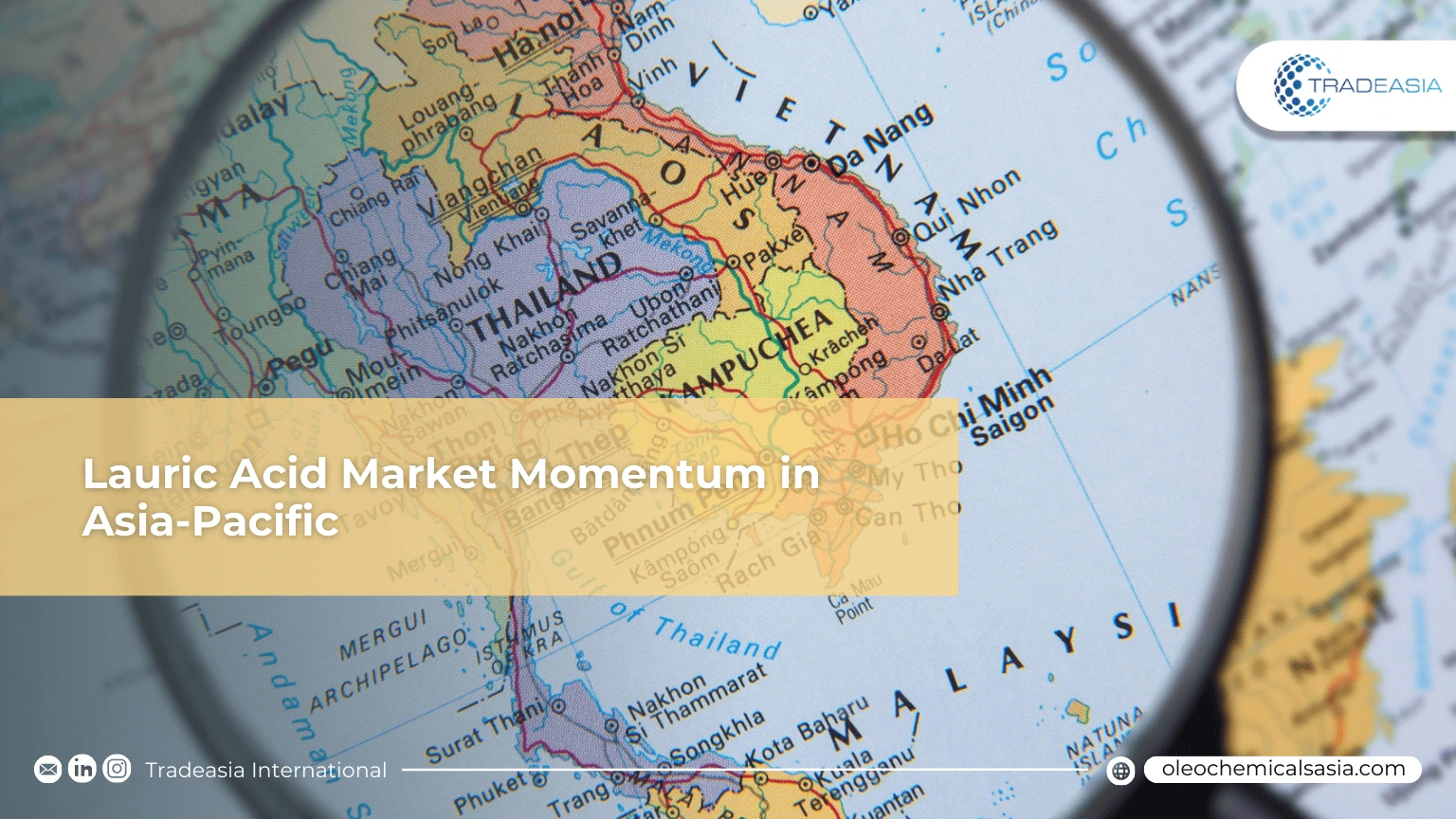
One of the defining characteristics of the Lauric Acid market is its geographic imbalance between production and consumption. Feedstock-rich countries in Southeast Asia, particularly Indonesia, Malaysia, and the Philippines, dominate supply due to abundant palm kernel oil and coconut oil. In contrast, major demand centers include not only Asia but also Europe, North America, and Latin America, where downstream manufacturers convert Lauric Acid into surfactants, personal care ingredients, and food additives. This creates a structurally trade-intensive market, making logistics performance, freight costs, and port infrastructure critical to overall supply chain resilience.
By 2026, several macro trends will shape Lauric Acid demand. First, the continued shift from bar soaps to liquid and specialized cleansers will increase the need for tailored surfactant systems, many of which rely on Lauric Acid-based derivatives. Second, regulatory and consumer pressure for biodegradable, low-toxicity ingredients will favor oleochemical solutions over some petrochemical counterparts. Third, food and nutraceutical applications, such as medium-chain triglyceride (MCT) oils and specialty fats, will support additional Lauric Acid consumption. However, the market will also face headwinds, including feedstock price volatility, evolving trade policies, and sustainability certification requirements that can influence both cost and supplier selection.
Feedstock, Production Hubs, and Cost Drivers
The Lauric Acid supply chain begins with two primary feedstocks: palm kernel oil (PKO) and coconut oil. PKO is predominantly produced in Indonesia and Malaysia, while coconut oil production is concentrated in the Philippines, Indonesia, India, and a few other tropical countries. These oils are processed via hydrolysis or splitting to generate mixed fatty acids, which are then fractionated to isolate Lauric Acid and its co-products such as myristic, palmitic, and stearic acids. The concentration of feedstock in a limited number of countries introduces inherent geographic and climate-related risk into the Lauric Acid supply chain.
Production hubs for Lauric Acid and related oleochemicals are heavily clustered in Southeast Asia. Large integrated facilities in Indonesia and Malaysia convert PKO into fatty acids, fatty alcohols, and glycerin, often supplying global customers under long-term contracts. Secondary processing and refining capacities exist in China, India, Europe, and the United States, where imported crude or distilled fatty acids may be further purified or transformed into derivatives. The cost structure of Lauric Acid production is driven by feedstock prices (often the single largest component), energy and utilities, labor, and capital-intensive fractionation equipment.
From a cost driver perspective, the most significant variable is the price of PKO and coconut oil, which can fluctuate due to weather patterns (such as El Niño events), disease outbreaks affecting plantations, fertilizer and labor costs, and policy decisions around biofuel mandates that compete for the same feedstock. Freight rates, particularly for containerized and bulk liquid shipments, also play a major role, as seen during the COVID-19 pandemic when logistics bottlenecks sharply increased delivered costs. Currency movements between producer countries and key import markets further influence competitiveness. To manage these variables, many buyers work with experienced intermediaries like chemtradeasia, who monitor feedstock markets, maintain multi-country sourcing options, and optimize shipment planning to balance cost and reliability.
Lauric Acid in Oleochemical Applications and Benefits
Within the oleochemical value chain, Lauric Acid is prized for its versatility and performance characteristics. Its C12 chain length offers a favorable balance of hydrophilicity and lipophilicity, making it an ideal precursor for surfactants, soaps, and esters. In home and personal care, Lauric Acid is used to produce sodium laurate and other soaps with good foaming and cleansing properties. It also serves as a key raw material for sulfonated and ethoxylated surfactants used in shampoos, body washes, dishwashing liquids, and laundry detergents. These applications benefit from Lauric Acid’s biodegradability and compatibility with other fatty acids and surfactant systems.
In industrial and technical applications, Lauric Acid is esterified with various alcohols to produce lubricants, plasticizers, and specialty esters used in metalworking fluids, PVC processing, and textile auxiliaries. Its relatively low melting point and oxidative stability contribute to favorable handling and performance profiles. In the food industry, Lauric Acid is present as part of MCT oils and specialty fats used in confectionery, bakery, and nutritional products. While food-grade applications require stringent quality and safety standards, the underlying advantage remains the same: Lauric Acid and its derivatives provide functional benefits such as improved texture, stability, and mouthfeel, derived from a renewable, plant-based source.
By 2026, the benefits of Lauric Acid in oleochemical applications will be increasingly evaluated through the lens of sustainability and regulatory compliance. Brands and manufacturers are prioritizing ingredients that are RSPO-certified (for palm-derived products), traceable, and produced with lower greenhouse gas emissions. Lauric Acid’s origin from renewable oils gives it an inherent advantage over petrochemical alternatives, but the supply chain must still address concerns about land use, biodiversity, and social impacts. Suppliers and distributors that can offer certified Lauric Acid, transparent chain-of-custody documentation, and consistent quality will be better positioned to serve global customers in regulated and consumer-facing sectors.
Supply Chain Strategies and the Role of chemtradeasia
Managing a global Lauric Acid supply chain requires more than simply selecting a low-cost producer. Buyers must balance price, quality, sustainability, logistics performance, and risk diversification. One key strategy is multi-sourcing, where procurement teams qualify multiple Lauric Acid suppliers across different geographies (for example, Indonesia, Malaysia, and the Philippines) to reduce exposure to localized disruptions. Another strategy is to align contract structures with risk appetite, combining spot purchases with medium-term agreements that provide volume security and partial price visibility. Inventory positioning, including the use of regional storage hubs, can also buffer against shipping delays and seasonal demand peaks.
Specialized trading and distribution companies such as chemtradeasia play a central role in implementing these strategies. Operating as a link between upstream Lauric Acid producers and downstream users in detergents, personal care, food, and industrial sectors, chemtradeasia aggregates demand, negotiates with multiple mills and oleochemical plants, and manages international logistics. This enables smaller and mid-sized customers to access competitive pricing and diversified supply options that might otherwise be difficult to achieve directly. For large multinationals, working with a partner like chemtradeasia can supplement direct sourcing by providing alternative supply routes, regional stock points, and market intelligence.
Beyond basic trading, chemtradeasia and similar partners increasingly provide value-added services that support more sophisticated supply chain management. These may include technical documentation and specification matching (for example, ensuring acid value, iodine value, and color meet customer requirements), assistance with regulatory and customs compliance, and support in sourcing certified or specialty grades such as food-grade or pharmaceutical-grade Lauric Acid. By 2026, digitalization is expected to further transform this space, with online platforms, real-time shipment tracking, and data-driven forecasting helping buyers optimize procurement. In this context, a partner with both on-the-ground presence in producer countries and global customer reach can significantly enhance resilience and responsiveness in Lauric Acid sourcing.
Conclusion
As the global oleochemicals industry evolves, Lauric Acid will remain a foundational building block for a wide range of applications, from everyday soaps and shampoos to specialized industrial esters and food ingredients. The period up to 2026 is likely to see steady demand growth, particularly in emerging markets where hygiene and personal care consumption are rising. At the same time, the market will face increased scrutiny on sustainability, traceability, and regulatory compliance, pushing suppliers and buyers alike to raise standards in sourcing and supply chain transparency. Those who anticipate these shifts and build robust procurement strategies will be better positioned to secure competitive and reliable Lauric Acid supply.
Feedstock concentration in Southeast Asia, exposure to agricultural and climate risks, and ongoing logistics challenges underscore the importance of proactive risk management. Multi-sourcing, strategic inventory placement, and close collaboration with experienced intermediaries will be essential tools for managing price volatility and supply disruptions. Partners such as chemtradeasia can provide not only access to a diversified network of Lauric Acid producers but also market intelligence, documentation support, and logistics coordination that simplify global sourcing for both large and mid-sized buyers. By combining technical understanding of Lauric Acid applications with strong commercial and operational capabilities, supply chain stakeholders can navigate the complexities of the 2026 landscape more effectively.
This article is intended solely for informational and market insight purposes and does not constitute technical, safety, regulatory, or other professional advice. Readers should independently verify all information with qualified experts, consult official documentation such as MSDS/SDS and relevant standards, and contact appropriate technical or commercial teams, including ours where applicable, before making decisions or using Lauric Acid in specific applications.


Leave a Comment