
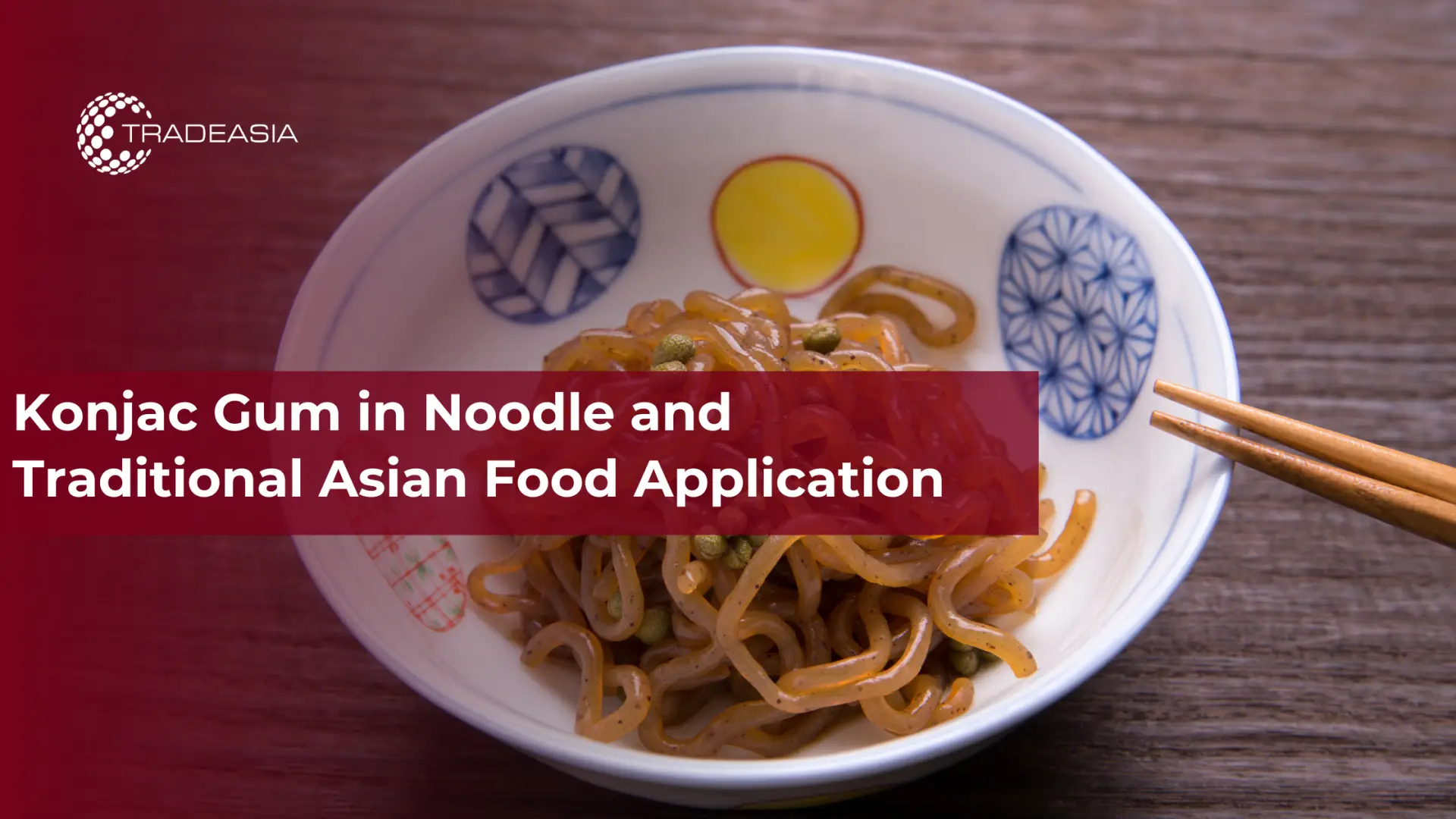
Creating Unique Texture and Functional Benefits in Shirataki and Beyond
Introduction: The Transformation of Noodles from Staple Food to Functional Platform
Noodles have long held a central position in Asian food systems, functioning not only as a dietary staple but also as a cultural symbol deeply embedded in daily life, tradition, and culinary identity. Across countries such as China, Japan, Indonesia, Thailand, and Vietnam, noodles are consumed in countless forms, ranging from wheat-based ramen and udon to rice vermicelli and mung bean glass noodles. Historically, the primary drivers of noodle production were affordability, availability of raw materials, and cultural preferences. However, in the modern global food landscape, the role of noodles has expanded far beyond these traditional dimensions.
Over the past two decades, the global food industry has undergone a significant shift toward health-conscious consumption, driven by rising awareness of obesity, metabolic disorders, and lifestyle-related diseases. This shift has created new expectations for staple foods, including noodles, which are increasingly required to offer not only convenience and taste but also nutritional and functional benefits. As a result, manufacturers are exploring innovative ingredients that can transform traditional products into platforms for health-oriented and value-added formulations.
Within this evolving landscape, konjac gum has emerged as a highly strategic ingredient that bridges traditional Asian food practices with modern functional food innovation. Derived from the tuber of the konjac plant (Amorphophallus konjac), konjac gum is rich in glucomannan, a soluble dietary fiber with exceptional water-binding and gelling properties. While konjac has been used for centuries in East Asian cuisines, particularly in Japan and China, its industrial applications have expanded significantly, especially in noodle production.
Products such as Shirataki noodles have gained international recognition as low-calorie, low-carbohydrate alternatives to traditional noodles, aligning closely with dietary trends such as keto, low-carb, and weight management. However, the relevance of konjac gum extends far beyond shirataki. It plays a critical role in a wide range of noodle formulations and traditional Asian foods, offering unique textural properties, improved stability, and significant nutritional advantages.
This article provides a comprehensive and in-depth analysis of konjac gum in noodle and traditional Asian food applications, examining its functional mechanisms, its role in texture and gel elasticity, its contribution to low-calorie product development, and its commercial implications for manufacturers and export-oriented businesses. By understanding how konjac gum operates at both a molecular and industrial level, stakeholders can better leverage its potential in a rapidly evolving global food market.
The Molecular Structure of Konjac Gum: Foundation of Functionality
Konjac gum is primarily composed of glucomannan, a high-molecular-weight polysaccharide consisting of β-1,4-linked glucose and mannose units in a ratio of approximately 1:1.6. This linear molecular structure is responsible for the exceptional functional properties that distinguish konjac gum from other hydrocolloids commonly used in the food industry.
One of the most notable characteristics of glucomannan is its extraordinary water absorption capacity. Konjac gum can absorb up to 50 times its own weight in water, forming highly viscous solutions even at low concentrations. This property is critical in noodle applications, where water retention directly influences texture, mouthfeel, and structural integrity. Unlike starch-based systems, which rely on gelatinization and retrogradation, konjac gum forms a stable network that binds water effectively without significant syneresis.
Another defining feature of konjac gum is its ability to form thermally stable gels in the presence of alkaline agents such as calcium hydroxide. This process involves the deacetylation of glucomannan, which allows the polymer chains to interact more closely and form a strong, elastic network. The resulting gel is resistant to heat and mechanical stress, making it suitable for applications that require durability during cooking, packaging, and transportation.
In addition to its standalone functionality, konjac gum exhibits strong synergistic interactions with other hydrocolloids, including carrageenan, xanthan gum, and locust bean gum. These interactions can significantly enhance gel strength, elasticity, and stability, enabling manufacturers to tailor the properties of noodle products to specific requirements. For example, combining konjac gum with carrageenan can produce gels with improved firmness and reduced brittleness, which is particularly useful in hybrid noodle formulations.
From a nutritional perspective, glucomannan is classified as a soluble dietary fiber that is not fully digested in the human gastrointestinal tract. This contributes to its low caloric value and its ability to promote satiety, making it an attractive ingredient for health-focused food products. The combination of functional and nutritional properties positions konjac gum as a unique ingredient that can address both technical and market-driven challenges in noodle production.
Gel Elasticity and Texture Engineering: The Core of Konjac-Based Noodles
Texture is arguably the most critical attribute in noodle products, influencing not only consumer satisfaction but also the perceived quality and authenticity of the product. In traditional noodles, texture is typically derived from gluten networks in wheat-based products or starch gelatinization in rice-based varieties. In contrast, konjac-based noodles rely on a gel matrix formed by glucomannan, which creates a fundamentally different textural profile.
The elasticity of konjac gels is one of their most distinctive features. Unlike brittle gels that fracture under stress, konjac gels exhibit high flexibility and resilience, allowing them to stretch and return to their original shape without breaking. This elasticity is a result of the strong yet flexible network formed by glucomannan chains, which can absorb and dissipate mechanical energy effectively.
In practical terms, this means that konjac-based noodles can withstand handling, cooking, and consumption without losing their structural integrity. The noodles maintain a firm, slightly chewy texture that is often described as “springy” or “bouncy.” While this texture differs from that of traditional wheat noodles, it has become a defining characteristic of konjac-based products and is appreciated by consumers seeking alternative eating experiences.
The degree of elasticity can be controlled by adjusting formulation parameters such as konjac concentration, pH, and the presence of co-gelling agents. Higher concentrations of konjac gum generally result in firmer and more elastic gels, while lower concentrations produce softer textures. The addition of calcium hydroxide not only facilitates gel formation but also influences the firmness and stability of the final product.
Temperature also plays a role in texture development. Unlike gelatin-based systems, which are thermoreversible, konjac gels are heat-stable once formed. This means that konjac noodles retain their structure even when exposed to high cooking temperatures, making them suitable for a wide range of culinary applications, including boiling, stir-frying, and hot pot dishes.
Low-Calorie Noodles: Redefining Staple Foods in Health-Conscious Markets
One of the most significant contributions of konjac gum to the noodle industry is its role in enabling the production of low-calorie and low-carbohydrate products. Traditional noodles, particularly those made from wheat or rice, are rich in carbohydrates and contribute a substantial amount of calories to the diet. While these products remain popular, there is a growing demand for alternatives that align with modern dietary preferences.
Konjac-based noodles, particularly Shirataki noodles, offer a compelling solution to this demand. Because glucomannan is not digested in the same way as conventional carbohydrates, these noodles provide minimal caloric value—often less than 20 calories per serving. This represents a dramatic reduction compared to traditional noodles, which typically contain 150 to 200 calories per serving.
The low-calorie nature of konjac noodles makes them particularly attractive for consumers following weight management programs, ketogenic diets, or low-carb lifestyles. In addition to calorie reduction, the high fiber content of glucomannan contributes to a feeling of fullness, which can help reduce overall food intake. This dual benefit of low energy density and high satiety is a key factor driving the popularity of konjac-based products in global markets.
From a manufacturing perspective, the challenge lies in balancing these nutritional benefits with sensory attributes. Konjac noodles have a neutral flavor and a distinct texture that may differ from consumer expectations based on traditional noodles. To address this, manufacturers often incorporate flavoring agents, sauces, or hybrid formulations that combine konjac with other ingredients to enhance palatability.
The ability to position konjac noodles as both a traditional product and a modern health solution creates significant opportunities for market expansion. In Western markets, where awareness of Asian foods has increased, konjac noodles are often marketed as innovative and functional products, appealing to health-conscious consumers seeking alternatives to conventional staples.
Shirataki and Beyond: Expanding Product Innovation in Noodle Applications
While shirataki noodles represent the most well-known application of konjac gum, the scope of innovation in this category extends far beyond this traditional product. Shirataki noodles are typically produced by mixing konjac flour with water and calcium hydroxide, then shaping the mixture into thin strands and setting it into a gel. The noodles are usually packaged in water to maintain their texture and prevent dehydration.
In recent years, manufacturers have introduced a wide range of variations on the traditional shirataki concept. These include flavored noodles, fortified versions with added nutrients, and blended products that combine konjac with wheat, rice, or legume flours. These innovations aim to improve sensory properties while retaining the functional benefits of konjac.
Hybrid noodles, in particular, represent a significant area of growth. By combining konjac gum with other ingredients, manufacturers can create products that offer a more familiar texture while still reducing calorie content. For example, adding konjac to wheat-based noodles can enhance elasticity and reduce carbohydrate density, creating a product that appeals to both traditional and health-conscious consumers.
In Southeast Asia, konjac gum is increasingly being used in local noodle varieties and ready-to-eat meals. This reflects a broader trend toward incorporating functional ingredients into traditional foods, driven by changing consumer preferences and the influence of global health trends. The adaptability of konjac gum allows it to be integrated into diverse culinary contexts, from instant noodles to fresh pasta-like products.
Traditional Asian Foods: Beyond Noodles and Into Culinary Heritage
Although noodles are the most visible application of konjac gum, its use in traditional Asian foods extends far beyond this category. In Japan, konjac is used to produce konnyaku, a firm, gelatinous food that is often consumed in dishes such as oden. In China and Korea, similar products are used in soups, hot pots, and stir-fry dishes, valued for their texture and ability to absorb flavors.
These traditional applications highlight the versatility of konjac gum as a texturizing agent. Its ability to form stable, elastic structures makes it suitable for a wide range of products, from solid blocks to sliced or shredded formats. In many cases, konjac-based foods are appreciated not only for their texture but also for their perceived health benefits, particularly their low calorie content and high fiber levels.
The transition from traditional to industrial applications has been facilitated by advances in processing technology and increased standardization of konjac gum production. This has enabled manufacturers to scale up production while maintaining consistent quality, making it possible to meet the demands of both domestic and export markets.
Buyers and Market Dynamics: Regional Strength and Global Demand Expansion
The primary buyers of konjac gum in noodle and traditional food applications include Asian food manufacturers, particularly in countries where konjac has a strong cultural presence. These manufacturers rely on konjac gum for its functional performance, as well as its alignment with traditional culinary practices.
Export-oriented companies represent another important segment, particularly those targeting markets in North America, Europe, and the Middle East. In these regions, konjac-based products are often positioned as premium or functional foods, appealing to consumers seeking healthier alternatives.
The growing popularity of konjac noodles has also attracted interest from multinational food companies, which are exploring opportunities to incorporate konjac into new product formats. This is driving demand for high-quality konjac gum with consistent performance and reliable supply chains.
From a procurement perspective, buyers prioritize factors such as purity, viscosity, particle size, and microbial safety. As applications become more sophisticated, technical support and formulation expertise from suppliers are also becoming increasingly important.
Conclusion: A Strategic Ingredient for the Future of Noodles and Functional Foods
Konjac gum represents a unique convergence of tradition, functionality, and innovation in the global food industry. Its role in noodle applications, particularly in products like Shirataki noodles, demonstrates its ability to deliver distinctive texture while addressing modern dietary needs.
As consumer demand continues to shift toward healthier and more functional foods, the importance of ingredients like konjac gum is likely to increase. Its versatility, combined with its nutritional benefits and compatibility with large-scale production, makes it a valuable tool for manufacturers seeking to innovate and differentiate their products.
For buyers and producers, understanding the full range of konjac gum’s capabilities is essential for unlocking its potential in both traditional and emerging markets. In a rapidly evolving food landscape, konjac gum stands out as a strategic ingredient that can bridge the gap between heritage and modernity, delivering value across the entire supply chain.
For businesses seeking high-quality Konjac Gum or other food ingredients products and reliable sourcing solutions, visit foodingredientsasia.com for more information about specifications, applications, and supply capabilities. For direct inquiries, product details, or customized requirements, please contact food@chemtradeasia.com. Our team is ready to assist you with professional support and comprehensive solutions tailored to your needs.