Introduction
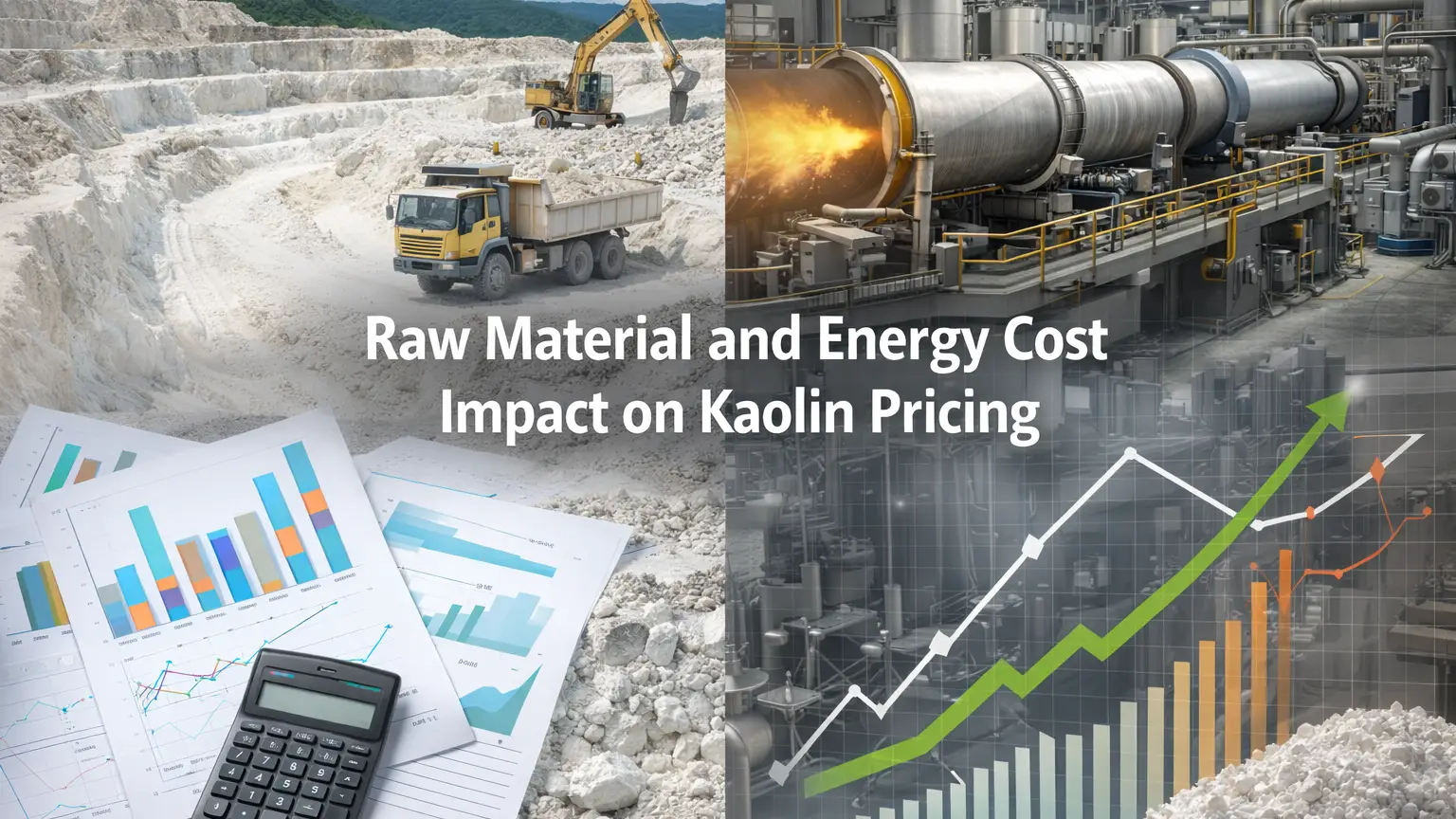
Raw material and energy costs play a central role in shaping kaolin pricing across global markets. As a key industrial mineral used in paper, ceramics, paints, plastics, rubber, and pharmaceuticals, kaolin pricing directly affects production planning and procurement strategies in multiple industries. What appears to be a simple white clay is, in reality, a product whose price reflects complex interactions between mining conditions, processing requirements, energy markets, and regional logistics.
For procurement managers, manufacturers, and product developers, understanding kaolin pricing factors has become increasingly important. Rising fuel costs, fluctuating ore quality, stricter environmental regulations, and global supply chain pressures have made kaolin market pricing more dynamic than in previous years. This article examines how raw material quality and energy consumption influence kaolin prices, with particular focus on hydrous and calcined kaolin products, and explains why these cost drivers matter for long-term sourcing decisions.
Kaolin Production and Cost Structure Overview
Kaolin production begins with the extraction of crude ore, followed by multiple beneficiation and processing stages designed to meet end-use specifications. After mining, crude kaolin is mixed with water to form a slurry, which then undergoes degritting, particle size classification, impurity removal, and drying.
Degritting removes coarse quartz and sand using screens and hydrocyclones. Particle size separation is achieved through centrifuges to ensure consistency and performance. Magnetic separation eliminates iron-bearing contaminants that affect brightness and color. The final stages involve filtration and thermal drying, typically using gas-fired systems.
Each step adds to the overall cost structure. Major cost components include mining operations, processing equipment, utilities such as water and electricity, labor, maintenance, environmental compliance, and transportation. Across most operations, raw materials and energy account for more than 60 percent of total kaolin production costs, making pricing highly sensitive to changes in these inputs.
Raw Material Costs as a Core Kaolin Price Driver
Raw material costs in kaolin production are closely tied to ore quality and reserve characteristics. High-purity kaolin deposits with naturally low levels of iron and titanium require less intensive processing, which helps stabilize production costs. In contrast, lower-grade deposits increase expenses due to longer processing cycles and higher consumption of water, chemicals, and energy.
As deposits mature, declining ore quality often leads to rising extraction and beneficiation costs. Additional mining depth, increased stripping ratios, and more complex processing steps all contribute to higher raw material expenses. Environmental management also adds to costs, particularly where water treatment, tailings handling, and land reclamation are required to meet regulatory standards.
These factors explain why raw material costs remain one of the most influential kaolin pricing drivers, especially in regions with aging mines or stricter environmental oversight.
Energy Costs and Their Direct Impact on Kaolin Pricing
Energy consumption is one of the most decisive elements in kaolin cost structure. Nearly every stage of kaolin processing relies on electricity or fuel, from crushing and grinding to classification and drying.
For hydrous kaolin, energy demand is concentrated in drying operations. Removing moisture from kaolin slurry to meet transport and storage specifications typically requires natural gas or fuel oil. Energy price fluctuations therefore have a direct effect on hydrous kaolin pricing.
Calcined kaolin carries an even higher energy burden. Calcination involves heating kaolin to temperatures around 1,000 to 1,050 degrees Celsius to alter its crystal structure and enhance brightness and opacity. This process consumes approximately 1 megawatt-hour of energy per tonne, making calcined kaolin particularly sensitive to fuel price volatility.
In addition to thermal energy, electricity is required for pumps, mills, centrifuges, and magnetic separators, while diesel fuels mining equipment and internal material handling. Regional energy cost differences strongly influence producer competitiveness and are often reflected in global kaolin price variations.
Transportation and Logistics Costs in Kaolin Supply
Transportation represents another significant component of kaolin pricing, particularly for export-oriented producers. Kaolin is shipped in bulk, big bags, or containers, depending on grade and application. Costs vary based on distance from mine to customer, fuel prices, and transport mode, including truck, rail, or sea freight.
Producers serving international markets face additional expenses related to port handling, packaging customization, storage, and freight insurance. For buyers, sourcing kaolin closer to end-use facilities can reduce delivered costs and exposure to fuel surcharges. Conversely, long-distance sourcing increases sensitivity to logistics disruptions and global freight rate fluctuations.
Market Conditions and Cost Pass-Through Dynamics
Whether rising raw material and energy costs translate into higher kaolin prices depends largely on market conditions. When supply is tight due to mine closures, permitting delays, or capacity constraints, producers have greater ability to pass costs through to customers. In more competitive segments such as paper and ceramics, pricing pressure often limits full cost recovery.
Long-term supply agreements help stabilize pricing for both producers and buyers, while spot purchases remain more exposed to short-term volatility. With global kaolin demand projected to grow at a moderate pace, producers increasingly focus on operational efficiency and value-added grades to protect margins as input costs rise.
Regional Differences in Cost Impact
Regional variations in energy prices, labor costs, and regulatory requirements create noticeable differences in kaolin pricing worldwide. Asia-Pacific benefits from relatively lower industrial energy costs, although regulatory uncertainty and mining restrictions can affect supply consistency. The United States offers stable supply from established deposits but faces higher reclamation and environmental compliance costs that can add 10 to 15 percent to production expenses. Europe experiences elevated energy and carbon-related costs, which impact overall competitiveness.
These regional dynamics explain why major supply hubs such as the southeastern United States and China continue to play a critical role in global kaolin markets despite differing cost structures.
Implications for Industrial Buyers and Manufacturers
For industrial buyers, managing kaolin price volatility requires a proactive sourcing approach. Diversifying suppliers across regions helps reduce exposure to localized cost shocks. Long-term contracts offer pricing stability, while close monitoring of energy markets and regulatory changes supports better forecasting.
Evaluating alternative kaolin grades, such as slurry versus dry or calcined products, can also provide cost flexibility without compromising performance. Strong technical collaboration with suppliers allows manufacturers to adjust formulations as input costs change, ensuring consistent product quality.
Working with experienced distributors like Chemtradeasia helps buyers navigate these challenges by offering access to reliable kaolin supply, regional sourcing options, and technical support tailored to specific applications. This approach supports cost control while maintaining operational continuity.
Conclusion
Raw material quality and energy consumption remain the primary forces shaping kaolin pricing across global markets. From mining and beneficiation to drying, calcination, and logistics, each stage of production is influenced by input costs that continue to fluctuate.
As energy markets evolve and environmental requirements tighten, kaolin market pricing trends will remain dynamic. For manufacturers and procurement teams, strategic sourcing, supplier diversification, and cost transparency are essential for long-term resilience.
By partnering with trusted suppliers and distributors such as Chemtradeasia, businesses gain the insight and supply reliability needed to manage kaolin price fluctuations effectively and maintain competitiveness in demanding industrial markets.
Leave a Comment