Introduction
From municipal water plants to paper mills and oilfields, polyaluminium chloride (PAC) has become one of the most widely used inorganic coagulants in modern industry. In the United States, tightening environmental regulations, growing demand for high-quality water, and the push for more efficient manufacturing processes have all accelerated the adoption of PAC-based solutions. As a result, this versatile chemical now plays a central role in both upstream production processes and downstream wastewater management.
For buyers, engineers, and plant managers, understanding where and how PAC is used is essential for optimizing both operational performance and compliance. Compared with traditional coagulants such as alum (aluminium sulfate) or ferric salts, PAC often delivers higher efficiency, lower sludge volumes, and better performance over a wider pH range. This has led to its broad deployment not only in water treatment, but also in sectors such as pulp and paper, textiles, mining, and oil & gas.
This article maps the journey of polyaluminium chloride from the factory floor to the finished product, with a focus on its most important applications in the U.S. market. It also highlights how reliable supply partners such as chemtradeasia.com support manufacturers and utilities with consistent quality, tailored grades, and logistics solutions that match demanding operational schedules.
Understanding Polyaluminium Chloride and Its Key Features
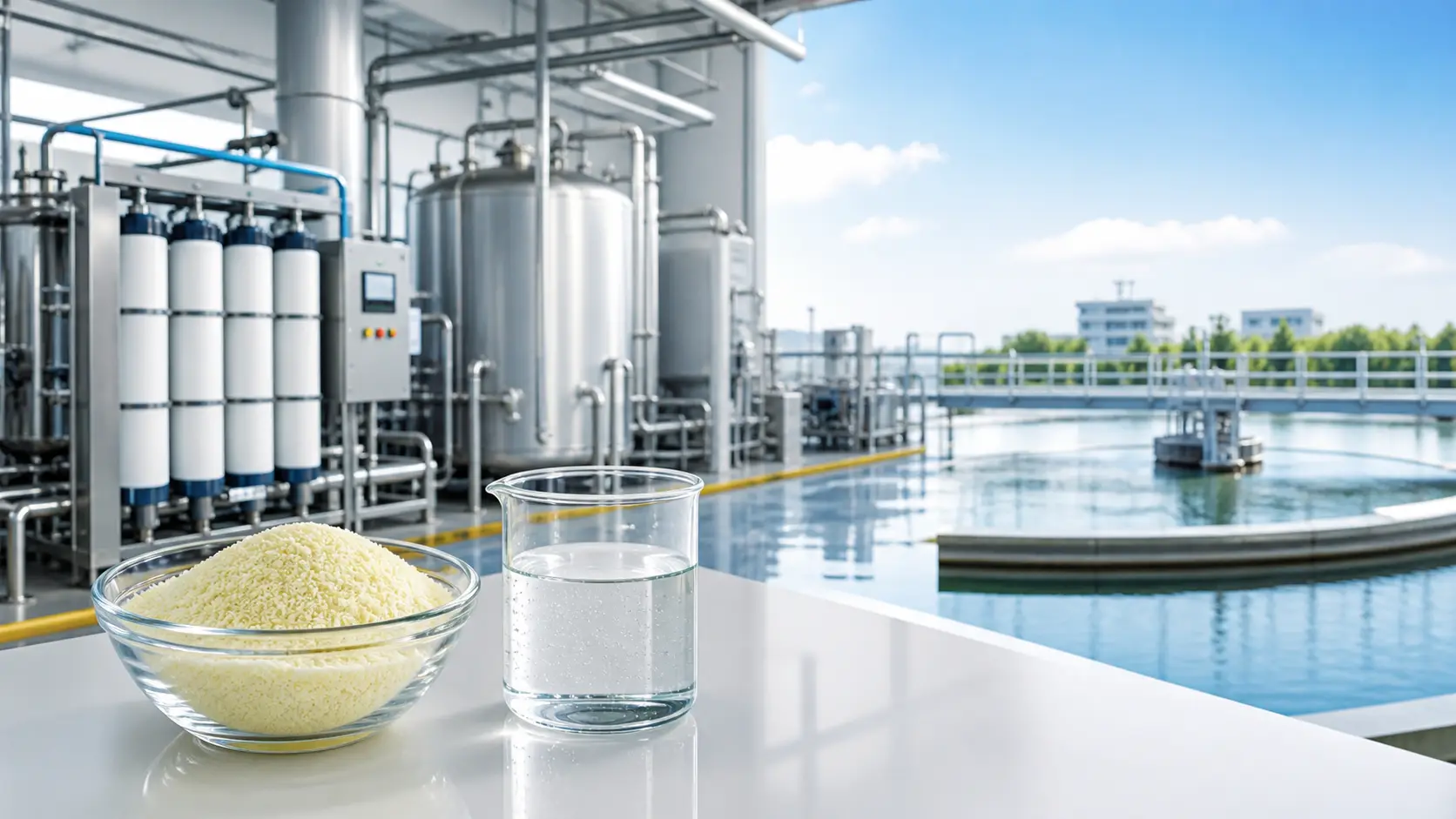
Polyaluminium chloride (PAC) is a pre-hydrolyzed inorganic polymeric coagulant, typically produced by reacting aluminium hydroxide or bauxite with hydrochloric acid under controlled conditions. The result is a family of products characterized by varying basicity (degree of neutralization), aluminium content, and impurity profiles. Commercial PAC is commonly supplied as a yellowish liquid or a light-yellow powder, with typical Al2O3 contents ranging from about 23–30% for liquid grades and 28–31% or higher for solid grades.
One of PAC’s defining technical advantages is its pre-hydrolyzed structure. Unlike alum, which must hydrolyze completely in water before forming effective coagulant species, PAC already contains polymerized aluminium complexes that are highly active at the point of use. This allows for more rapid floc formation, better performance at lower dosages, and effective operation across a broader pH window (often around 5.0–9.0, depending on the grade). These features are particularly valuable for U.S. plants facing fluctuating raw water quality, seasonal changes, or variable industrial effluents.
In practice, PAC products are differentiated by parameters such as basicity (often 40–90%), insoluble content, heavy metal limits, and viscosity for liquid grades. High-basicity PAC can offer stronger charge neutralization and better turbidity removal, while lower-basicity grades may be preferred in certain specialty applications. Suppliers like chemtradeasia.com typically offer multiple PAC specifications to align with different regulatory standards, including NSF/ANSI certifications for drinking water applications in the United States and technical grades for industrial use.
Water and Wastewater Treatment: The Largest PAC Application
Water and wastewater treatment is the single largest application area for polyaluminium chloride globally, and the U.S. is no exception. According to industry analyses, coagulants and flocculants for water treatment represent a multi-billion-dollar market in North America, driven by municipal utilities, industrial facilities, and private water service providers. PAC is widely used in both drinking water treatment and municipal wastewater treatment plants (WWTPs) as a primary coagulant for turbidity, color, and organic matter removal.
In drinking water plants, PAC is typically dosed in rapid-mix basins to destabilize colloidal particles, natural organic matter (NOM), and microorganisms. Its high charge density enables efficient coagulation at lower doses compared with alum, which can translate into reduced sludge generation and lower handling and disposal costs. Additionally, PAC can help control disinfection by-product (DBP) precursors by removing organic carbon prior to chlorination, supporting compliance with U.S. Environmental Protection Agency (EPA) regulations on trihalomethanes (THMs) and haloacetic acids (HAAs). Many U.S. utilities switching from alum to PAC report improved treated water clarity and more stable performance during raw water quality upsets.
In municipal and industrial wastewater treatment, PAC is used to remove suspended solids, phosphates, and certain heavy metals, as well as to improve sludge dewatering. Enhanced coagulation with PAC is often integrated into tertiary treatment steps to achieve low phosphorus discharge limits—an increasingly important requirement under nutrient management regulations in states such as Florida, Wisconsin, and Ohio. Industrial users, including food processors, metal finishers, and chemical plants, rely on PAC to meet stringent discharge permits and to optimize the performance of downstream biological treatment systems and membrane filtration units.
From a procurement standpoint, U.S. water operators prioritize consistent quality, secure supply, and technical support. Platforms such as chemtradeasia.com connect buyers with vetted PAC manufacturers, offering a range of liquid and solid grades suitable for different treatment configurations. Access to detailed technical data sheets, MSDS/SDS, and application guidance helps ensure that the chosen PAC grade aligns with plant design, raw water characteristics, and regulatory requirements.
PAC in Pulp, Paper, and Packaging Manufacturing
The pulp and paper industry is another major consumer of polyaluminium chloride, especially in North America where demand for packaging and tissue products remains strong. In paper mills, PAC serves as a multifunctional process chemical: it acts as a retention and drainage aid, a pitch and stickies control agent, and a coagulant for process water and effluent treatment. As U.S. mills modernize and shift toward higher recycled fiber content, PAC’s role in maintaining runnability and product quality has become even more critical.
Within the wet end of the paper machine, PAC improves the retention of fines, fillers, and additives, helping mills achieve desired sheet properties while reducing raw material losses. By neutralizing anionic trash and stabilizing charge balance, PAC supports more consistent formation and drainage, which can translate into higher machine speeds and reduced breaks. In packaging and board grades, this can yield tangible productivity gains, while in tissue and specialty grades, improved formation and cleanliness support premium product characteristics.
Pitch, stickies, and deposit control is another key application. Resins, adhesives, and contaminants from recycled fibers can lead to deposits on wires, felts, and dryer cans, causing defects and unplanned shutdowns. PAC helps agglomerate these materials, allowing them to be removed through filtration and cleaning systems rather than accumulating on equipment surfaces. Many mills use PAC in combination with other functional chemicals, such as cationic polymers and fixation agents, to create an integrated deposit control program.
On the environmental side, paper mills employ PAC in their internal water circuits and effluent treatment plants to remove suspended solids, color, and chemical oxygen demand (COD). As the U.S. industry faces ongoing pressure to reduce water consumption and improve effluent quality, PAC-based coagulation and flocculation remain central to closing water loops and meeting discharge permits. Suppliers accessible via chemtradeasia.com offer paper-grade PAC products optimized for low impurity levels and tailored basicity, enabling mills to fine-tune performance across different process stages.
Industrial and Specialty Applications Across U.S. Sectors
Beyond water utilities and paper mills, polyaluminium chloride is increasingly used across a wide range of U.S. industrial sectors. In the textile industry, PAC is employed in dyeing and finishing operations to clarify process water, remove color from dye-house effluents, and improve the efficiency of downstream biological treatment. Color removal is particularly important for facilities discharging to municipal sewers or sensitive receiving waters, where visible color and high COD can trigger regulatory scrutiny.
In the oil and gas sector, PAC finds application in produced water treatment, drilling wastewater, and refinery effluent management. Coagulation with PAC helps remove suspended solids, oil droplets, and certain dissolved contaminants, improving the performance of flotation units, filters, and membranes. With the U.S. continuing to be a major producer of oil and gas, especially from shale formations, the need for robust water treatment technologies—including PAC-based systems—remains strong, particularly in regions such as Texas, New Mexico, and North Dakota.
Mining and mineral processing operations also rely on PAC to treat tailings water, process water, and stormwater runoff. Effective removal of fine particles and metals supports both regulatory compliance and water reuse within the plant. Other specialty applications include use in construction materials (as a setting modifier and water reducer in certain formulations), in cosmetic and personal care intermediates (as process aids in pigment and filler preparation), and in various chemical manufacturing processes where charge neutralization and impurity removal are required.
Across these sectors, buyers typically evaluate PAC against several criteria: coagulation efficiency, impact on downstream processes, compatibility with existing equipment, and total cost of ownership. Reliable sourcing platforms such as chemtradeasia.com help U.S. buyers compare grades, access competitive pricing, and arrange logistics for both bulk liquid deliveries (e.g., ISO tanks, tank trucks) and bagged solid products. This supply-chain reliability is critical for industries where unplanned downtime or non-compliance with environmental permits can have significant financial and reputational consequences.
Key Benefits and Competitive Advantages of PAC
The widespread adoption of polyaluminium chloride in the United States is driven by a combination of technical, economic, and environmental benefits. On the technical side, PAC’s pre-hydrolyzed structure results in faster and more efficient coagulation compared with many traditional coagulants. Users often observe improved turbidity reduction, better color removal, and more compact floc formation, which enhances sedimentation and filtration performance. This can be especially valuable in surface waters with high levels of natural organic matter or in industrial effluents containing fine, stable colloids.
Economically, PAC can deliver cost savings through reduced chemical consumption, lower sludge volumes, and improved process efficiency. Because PAC is more efficient on a per-unit basis, plants may be able to reduce overall coagulant dosage while maintaining or even improving treatment performance. Lower sludge generation not only reduces disposal costs but can also decrease the size and operating load of sludge handling equipment. In manufacturing environments such as pulp and paper or textiles, improved retention, drainage, and water clarity can translate into higher throughput, fewer quality issues, and reduced downtime.
From an environmental and regulatory standpoint, PAC supports compliance with increasingly strict standards on water quality and effluent discharge. Better removal of suspended solids, phosphorus, organic matter, and color helps facilities meet permit limits and reduce the formation of disinfection by-products. Additionally, the ability to treat and recycle process water supports corporate sustainability goals and reduces freshwater intake. Suppliers available via chemtradeasia.com often provide PAC grades that meet specific certifications, such as NSF/ANSI standards for potable water, helping utilities and industries demonstrate adherence to recognized quality benchmarks.
When comparing PAC with alternative coagulants like alum or ferric chloride, many U.S. operators find that PAC offers superior performance in challenging conditions and provides greater operational flexibility. However, the optimal choice depends on site-specific factors, including water chemistry, existing infrastructure, and overall treatment objectives. This is why access to multiple PAC specifications, technical documentation, and expert support through platforms such as chemtradeasia.com is an important part of the decision-making process.
Conclusion
From municipal drinking water plants to high-speed paper machines and complex oilfield operations, polyaluminium chloride has become a foundational chemical in the U.S. industrial landscape. Its versatility, efficiency, and adaptability across different pH ranges and water qualities make it a preferred choice for many engineers and plant operators seeking reliable coagulation and process control. As regulatory expectations tighten and sustainability objectives grow more ambitious, PAC’s role in enabling cleaner production and safer water is likely to expand further.
For buyers and technical teams, the ability to source the right PAC grade, in the right form and quantity, is just as important as understanding its chemistry. Online trading platforms such as chemtradeasia.com connect U.S. users with a broad network of PAC manufacturers, offering a spectrum of grades tailored for potable water, wastewater, and industrial process applications. With access to technical data, quality certifications, and flexible logistics solutions, companies can integrate PAC more effectively into their operations and build resilient, compliant treatment systems.
While this article provides a broad overview of where polyaluminium chloride is used most in the United States, each facility’s needs are unique. Careful evaluation of feedwater or effluent characteristics, process design, and regulatory requirements is essential before finalizing any coagulant strategy.
This article is provided for general informational and market insight purposes only and is not intended as technical, safety, design, or professional engineering advice. Readers should independently verify all information with qualified experts, consult official documentation such as MSDS/SDS and relevant standards, and contact appropriate professionals or our team for guidance on specific products, operating conditions, or applications.
Leave a Comment