
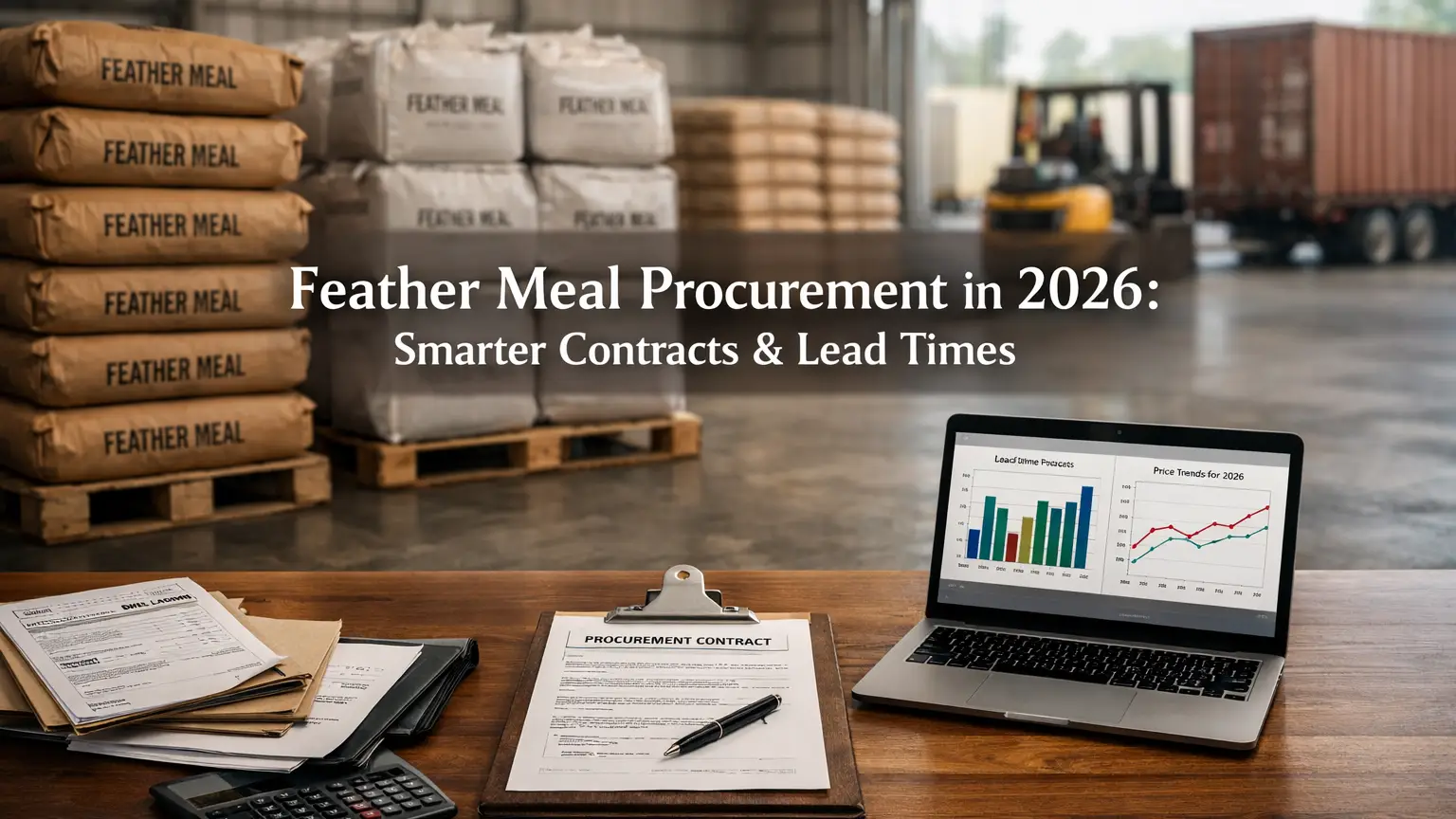
The procurement of feather meal in 2026 has transformed from a straightforward process of acquiring a poultry byproduct to securing a strategic, high-protein resource essential for animal nutrition and organic agriculture. Hydrolyzed feather meal, now recognized as a valuable ingredient with 80–90% crude protein, offers a cost-effective alternative to pricier fish meal and soybean meal. However, the industry is also facing rising challenges such as biological disruptions like Highly Pathogenic Avian Influenza (HPAI) and tightening sustainability regulations. These challenges demand a more resilient and data-driven procurement approach.
The Rise of Smart Contracts in Feather Meal Procurement
As the agricultural supply chain becomes more sophisticated, vertical integration is expected to increase feather meal supply chain efficiency by up to 30% globally by 2026. A key element driving this efficiency is the adoption of smart contracts. These automated, secure agreements are designed to streamline transactions between farmers, processors, and retailers, ensuring equitable and timely deals.
Smart contracts in 2026 offer several advantages that optimize procurement processes:
-
Automated Settlements: Digital documentation paired with automated payments can significantly reduce transaction risks and disputes, making the entire process more seamless.
-
Proof of Origin: Integrated blockchain systems allow for up to 35% faster supply chain traceability. Buyers can verify the sustainability and quality of products from "farm to fork", giving them confidence in their procurement decisions.
-
Market Stability: By using formula-based pricing, smart contracts can help manage volatility in commodity prices by linking raw material costs to finished product prices, providing more stable cost forecasting.
Leveraging Technology to Optimize Lead Times
Lead times, a crucial factor in procurement, are shrinking thanks to advances in AI and satellite monitoring. These technologies offer end-to-end visibility and insights that enable vertically integrated operations to reduce the gap between harvest and retail delivery by up to 20%.
Agribusinesses are increasingly relying on fleet and resource automation to synchronize machinery usage with real-time supply chain needs. This optimization ensures that inputs and finished products are delivered on time, regardless of external logistical challenges. For feather meal buyers, these advancements promise more predictable delivery schedules, which are critical in maintaining supply chain stability amidst global uncertainties.
Addressing Supply Volatility and Structural Risks
Feather meal production is directly tied to poultry slaughter volumes, which means supply cannot be easily scaled up through acreage expansion. It is instead dependent on biological cycles and processing capacity. Therefore, any disruption to poultry throughput—such as a disease outbreak like HPAI—can significantly impact feather meal availability.
To mitigate these risks, procurement teams in 2026 are embracing multi-origin sourcing strategies. By diversifying their supply base across Asia, North America, and Latin America, businesses can ensure continuity in supply, even in the face of localized disruptions. Additionally, buyers are focusing on suppliers with integrated rendering facilities located within poultry processing plants. These suppliers tend to offer more stable output and enhanced traceability compared to those relying on standalone operations.
Financial Risk Management and Strategic Sourcing
Feather meal lacks a dedicated futures market, making it more challenging to hedge against price fluctuations. However, savvy buyers are leveraging cross-hedging strategies using soybean meal futures. Since there is a strong price correlation between animal protein meals and soybean meal futures, soybean futures offer a useful tool for managing price volatility in the feather meal market.
Effective sourcing strategies in 2026 include a balanced procurement approach:
-
Forward Contracts: Committing 40% to 60% of anticipated volume under forward contracts for six to twelve months helps ensure a secure supply.
-
Spot Purchases: Keeping some volume open for spot purchases allows procurement teams to take advantage of market dips, buying when prices soften.
-
Formulation Flexibility: Nutrition teams are increasingly using least-cost formulation software to substitute feather meal with alternative ingredients such as canola meal or distillers dried grains (DDGS) when prices surge, all while maintaining proper amino acid balances.
The Sustainability Imperative
As sustainability becomes a critical driver for profitability and market access, it is no longer just a corporate goal—it’s a necessity. By 2026, regulations like the EU’s Corporate Sustainability Reporting Directive (CSRD) will require documented provenance and digital compliance from all participants in the premium supply chain.
Sustainability is now embedded at every stage of production, with buyers prioritizing suppliers who track carbon emissions and environmental impact. This environmental monitoring not only satisfies regulatory frameworks but also becomes a competitive advantage in the market. As sustainability continues to shape the procurement process, businesses that can demonstrate responsible stewardship will attract more loyal customers and potentially better financial terms.
Conclusion
The feather meal procurement process in 2026 is increasingly shaped by the need for smarter, more resilient strategies. As supply chain disruptions and market volatility rise, the industry must embrace technologies like smart contracts and AI-driven automation to optimize procurement processes and manage risks. At the same time, sustainability is now a fundamental consideration in the procurement of feather meal, with buyers expected to prioritize suppliers who are committed to environmental stewardship and regulatory compliance.
Looking to secure a steady supply of high-quality feather meal for your business? ChemTradeAsia offers a reliable, transparent procurement solution that ensures you stay ahead of market volatility and sustainability requirements. Get in touch with us today to learn more about our feather meal sourcing options!