
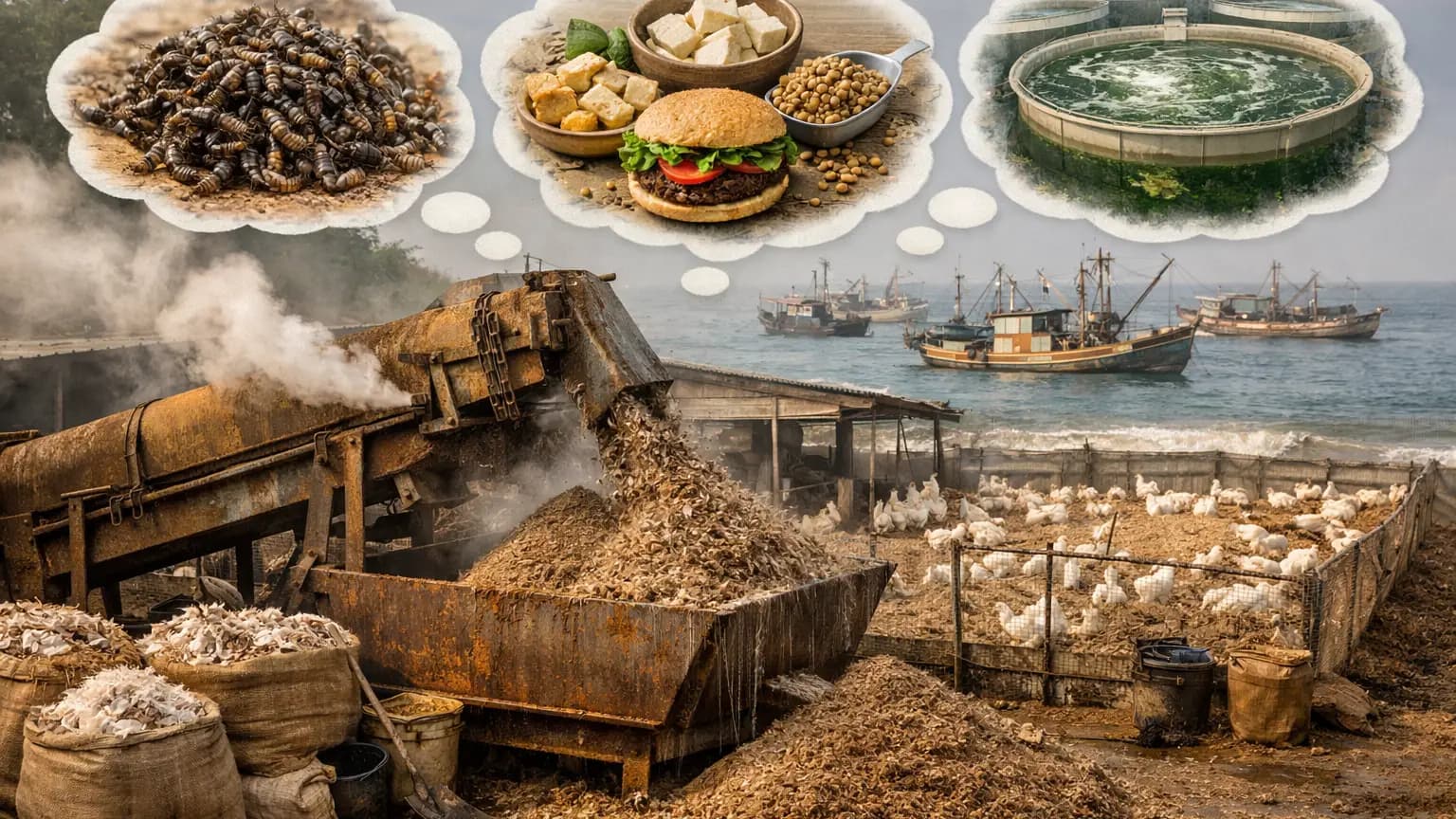
The global animal feed industry is under intense pressure to deliver high-performance diets at lower cost while meeting increasingly strict sustainability expectations. Fishmeal, long regarded as the “gold standard” protein source in aquaculture and high-performance livestock feeds, is facing supply constraints, price volatility, and environmental scrutiny. As a result, nutritionists and feed formulators are searching for alternative proteins that can partially replace fishmeal without compromising growth, feed efficiency, or animal health.
Among the emerging options, feather meal has attracted renewed interest. Derived from processed poultry feathers, this rendered by-product offers very high crude protein content and a favorable amino acid profile when properly hydrolyzed. With advances in processing technology and better understanding of digestibility, feather meal is no longer viewed merely as a low-value by-product, but as a functional ingredient that can play a strategic role in modern feed formulations. Platforms such as chemtradeasia.com are making standardized-quality feather meal more accessible to feed producers worldwide.
This article examines whether feather meal can realistically replace fishmeal in 2026 and beyond, and to what extent. It reviews nutritional and functional properties, compares specifications, explores emerging feed applications, and analyzes market and sustainability trends. While feather meal is unlikely to fully substitute fishmeal in most diets, it can be a powerful tool for partial replacement, cost optimization, and circular-economy sourcing when used correctly and sourced from reliable suppliers like those available via chemtradeasia.com.
Feather Meal and Fishmeal: Composition, Quality, and Specifications
Feather meal is produced by collecting poultry feathers from processing plants, thoroughly cleaning them, and subjecting them to high-pressure steam hydrolysis followed by drying and grinding. This process breaks disulfide bonds in keratin, improving digestibility. Typical high-quality hydrolyzed feather meal contains 80–90% crude protein on a dry matter basis, low fat (6–12%), and minimal fiber. However, its nutritional value is highly dependent on processing conditions; under- or over-hydrolysis can significantly reduce digestibility and amino acid availability.
Fishmeal, by contrast, is produced from whole fish or fish trimmings that are cooked, pressed, dried, and ground. Premium fishmeal generally contains 60–72% crude protein, 8–12% fat, and valuable long-chain omega-3 fatty acids such as EPA and DHA. It is also rich in essential amino acids, especially lysine and methionine, and provides highly digestible phosphorus. Unlike feather meal, fishmeal is a natural source of marine lipids and bioactive compounds that support growth, immunity, and palatability in fish, shrimp, and terrestrial livestock.
From a specifications standpoint, the key differences lie in amino acid balance, digestibility, and functional attributes. Feather meal tends to be high in cystine but relatively low in lysine, methionine, and tryptophan, requiring careful balancing with other protein sources or crystalline amino acids. Digestibility coefficients for well-processed feather meal can reach 70–80% in monogastrics and even higher in ruminants, but poorly processed material can fall far below this range. Feed producers sourcing via chemtradeasia.com typically look for standardized specifications such as minimum 80% crude protein, controlled ash content, and verified digestibility metrics to ensure predictable performance.
Emerging Feed Applications of Feather Meal in 2026
By 2026, feather meal is gaining traction across multiple animal sectors as a strategic component in protein matrices rather than a simple low-cost filler. In broiler and layer diets, feather meal is increasingly used at low to moderate inclusion levels (commonly 2–5%, sometimes up to 7% in specific phases) to partially replace more expensive protein sources. When balanced with soybean meal, corn gluten meal, and synthetic amino acids, feather meal can help maintain performance while reducing overall feed cost per ton. Its high sulfur amino acid content can also support feathering and integument health in poultry.
In aquaculture, where fishmeal use is under the greatest scrutiny, feather meal is being tested and adopted as a partial fishmeal replacer in diets for tilapia, carp, catfish, and some marine species. Research indicates that with appropriate processing and amino acid balancing, feather meal can replace 10–25% of fishmeal protein in certain formulations without significant loss in growth or feed conversion ratio. However, limitations in palatability and the absence of marine lipids mean that feather meal is typically combined with other alternative proteins such as poultry by-product meal, soybean concentrate, and insect meal rather than used as a stand-alone substitute.
Ruminant nutrition is another promising area. In dairy and beef cattle diets, feather meal can serve as a source of rumen-undegradable protein (RUP), supporting high-producing animals that require amino acids beyond what the rumen microbes can synthesize. Its relatively slow degradability in the rumen, when properly processed, allows more amino acids to reach the small intestine. Feed manufacturers working through chemtradeasia.com are increasingly exploring feather meal as part of high-production dairy rations and finishing beef diets, where cost-effective bypass protein is in demand.
Nutritional Benefits, Limitations, and Formulation Strategies
The primary nutritional advantage of feather meal is its very high crude protein concentration, which can exceed that of many plant and animal protein ingredients. This makes it an efficient way to raise dietary protein levels without dramatically increasing feed volume. Additionally, feather meal is rich in sulfur-containing amino acids, particularly cystine, which can complement ingredients that are relatively low in these nutrients. In ruminants, its potential as a rumen-undegradable protein source adds further value, especially in high-output dairy systems.
However, feather meal also has notable limitations that must be addressed through formulation. Its amino acid profile is unbalanced relative to animal requirements, with deficits in lysine, methionine, and tryptophan compared with fishmeal. Digestibility is highly variable and can be compromised by overcooking, leading to heat damage and reduced availability of key amino acids. This variability underscores the importance of sourcing from reputable suppliers and specifying processing standards. Platforms such as chemtradeasia.com help buyers access feather meal with consistent quality parameters, including target digestibility values and controlled processing conditions.
Effective formulation strategies typically involve using feather meal as part of a matrix of complementary proteins rather than as a primary or sole protein source. Nutritionists often limit inclusion rates to levels demonstrated to be safe and effective in the target species: for example, 2–5% in poultry, 3–6% in swine, up to 10% or more in ruminant concentrates, and modest percentages in aquafeeds depending on species and life stage. The use of crystalline amino acids (lysine, methionine, threonine, tryptophan) can correct imbalances, while enzyme supplementation (such as proteases and keratinases) is being explored to further enhance digestibility. These strategies allow feather meal to contribute to protein supply and cost reduction without undermining performance.
Market Trends and Sustainability
Global fishmeal production has remained relatively flat over the past decade, typically ranging around 4–5 million metric tons annually, while demand from aquaculture and intensive livestock systems continues to grow. This imbalance has contributed to price volatility and encouraged the search for alternative proteins. At the same time, the poultry industry has expanded significantly, generating large volumes of feathers that must be managed responsibly. Converting these feathers into high-protein feather meal aligns with circular-economy principles by turning a waste stream into a valuable feed ingredient.
Sustainability considerations are becoming central to feed ingredient choices. Life-cycle assessments generally show that rendered by-products such as feather meal have a lower incremental environmental footprint compared with dedicated crops or fisheries, because they utilize materials that would otherwise require disposal. By partially replacing fishmeal with feather meal and other co-product proteins, feed manufacturers can reduce dependence on wild-caught fish resources and demonstrate progress toward more sustainable supply chains. This is particularly important for aquaculture operations seeking eco-label certifications and for livestock integrators responding to retailer and consumer expectations.
In this evolving context, digital trading platforms like chemtradeasia.com play a crucial role. They connect feed manufacturers, premix producers, and integrators with vetted suppliers of feather meal and other rendered proteins, offering standardized product specifications, documentation, and logistics support. Buyers can compare protein content, moisture, ash, and digestibility data, and can access supporting documents such as quality certificates and, where relevant, safety data sheets. By aggregating supply and providing transparent information, chemtradeasia.com helps stabilize procurement, reduce sourcing risk, and support the broader transition toward more diversified and sustainable protein portfolios in global feed.
Conclusion
Feather meal cannot fully replace fishmeal in most feed formulations, particularly in high-value aquaculture diets where marine lipids, palatability, and specific bioactive compounds are critical. However, when properly processed and formulated, feather meal can serve as a valuable partial substitute, contributing 10–25% of fishmeal protein in some aquafeeds and higher shares of total dietary protein in poultry, swine, and ruminant diets. Its high protein content, favorable sulfur amino acid levels, and potential as a rumen-undegradable protein source make it a strategic ingredient for cost control and nutritional flexibility.
Looking ahead to 2026 and beyond, the role of feather meal is likely to expand as feed producers seek to diversify protein sources, manage price risk, and meet sustainability commitments. Success will depend on consistent quality, reliable digestibility, and careful formulation that addresses amino acid balance and inclusion limits for each species. By leveraging supply platforms such as chemtradeasia.com, feed manufacturers can secure standardized feather meal products, integrate them into multi-protein strategies, and reduce reliance on finite marine resources without compromising animal performance or product quality.
This article is intended solely for informational and market insight purposes and does not constitute technical, safety, or professional advice. Users should independently verify all information with qualified nutritionists or technical experts, consult official documentation such as MSDS/SDS where applicable, and contact our team or other professionals for guidance on specific formulations, regulatory requirements, and application conditions.