
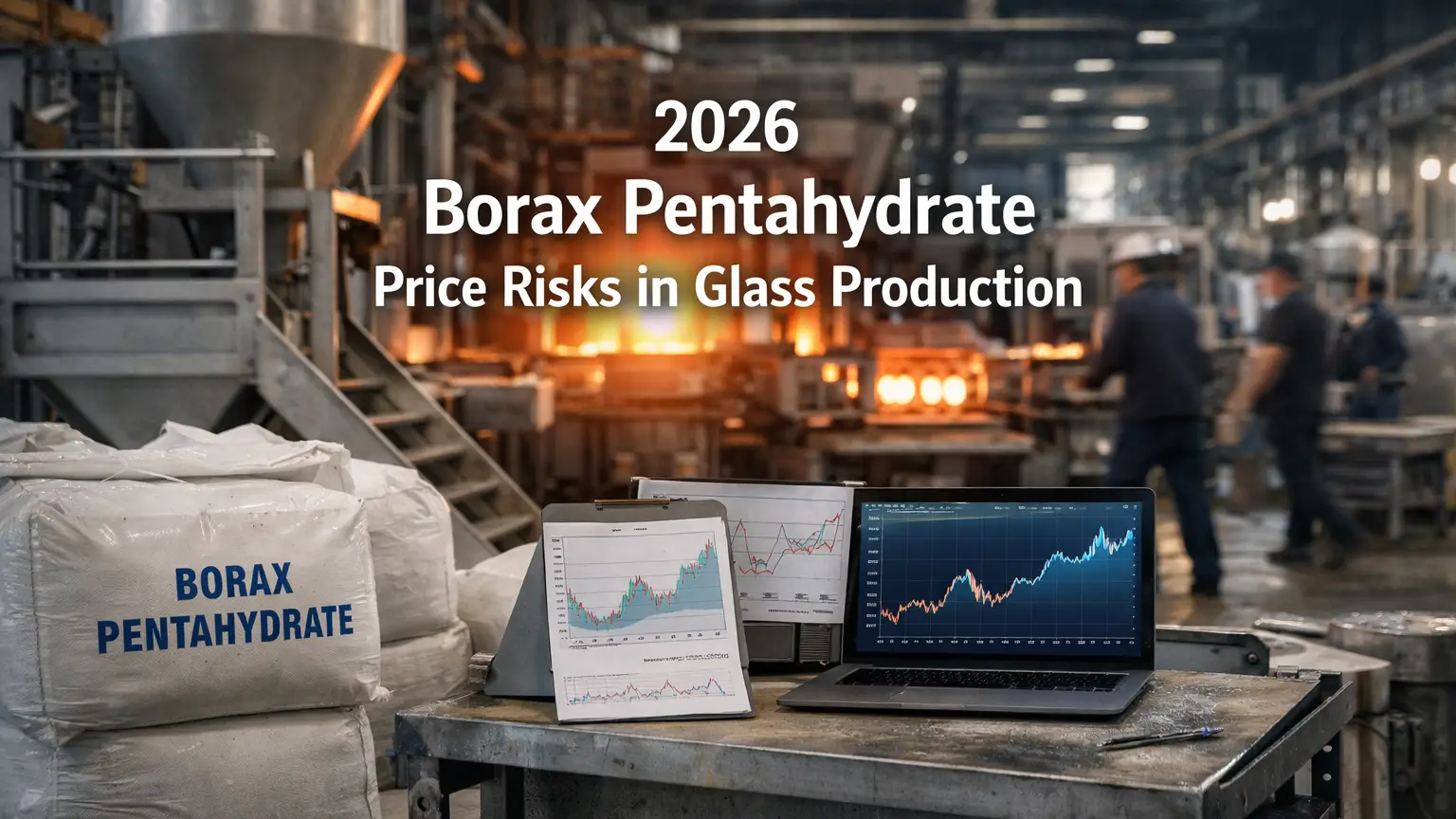
The borax pentahydrate market in 2026 is experiencing significant price volatility, driven by demand surges and supply chain risks. Glass manufacturers, heavily reliant on borax pentahydrate for production, must address these pricing challenges to mitigate risks effectively. This article explores the key factors influencing borax pentahydrate pricing in 2026, including supply constraints, demand catalysts, and strategies for price stability.
The Strategic Shift of Borax Pentahydrate in 2026
In 2026, boron compounds, particularly borax pentahydrate (Na2B4O7·5H2O), are becoming a critical mineral for multiple industries. Once viewed as a versatile industrial commodity, borax pentahydrate now plays a vital role in energy transition technologies, including solar glass production. The global boron market, valued at USD 3.75 billion in early 2026, is projected to grow at a 4.90% compound annual growth rate (CAGR), reaching USD 5.48 billion by 2034.
The glass manufacturing industry, in particular, faces increasing risks related to price fluctuations and supply disruptions. As regional pricing dynamics shift, glass producers must adopt strategic procurement practices to mitigate risks associated with borax pentahydrate prices.
The Borax Pentahydrate Supply Landscape
Turkey’s Dominance in Borax Pentahydrate Production
Over 70% of the world’s borate reserves are concentrated in Turkey, with Eti Maden, the state-owned Turkish enterprise, controlling the largest deposits. Turkey’s influence over the borax pentahydrate market, combined with low production costs due to subsidized energy and labor, creates a volatile pricing environment. By 2026, Turkey aims to reach USD 5 billion in borate exports, but global supply risks persist due to dependency on one country for the majority of the supply.
Counterbalance in the U.S.: Rio Tinto’s Role in Borax Production
In the United States, Rio Tinto Borates operates the Boron mine in California, supplying approximately 30% of the global borates market. However, U.S. production is significantly more expensive due to regulatory compliance and environmental costs. These factors place upward pressure on borax pentahydrate prices in the U.S. market, creating a gap in pricing compared to Turkish suppliers.
The recent closure of Searles Valley Minerals' facilities in early 2026 further reduces North American supply capacity, exposing U.S. glass manufacturers to greater reliance on Turkish imports and increasing the risk of price volatility.
Borax Pentahydrate Production Costs
The cost of borax pentahydrate is heavily influenced by the energy-intensive refining process. Boron minerals like tincal require high-temperature calcination, driving up the cost of production. In 2025, rising diesel and energy costs contributed to a 5.2% price increase in North America, with prices in the Asia-Pacific region rising by 8.35%. Energy costs now account for a significant portion of borax pentahydrate's price, making energy policy a crucial factor for manufacturers to consider when forecasting costs.
Key Demand Drivers for Borax Pentahydrate in Glass Production
Solar PV Glass: An Accelerating Demand Catalyst
The solar photovoltaic (PV) glass market is one of the largest drivers of borax pentahydrate demand. Solar glass, especially in bifacial and glass-glass module architectures, requires borax pentahydrate to enhance the glass's thermal resistance and durability. The global solar PV glass market is set to reach USD 22.05 billion by 2026, with continued growth through 2034.
In India, government mandates for locally produced solar cells and panels will accelerate domestic demand for borax pentahydrate. Companies like Borosil Renewables are increasing their solar glass production capacity to meet this surge in demand.
Fiberglass Insulation: Supporting Energy Efficiency Goals
Borates are critical in fiberglass insulation production, where they reduce the clinkering temperature and improve melt viscosity. As building codes become more stringent in response to decarbonization goals, the demand for fiberglass insulation is increasing. The need for high-performance insulation, driven by retrofitting projects, is another key factor in the growing demand for borates in the glass industry.
Specialty Glass for Electronics and Displays
The electronics sector’s demand for borosilicate glass, used in LCD screens and smartphones, is also rising. Boron’s ability to control thermal expansion makes it essential in the production of glass used in high-tech devices. With the growing demand for 5G devices, the electronics industry is expected to increase its consumption of high-purity borates.
Geopolitical and Trade Risks: Borax Pentahydrate as a Critical Mineral
Boron’s recent designation as a critical mineral by both the U.S. and European Union underscores its importance to national security and economic stability. As part of efforts to secure a domestic supply of borates, the U.S. has launched initiatives like “Project Vault,” aimed at creating a strategic reserve of critical minerals.
However, as the U.S. continues to rely on imports for more than half of its boron needs, trade policies and geopolitical risks will continue to affect borax pentahydrate pricing. Tariffs, trade agreements, and strategic reserves are key components of the shifting global landscape that will shape borax prices moving forward.
Risk Mitigation Strategies for Glass Manufacturers
Given the pricing volatility and supply risks in 2026, glass manufacturers can adopt several strategies to protect themselves from rising borax pentahydrate costs:
-
Supply Chain Diversification: Sourcing from multiple regions, including Turkey, South America, and emerging U.S. projects, can help reduce reliance on a single supplier.
-
Strategic Inventory Buffering: Maintaining a 3- to 6-month stockpile of borax pentahydrate can prevent production disruptions caused by trade or logistical shocks.
-
Energy Efficiency Investments: Optimizing energy use in melting furnaces and improving batch processes can offset rising borate input costs.
-
Engagement with Trade Policy: Staying informed about potential anti-dumping measures or tariffs on borates will allow manufacturers to adjust procurement strategies accordingly.
Conclusion
The borax pentahydrate market in 2026 presents both opportunities and challenges. As demand for borax continues to rise, especially in solar glass, fiberglass insulation, and electronics, glass manufacturers must navigate supply risks and price fluctuations. By diversifying supply chains, maintaining buffer stocks, and investing in production efficiency, companies can safeguard against market volatility.
If you're seeking reliable borax pentahydrate suppliers to meet your production needs, Chemtrade Asia offers high-quality borates with competitive pricing and global market insights. Secure your supply today and stay ahead of market trends.