Introduction Feather Meal
The global feed industry is under mounting pressure to secure high-quality, cost-effective, and sustainable protein sources for livestock, aquaculture, and pet nutrition. Among the various protein ingredients, feather meal has emerged as a strategic by-product that helps close the loop in poultry processing while delivering valuable nutritional and economic benefits. As buyers plan their procurement strategies toward 2026, understanding the evolving application profile, quality requirements, and supply dynamics of feather meal is becoming increasingly important.
Feather meal is produced from poultry feathers, typically sourced from slaughterhouses and processing plants, and converted into a high-protein ingredient through hydrolysis and drying. Its use as a feed ingredient is well established in poultry and swine diets and is gaining traction in aquafeed and specialty feed segments. However, buyers must navigate variability in quality, regulatory frameworks, and sustainability expectations while securing reliable supply from global producers.
This article provides a comprehensive overview of feather meal’s role in the global feed ingredients market, with a focus on applications, buyer requirements, and emerging trends toward 2026. It also highlights how integrated trading and distribution platforms such as chemtradeasia can help buyers manage risk, ensure quality compliance, and optimize sourcing strategies for feather meal and related feed ingredients.
Global Market Overview for Feather Meal in Feed Ingredients
The global animal feed market is projected to grow steadily, driven by rising demand for animal protein, urbanization, and evolving dietary patterns. According to industry estimates, the compound annual growth rate (CAGR) for the global feed market is expected to range between 3–4% through 2026, with Asia-Pacific, Latin America, and parts of Africa acting as key growth engines. Within this context, feather meal feed ingredients occupy a niche but important role, particularly as a secondary protein source that can help reduce dependence on conventional materials such as soybean meal and fishmeal.
Feather meal production is closely linked to the poultry industry, which has been one of the fastest-growing livestock sectors worldwide. Major poultry-producing countries such as the United States, Brazil, China, India, and several Southeast Asian nations are also the primary sources of feather meal. Global output of feather meal is estimated in the low millions of tonnes annually, representing a small share of total feed protein, but its impact is amplified by its high crude protein content and the circular-economy value it provides by utilizing what would otherwise be waste.
Market dynamics for feather meal toward 2026 are shaped by several trends: sustainability and waste valorization, regulatory scrutiny on feed safety, and ongoing volatility in commodity protein prices. As fishmeal and soybean meal prices fluctuate, nutritionists and procurement teams are increasingly open to incorporating alternative proteins such as feather meal, provided that digestibility, amino acid balance, and microbiological safety can be assured. This creates both opportunities and challenges for buyers who must balance cost optimization with performance and compliance.
Product Profile of Feather Meal: Composition, Grades, and Specifications
Feather meal is primarily composed of keratin, a fibrous protein that gives feathers their structural strength. Through controlled hydrolysis, often under high temperature and pressure, this keratin is partially broken down to improve digestibility for monogastric animals. Typical commercial feather meal products contain around 80–90% crude protein on a dry matter basis, though actual values vary by process, raw material quality, and manufacturer. Ash content usually ranges from 3–8%, while fat content is relatively low compared with other animal by-product meals.
From a specification standpoint, buyers commonly evaluate feather meal based on parameters such as crude protein, pepsin digestibility, moisture content, ash, fat, amino acid profile (particularly cystine, methionine, and lysine), and microbiological quality (e.g., total plate count, Salmonella, E. coli). For high-performance feed formulations, hydrolyzed feather meal with enhanced digestibility is preferred, often specified with pepsin digestibility above 75–80%. Moisture content is typically controlled below 10–12% to ensure stability during storage and transport.
Different grades of feather meal are available in the market, ranging from standard hydrolyzed feather meal to premium blends that may include blood meal or poultry by-product meal for a more balanced amino acid profile. Buyers targeting aquafeed or pet food segments may demand tighter specifications, including lower biogenic amines, stricter pathogen limits, and traceability to certified poultry processing plants. Trading partners like chemtradeasia often work with multiple producers to offer a portfolio of grades, allowing customers to match specifications with application needs and cost targets.
Key Applications and Benefits of Feather Meal in Animal Feed
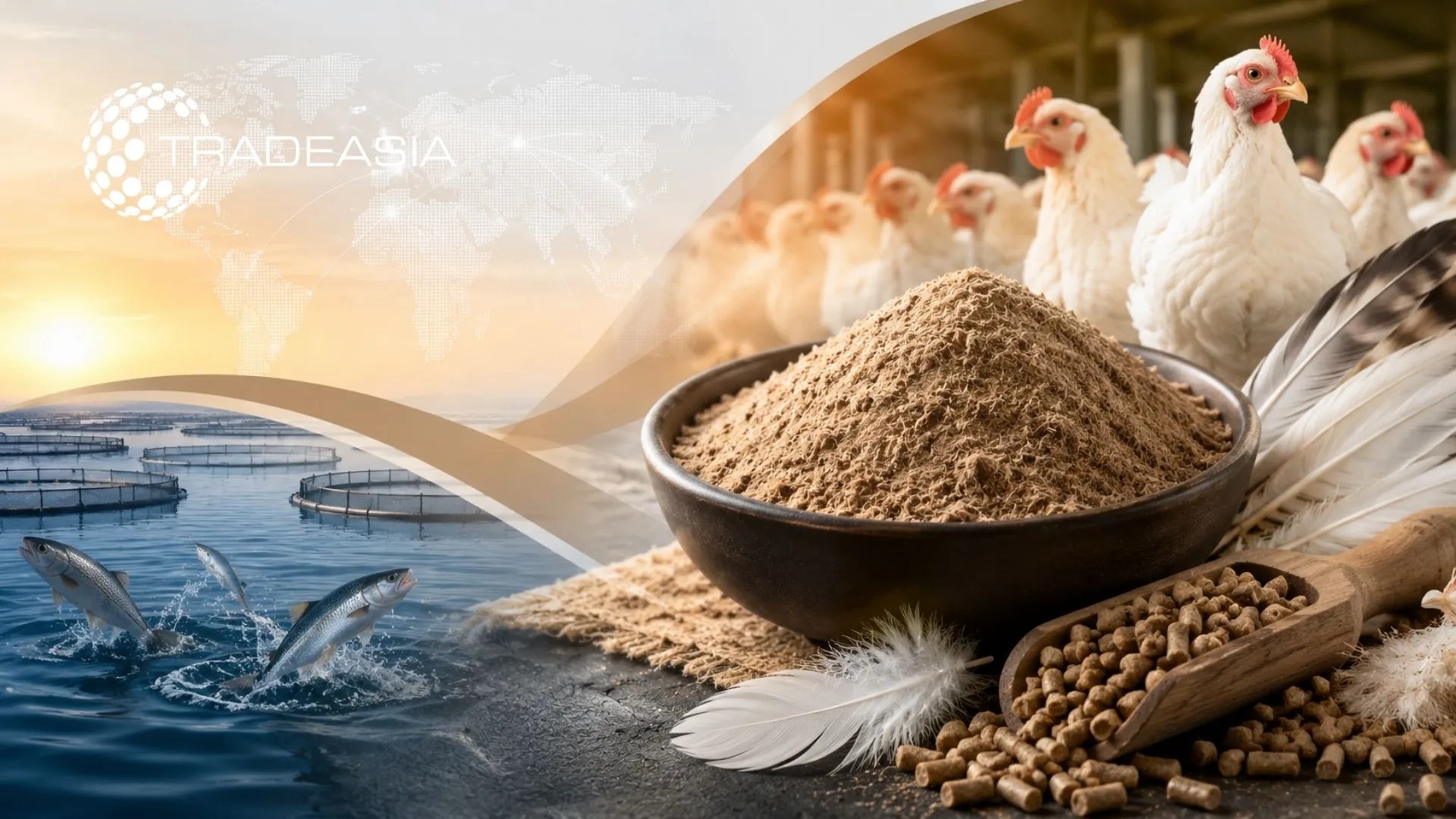
The primary application of feather meal feed ingredients is as a high-protein component in compound feeds for poultry, swine, ruminants, and increasingly, aquaculture species. In poultry diets, feather meal is typically included at low to moderate levels (often 2–5%), contributing to overall protein and sulfur-containing amino acids. For swine, particularly grower-finisher diets, feather meal can partially replace more expensive protein sources when balanced with synthetic amino acids to correct lysine and methionine deficiencies.
In aquafeed, feather meal is used more selectively, often in formulations for carnivorous fish and shrimp where cost pressure is high and fishmeal replacement is a priority. Here, its use is usually limited to low inclusion levels and combined with other animal or plant proteins to achieve a suitable amino acid profile and palatability. Ruminant diets, especially for dairy and beef cattle, may also incorporate feather meal as a bypass protein source, though regulatory constraints and local feed laws must be carefully considered.
The benefits of feather meal extend beyond its crude protein content. From a sustainability standpoint, it exemplifies circular-economy principles by converting poultry processing by-products into valuable feed ingredients, reducing waste and environmental burden. Economically, feather meal can provide cost savings relative to premium protein sources, especially during periods of high fishmeal or soybean meal prices. For buyers and formulators, this offers a lever to manage feed cost inflation while maintaining or enhancing performance, provided that formulation adjustments are made to address digestibility and amino acid balance.
Buyer Landscape, Sourcing Strategies, and the Role of chemtradeasia
The buyer landscape for feather meal spans a wide range of stakeholders, from large integrated feed manufacturers and poultry integrators to regional feed mills, premix producers, and traders. Large multinational feed companies typically secure feather meal through long-term contracts with rendering plants and animal by-product processors, ensuring consistent volumes and specifications. Mid-sized and smaller feed mills, particularly in emerging markets, often rely on international trading partners to access diversified supply sources and competitive pricing.
Toward 2026, buyers are increasingly prioritizing factors such as traceability, certification, and risk management in their sourcing strategies. Importers must navigate differing regulatory regimes, including feed hygiene regulations in the European Union, FDA and AAFCO guidelines in the United States, and country-specific feed laws across Asia, the Middle East, and Latin America. Requirements related to animal disease control, such as avian influenza, can temporarily disrupt supply chains, making diversification of origin and supplier relationships critical for continuity.
Trading and distribution platforms such as chemtradeasia play a pivotal role in connecting feather meal producers with global buyers. By maintaining a multi-origin supplier network, chemtradeasia can offer buyers flexible options in terms of quality grades, packaging formats (bulk, bags, or big bags), and logistics routes. Additionally, integrated documentation support—such as providing quality certificates, origin certificates, and compliance with local feed regulations, helps buyers reduce administrative burden and mitigate compliance risks. For buyers entering new markets or expanding their product portfolios, collaborating with experienced intermediaries can significantly shorten the learning curve and enhance procurement resilience.
Conclusion
As the global feed industry continues to grow and evolve, feather meal feed ingredients are positioned to play an increasingly important role in balancing cost, performance, and sustainability objectives. Its high protein content, alignment with circular-economy principles, and compatibility with various livestock species make feather meal a strategic component in modern feed formulations. However, realizing its full value requires careful attention to quality parameters, digestibility, and regulatory compliance, particularly in high-value segments such as aquafeed and pet food.
Looking toward 2026, buyers of feather meal will need to refine their sourcing strategies to address volatility in commodity prices, tightening sustainability expectations, and evolving feed safety regulations. Partnering with reliable suppliers and trading platforms like chemtradeasia can help secure consistent quality, diversified origins, and robust documentation, enabling feed manufacturers to integrate feather meal confidently into their formulations. By aligning procurement decisions with technical expertise and market intelligence, stakeholders across the value chain can unlock the economic and environmental benefits of this underutilized protein source.
This article is provided for informational and market insight purposes only and does not constitute technical, safety, or professional advice. Readers should independently verify all information with qualified experts, consult official documentation such as MSDS/SDS and relevant regulations, and contact appropriate professionals or our team for guidance on specific applications before making purchasing, formulation, or operational decisions.

Leave a Comment