
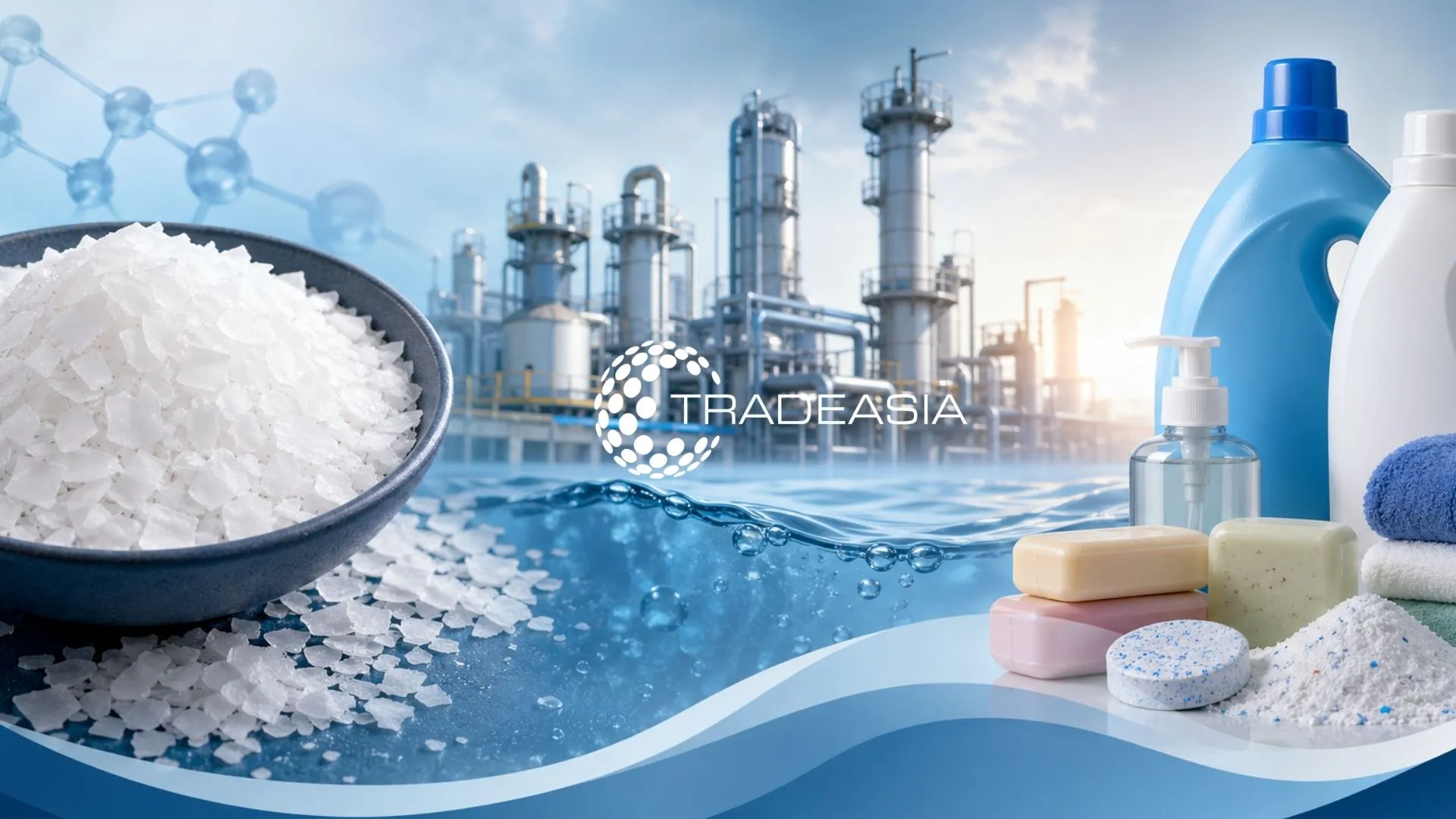
Introduction Caustic Soda Flakes
The rapid expansion of the home and personal care sector across Asia has significantly increased demand for reliable raw materials such as caustic soda flakes. As urbanization, rising disposable incomes, and heightened hygiene awareness drive consumption of soaps, detergents, and cleaning agents, manufacturers are under pressure to secure consistent, high-quality alkali inputs at competitive prices. In this context, understanding the technical role, market dynamics, and sourcing options for caustic soda flakes has become a strategic priority for procurement teams and formulation specialists alike.
Caustic soda flakes, chemically known as sodium hydroxide (NaOH), are a cornerstone ingredient in bar soap saponification and in various detergent and surfactant processes. Their solid, flaked form offers advantages in handling, storage, and transportation compared with liquid lye, especially for producers operating across multiple plants or export-oriented facilities. In Asia, where both small and large-scale manufacturers coexist, the flexibility of flakes is particularly attractive.
For industrial buyers, suppliers such as chemtradeasia play an important role in bridging regional production hubs and end users. With a networked approach to sourcing and logistics, platforms like chemtradeasia help buyers navigate price volatility, changing regulatory frameworks, and evolving quality expectations. This article explores the application of caustic soda flakes in soap and detergent manufacturing, key specifications, market insights in Asia, and critical considerations for buyers seeking dependable supply partnerships.
Role of Caustic Soda Flakes in Soap and Detergent Manufacturing
In traditional bar soap manufacturing, caustic soda flakes are indispensable for the saponification process, where triglycerides (fats and oils) react with sodium hydroxide to form sodium salts of fatty acids (soap) and glycerin. The concentration, purity, and dissolution behavior of caustic soda directly influence reaction efficiency, yield, and product consistency. For toilet soaps, beauty bars, and laundry soaps, manufacturers typically prepare a caustic soda solution from flakes, carefully controlling temperature and concentration to avoid localized overheating or incomplete saponification.
In the detergent sector, caustic soda plays multiple roles beyond simple saponification. It is used in the neutralization of acid-based surfactants, pH adjustment of detergent slurries, and in the production of intermediate chemicals such as sodium salts of linear alkylbenzene sulfonic acid (LABSA). Powder detergents, liquid detergents, and industrial cleaners all rely on controlled alkalinity to optimize cleaning performance, soil removal, and microbial control. Caustic soda flakes are often preferred where plants lack bulk liquid caustic storage or where flexible dosing is required.
Additionally, caustic soda is involved in upstream processes that support soap and detergent manufacturing. These include refining of vegetable oils, removal of free fatty acids, and production of auxiliary ingredients such as sodium silicate. For example, in many Asian plants producing laundry bars and multipurpose soaps, caustic soda flakes are dissolved on-site and integrated into both oil refining and final saponification stages, improving overall process integration. This multifunctional role makes sourcing decisions for caustic soda strategically important for cost, quality, and operational reliability.
Key Specifications and Quality Parameters for Industrial Buyers
Industrial buyers in the soap and detergent sector must pay close attention to the technical specifications of caustic soda flakes to ensure process stability and product quality. A typical industrial-grade specification for soap and detergent applications in Asia often targets a NaOH content of 98–99% minimum. Lower moisture content is critical for accurate dosing and predictable dissolution. Excessive water or volatile content can lead to clumping, uneven dissolution, and variability in alkali concentration, which in turn affects saponification and pH control.
Impurity profiles are equally important. Common specifications limit sodium chloride (NaCl) and sodium carbonate (Na2CO3) to low percentages, often below 0.5–1.0%, as these can influence soap hardness, efflorescence, and foaming characteristics. For high-end toilet soaps and specialized detergent formulations, tighter impurity controls may be required to avoid discoloration or unwanted side reactions. Heavy metal content is typically kept at trace levels according to relevant national or international standards, especially where products are intended for personal care or frequent skin contact.
Buyers working with suppliers such as chemtradeasia often request detailed technical data sheets (TDS) and certificates of analysis (COA) for each batch to verify conformity with their internal standards. Parameters such as flake size distribution, bulk density, and packing type (e.g., 25 kg bags, 50 kg bags, jumbo bags) also influence handling and process design. For automated dosing systems, consistent flake size and low dust generation are desirable to reduce blockages and minimize worker exposure. Aligning these technical parameters with plant capabilities and product requirements is essential for smooth operations.
Market Dynamics and Demand Trends in Asia
Asia is the world’s largest consumer and producer of caustic soda, with major capacity concentrated in China, India, Southeast Asia, and parts of the Middle East feeding Asian demand. The chlor-alkali industry, which co-produces caustic soda and chlorine, is closely linked to PVC, pulp and paper, alumina, and textiles. For soap and detergent manufacturers, this means caustic soda pricing and availability are influenced not only by home and personal care demand, but also by broader industrial cycles. When PVC or alumina demand shifts, caustic soda exports and regional balances can change, affecting procurement strategies.
In recent years, growth in the Asian soap and detergent market has been driven by expanding middle classes, urban migration, and post-pandemic hygiene awareness. Countries such as India, Indonesia, Vietnam, and the Philippines have seen strong volume growth in laundry detergents, dishwashing liquids, and personal wash products. This has translated into a steady underlying demand for caustic soda flakes, particularly in regions where small and mid-sized manufacturers lack access to bulk liquid caustic infrastructure. Flakes and prills remain a convenient format, especially for decentralized production clusters.
At the same time, regulatory trends and environmental considerations are reshaping the chlor-alkali industry. The phase-out of older mercury cell technologies in favor of membrane cell processes has improved product consistency and reduced environmental impact in many Asian plants. Buyers increasingly prefer suppliers that can demonstrate compliance with local and international environmental standards, stable production, and transparent logistics. Platforms like chemtradeasia help buyers compare offers from different origins, manage freight and documentation, and respond more quickly to price fluctuations driven by energy costs, currency movements, and trade policies.
Sourcing Strategies and Buyer Considerations with chemtradeasia
For procurement managers and technical buyers, building a resilient supply chain for caustic soda flakes involves balancing cost, reliability, and quality. One common strategy in Asia is to diversify sourcing across multiple producers or origins while working with a centralized trading and logistics partner. By engaging with a platform such as chemtradeasia, buyers gain access to a curated network of chlor-alkali producers, enabling them to compare specifications, lead times, and pricing while maintaining a single point of commercial and logistical coordination.
Key considerations include aligning contract terms with production cycles, storage capacity, and cash flow. Many soap and detergent manufacturers in Asia operate on tight working capital, making it crucial to choose between spot purchases and longer-term contracts based on market outlook. When prices are volatile, staggered contracts or mixed procurement strategies can help smooth cost curves. Chemtradeasia’s market insight and regional presence can support buyers in timing purchases, optimizing shipment sizes, and selecting appropriate incoterms to manage freight and risk.
Another important factor is technical and regulatory support. Industrial buyers increasingly request documentation such as Material Safety Data Sheets (MSDS/SDS), REACH-related information for exports, and compliance with local standards. Working with experienced suppliers and traders helps ensure that caustic soda flakes meet not only chemical specifications but also packaging, labeling, and documentation requirements for each destination market. In many cases, chemtradeasia can facilitate communication between end users and producers to address specific formulation needs, trial batches, or changes in product standards, thereby reducing the risk of production interruptions or quality deviations.
Conclusion
The soap and detergent industry in Asia relies heavily on caustic soda flakes as a fundamental raw material for saponification, pH control, and production of essential intermediates. As demand for hygiene and cleaning products continues to grow, the importance of stable, high-quality alkali supply chains has become more pronounced. Manufacturers must understand both the technical role of caustic soda in their formulations and the broader market forces that influence pricing and availability.
By focusing on key specifications such as NaOH content, impurity limits, and handling characteristics, industrial buyers can better align raw material selection with process requirements and product positioning. Leveraging regional market insights, monitoring regulatory developments, and adopting flexible sourcing strategies are equally important. Platforms like chemtradeasia provide a valuable interface between producers and end users, offering access to multiple origins, logistics solutions, and up-to-date market information that supports more informed procurement decisions.
This article is intended solely for informational and market insight purposes and does not constitute technical, safety, engineering, or professional advice. Readers should independently verify all information with qualified experts, consult official documentation such as MSDS/SDS and relevant standards, and contact appropriate technical resources or our team before making decisions or using caustic soda flakes in specific industrial applications.