
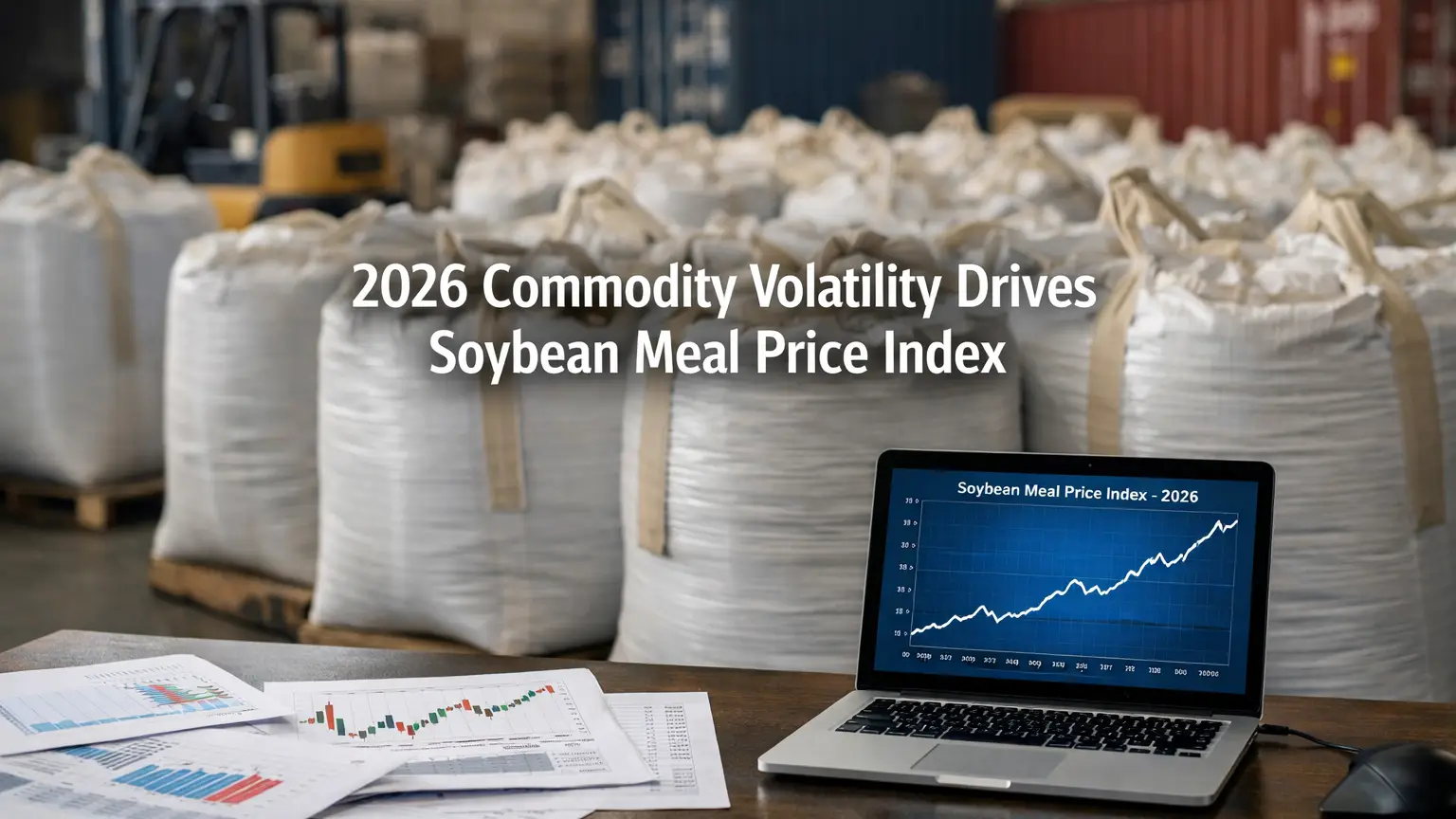
The global agricultural market in early 2026 is experiencing a remarkable shift. Despite reaching record-breaking physical supply levels, the Soybean Meal Price Index is witnessing a surge in price volatility. This paradox can be attributed to factors beyond simple supply and demand — namely, the influence of geopolitical instability, shifting energy policies, and changing political landscapes. In a market once driven primarily by supply constraints, the new landscape is shaped by a mix of resource nationalism, global competition, and market manipulation through political signaling.
How Politics Drives the Soybean Meal Market in 2026
In 2026, geopolitical volatility has moved from being a temporary shock to a permanent feature of the global market. Political events and signals now play a more critical role in influencing prices than the actual physical supply of commodities. A perfect example of this occurred in early February 2026 when a comment from former President Trump on China's plans to increase soybean purchases from the U.S. caused soybean futures to skyrocket. This came at a time when the South American crop was at a record high, underlining the growing importance of political factors in determining market trends.
One of the most significant outcomes of this shift is the rise of resource nationalism. Countries, especially China, are increasingly diversifying their sourcing strategies to mitigate trade risks. As of 2026, Brazil now supplies 71% of China's soybean imports, while the U.S. share has fallen to just 21%. This diversification increases the complexity of global supply chains and adds a layer of uncertainty to pricing, as traders look to political developments rather than traditional economic indicators to forecast market trends.
Traders and investors are turning to the Chicago Board of Trade (CBOT) Soybean Meal CVOL Index (SMVL) as a benchmark for understanding market volatility. By February 2026, the index reflected a market that was caught between the pressures of a massive harvest and the inflationary potential of renewed trade talks between the U.S. and China.
Biofuels and the Decoupling of Soy Complexes: Soybean Meal and Oil Go Their Separate Ways
A key factor contributing to the volatility of the soybean meal market is the increasing decoupling of the soy complex into two distinct segments: protein (meal) and fat (oil). Historically, soybean meal was a byproduct of oil extraction, driving crushing margins. However, the rapid expansion of renewable diesel production is reshaping this relationship.
In 2026, U.S. domestic crushing is being bolstered by the growth of renewable diesel production, which is projected to hit nearly 2.74 billion bushels per year. As a result, soybean oil is in high demand to meet biofuel needs, but this has led to an oversupply of meal. Since the U.S. cattle and swine populations are not expected to grow significantly, this surplus of meal could depress prices, even as renewable energy policies drive up the price of oil.
Another factor influencing prices is the uncertainty around biofuel incentives, such as the 45Z Clean Fuel Production Credit. Delays or changes in the execution of these credits could create price ceilings and exacerbate volatility, creating a disconnect between actual crop availability and market prices.
EUDR: A Non-Physical Driver of Price Volatility
The introduction of the European Union Deforestation Regulation (EUDR) in 2026 has further complicated the soybean meal market. The regulation divides the market into "sustainable" and "uncertified" categories, introducing new compliance risks for producers and suppliers. This has led to the emergence of risk premiums on non-compliant soybean meal, driving up costs for the EU feed and livestock sectors.
For instance, in early 2026, experts noted risk premiums ranging from €20 to €40 per ton for non-compliant soybean meal, costing the EU industry an estimated €1 billion for the first half of the year. While regions like the U.S. and Canada are considered low-risk areas, countries such as West Africa, India, and China face higher risks of trade disruptions due to the regulatory uncertainties surrounding the EUDR.
This regulatory environment is also causing shifts in demand. As higher soybean meal prices push suppliers to seek alternatives, markets for rapeseed meal (RSM) and sunflower meal (SFM) are gaining traction, but this only increases the price pressure on the entire "protein block."
South America's Role as the Market Titan
Despite the volatility caused by geopolitical and regulatory factors, global production dynamics still play a crucial role in determining prices. For the 2025/26 marketing year, the fundamentals remain bearish, with significant global soybean availability. Brazil, in particular, has emerged as the dominant player in global soybean production.
With a record-breaking harvest expected in Brazil, reaching an unprecedented 180 million metric tons (MMT), the country continues to expand its dominance as the world’s leading soybean producer. Alongside Brazil’s growth, Paraguay and Argentina are also increasing their output, with Paraguay forecasting 11.5 MMT and Argentina projected to produce 48.5 MMT.
In the U.S., while soybean production is stable, the 2025 crop is estimated at 4.3 billion bushels, with ending stocks projected to rise to 350 million bushels — a 60-million-bushel increase due to revised export estimates. These dynamics point to a well-supplied market in theory, yet the volatility driven by external factors continues to stir uncertainty.
Strategic Procurement Insights for Suppliers
As we move into the second half of 2026, the days of simple "efficiency-based" procurement are over. Suppliers and procurement professionals must adapt to the new realities of the soybean meal market by embracing strategic category management.
One of the most effective strategies involves hedging and locking in prices through futures and options when contracts are near historical lows. This helps protect against the sudden price spikes that can result from political developments or supply shocks.
Geographic diversification has also become a key consideration. While U.S. sourcing offers stability, international alternatives, particularly from Brazil and Argentina, can offer cost advantages. However, monitoring potential infrastructure bottlenecks in these regions will be essential for securing supply chains.
In Southeast Asia, demand for soybean meal is increasing, especially in countries like Vietnam, where the aquaculture sector relies heavily on protein sources for feed. Thailand's poultry sector is also expanding, creating new opportunities for suppliers to tap into this growing market.
Finally, sustainability and traceability are becoming crucial competitive advantages. As regulations tighten, particularly around deforestation, suppliers who implement digital traceability platforms and secure deforestation-free certified supply chains will be better positioned to succeed.
Conclusion
The 2026 Soybean Meal Price Index reflects the growing complexity of the global market. While the fundamental supply outlook is bearish, external factors such as geopolitical frictions, biofuel mandates, and new regulatory frameworks are creating an environment of heightened price volatility.
For procurement professionals and suppliers, the key to success will be moving beyond traditional procurement strategies and embracing data-driven, resilient, and sustainable approaches. Companies that can navigate this new normal and adapt to the evolving landscape will be well-positioned to thrive in the years ahead.
To stay ahead in the volatile soybean meal market of 2026, it’s essential to partner with suppliers who understand these market dynamics. At ChemtradeAsia, we offer strategic insights and tailored solutions to help you navigate price fluctuations and secure reliable, sustainable sourcing for your business needs. Get in touch with us today to learn how we can help you optimize your procurement strategy in these challenging times.


