
India Chemical Watch: June 30 Duty Decision, MEG Crisis, and Monsoon Season Demand
Introduction
India’s chemical market enters a critical inflection point at the end of June 2026, where fiscal policy, global supply disruption, and seasonal demand cycles are all converging at the same time. For downstream manufacturers, importers, and global suppliers, this is not a routine procurement window—it is a pricing reset moment for Q3.
Three simultaneous forces are shaping the market:
The potential expiry and revision of a ₹1,800 crore customs duty exemption on 40 petrochemicals
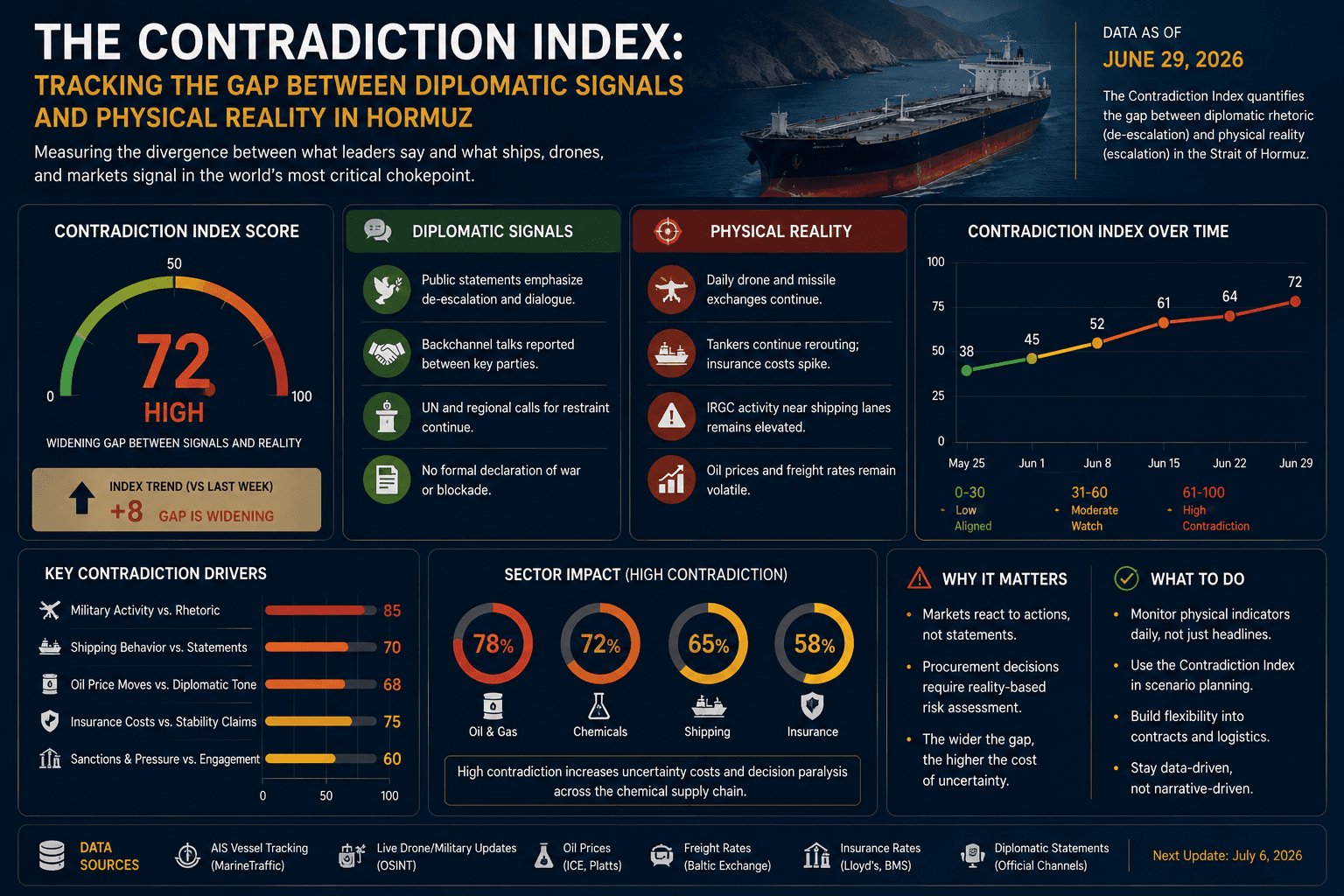
Tightening global supply of MEG, PTA, and polypropylene due to Hormuz-linked disruptions
The onset of monsoon-driven demand shifts in agriculture and construction chemicals
Together, these factors are creating a highly reactive procurement environment across India’s petrochemical value chain.

1. The June 30 Duty Decision: A Critical Policy Pivot
India’s inter-ministerial panel is currently reviewing the continuation of customs duty exemptions covering a basket of 40 petrochemical products.
Why this matters:
The exemption supports cost-competitive imports of key intermediates
It directly affects landed pricing for polymers and glycols
It influences downstream margins across manufacturing sectors
Key products impacted:
MEG (Monoethylene Glycol)
PTA (Purified Terephthalic Acid)
Polypropylene (PP)
Selected olefins and intermediates
Market implication:
If the exemption is reduced or withdrawn:
Import parity prices could rise immediately in Q3
Domestic polymer producers gain pricing power
Downstream sectors (textiles, packaging, automotive plastics) face margin compression
If extended:
Import pressure continues on domestic producers
Global suppliers retain strong access to Indian demand
Price stability returns to downstream sectors
This decision effectively sets the tone for India’s entire petrochemical pricing structure for the next quarter.

2. MEG, PTA, and PP: Import Stress Intensifies
India’s import-dependent segments are already under strain due to global supply disruptions linked to the Hormuz situation.
Key impacted materials:
MEG (Monoethylene Glycol)
Critical for polyester fiber and PET resin
Tight global supply due to Middle East constraints
CFR India prices remain highly volatile
Monoethylene glycol CAS: 107-21-1
PTA (Purified Terephthalic Acid)
Backbone of polyester manufacturing
Strong dependency on Asian and Gulf supply chains
Freight premiums are amplifying landed cost pressure
Polypropylene (PP)
Used in packaging, automotive, textiles
Sensitive to crude-linked feedstock volatility
Tight availability in spot markets
Purified Terephthalic Acid CAS: 100-21-0
Downstream Impact
Key consuming sectors include:
Polyester fiber and textiles
PET bottle manufacturing
Flexible and rigid packaging
Automotive components
These sectors are increasingly exposed to import cost volatility + policy uncertainty simultaneously, a rare combination that complicates Q3 planning.
3. Monsoon Season Demand Shift
As the monsoon season begins, India’s chemical demand pattern undergoes a structural seasonal shift.
Rising demand segments:
Agrochemicals
Pesticides
Herbicides
Fungicides
Fertilizer-related chemicals
Construction chemicals
Waterproofing agents
Admixtures
Sealants and coatings
Why demand shifts:
Agricultural activity intensifies during monsoon planting cycles
Infrastructure and construction timelines accelerate post-pre-monsoon delays
Inventory buildup occurs ahead of peak usage season
This seasonal pull increases demand for select chemical categories even as polymer markets face policy uncertainty.
4. Role of Major Indian Players
Reliance Industries
Reliance Industries Limited remains central to India’s petrochemical ecosystem.
Integrated refining-to-chemicals operations
Strong presence in MEG, PTA, and polymers
Sensitive to both import pricing and domestic policy changes
Indian Oil Corporation
Indian Oil Corporation Limited plays a key balancing role:
Domestic production of petrochemicals
Import substitution strategy in select chains
Exposure to feedstock and crude-linked volatility
Both companies are actively adjusting procurement, production scheduling, and inventory strategies based on the June 30 decision outcome.

5. Strategic Market Tension: Three Forces Colliding
India’s chemical market is currently being shaped by a rare three-way tension:
Policy Force:
Customs duty exemption decision (structural cost impact)
Global Supply Force:
MEG/PTA/PP tightening due to Middle East disruption
Seasonal Demand Force:
Monsoon-driven agrochemical and construction demand spike
This combination is increasing volatility across:
Import pricing
Domestic polymer margins
Inventory strategies
Contract negotiations
6. Importer Behavior: Caution and Acceleration at the Same Time
Procurement behavior in India is becoming fragmented:
Pre-June 30 behavior:
Accelerated imports (hedging against duty increase)
Short-term contracting
Inventory buildup for Q3
Post-decision behavior (expected):
Either demand pause (if policy uncertain)
Or rapid restocking (if clarity is provided)
This “wait-and-react” cycle is increasing spot market volatility.
Market Outlook
India’s chemical market is entering Q3 2026 with unusually high uncertainty. Unlike typical seasonal cycles, where demand is predictable and pricing is supply-driven, the current situation is shaped by policy, geopolitics, and seasonal demand simultaneously.
If duty exemptions are maintained, import flows will remain strong despite global supply stress. If they are reduced or removed, domestic producers will regain pricing leverage, but downstream industries will face margin pressure.
At the same time, monsoon-driven demand in agriculture and construction chemicals is providing a stabilizing counterweight to polymer volatility.
Key Takeaways
India’s June 30 customs duty decision is a major Q3 pricing trigger.
MEG, PTA, and PP supply is already tight due to Hormuz-linked disruptions.
Monsoon season is boosting agrochemical and construction chemical demand.
Reliance Industries Limited and Indian Oil Corporation Limited are key market stabilizers.
Policy + geopolitics + seasonal demand are converging simultaneously.
Importers are front-loading purchases ahead of policy clarity.
Q3 pricing will depend heavily on the outcome of the duty exemption review.