
Introduction
In the bustling industrial and commercial landscape of Singapore, a wide array of chemical compounds form the backbone of countless manufacturing processes. Among these, stearic acid stands out as a versatile and indispensable fatty acid with a footprint in industries ranging from personal care to heavy manufacturing. As a global trading hub with a sophisticated chemical sector, Singapore plays a pivotal role in the supply chain for this essential ingredient. Understanding its properties, applications, and the dynamics of its local market is crucial for businesses seeking to optimize their operations and source high-quality raw materials.
This article provides a comprehensive exploration of stearic acid, delving into its scientific characteristics, diverse industrial applications, and the specific trends shaping its market in Singapore. Furthermore, it offers practical guidance on navigating the supplier landscape, emphasizing the importance of partnering with reputable distributors like Chemtradeasia to ensure consistent quality, reliable supply, and competitive advantage in a demanding regional market.
What is Stearic Acid? Properties and Production
Stearic acid, scientifically known as octadecanoic acid, is a saturated long-chain fatty acid. It appears as a white, waxy solid at room temperature and is odorless with a mild, characteristic fatty odor when heated. Its chemical stability, derived from its saturated nature, makes it resistant to oxidation, a key property for many industrial applications. It is poorly soluble in water but readily dissolves in organic solvents like ethanol and chloroform. These physical and chemical properties, its melting point (around 69-70°C), lubricity, and ability to act as an emulsifier and surfactant, dictate its widespread utility.
The production of stearic acid primarily involves the hydrolysis of fats and oils, a process called saponification, followed by separation and distillation. Traditionally, animal tallow was a major source, but today, plant-based sources dominate, especially in environmentally conscious markets. In Southeast Asia, including Singapore's supply network, palm oil and palm kernel oil are the predominant feedstocks. The fatty acid composition from palm oil is then fractionated to isolate palmitic and stearic acids. This shift to vegetable-based production aligns with both consumer preferences for non-animal derivatives and the abundant palm oil resources in the region, making Singapore a strategic node for its distribution.
Commercial stearic acid is rarely 100% pure; it is often a mixture with palmitic acid. Grades are typically distinguished by their stearic acid content, such as stearic acid 90% or stearic acid 70%, with the remainder primarily being palmitic acid. Furthermore, it is available in different forms like flakes, beads, or powder, and is categorized by its source and processing to meet specific industry standards, such as food-grade, pharmaceutical-grade, and technical-grade. This variety allows manufacturers to select the precise specification needed for their formulation.
Key Applications and Industrial Uses of Stearic Acid
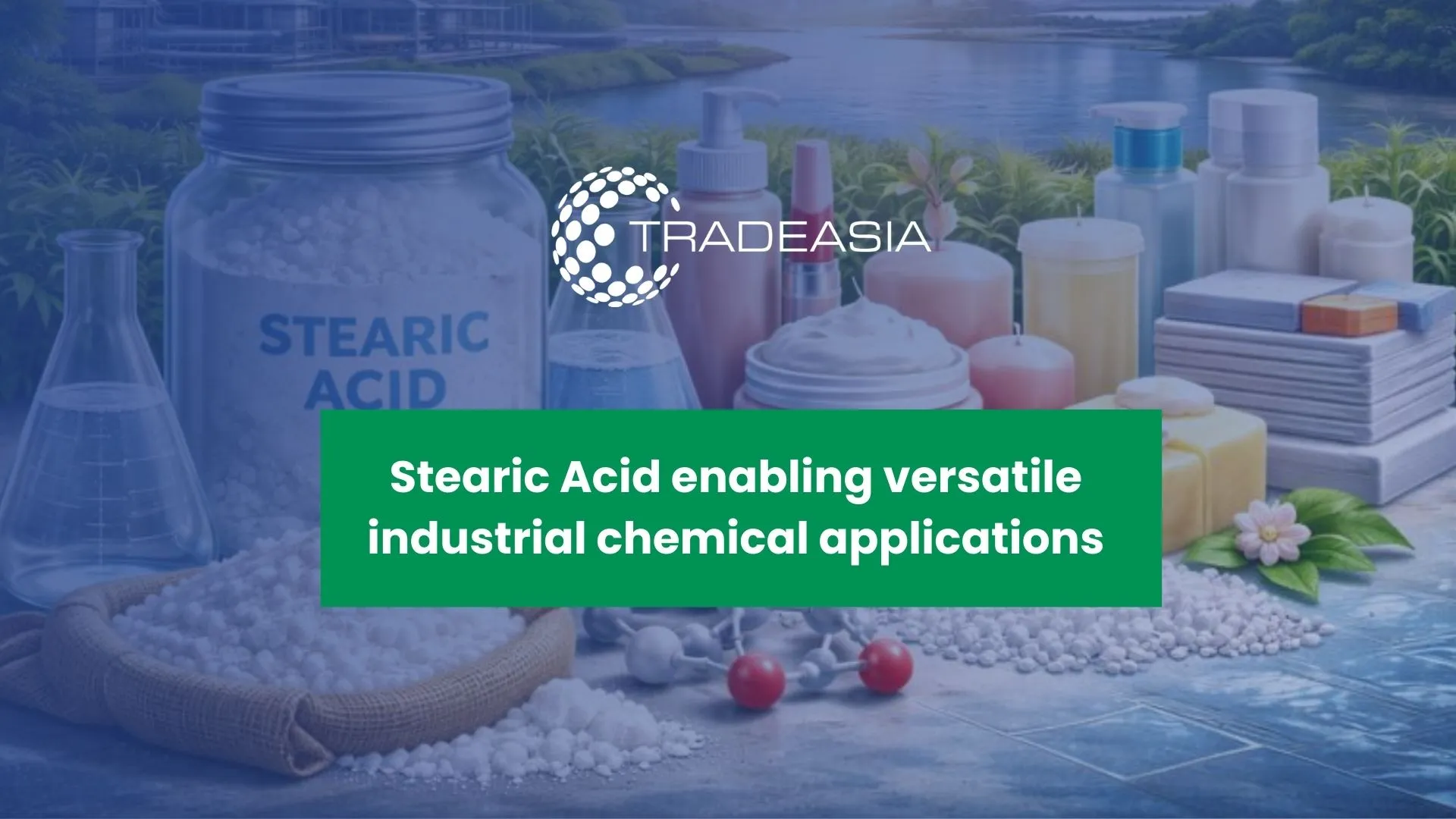
The utility of stearic acid spans a remarkable spectrum of industries, a testament to its multifunctional nature. In the cosmetics and personal care industry, it is a fundamental ingredient. It acts as a surfactant and cleansing agent in soaps, a thickener and emulsifier in creams and lotions, and a lubricant in shaving products. Its ability to create a stable emulsion between oil and water is invaluable. In deodorants and antiperspirants, stearic acid helps control the viscosity and provides structure to sticks. The demand for high-purity, vegetable-derived stearic acid is particularly strong in this sector, driven by consumer trends towards natural and sustainable ingredients.
In the realm of polymer and rubber manufacturing, stearic acid serves as a crucial processing aid and activator. During rubber vulcanization, it reacts with zinc oxide to form zinc stearate, which acts as a catalyst, improving the efficiency of the sulfur cross-linking process. It also functions as a plasticizer and lubricant, preventing rubber compounds from sticking to processing equipment and aiding in dispersion of fillers like carbon black. Similarly, in plastics (PVC), it is used as a lubricant and mold release agent. Beyond these, it finds use in the production of candles as a hardener, in food as a release agent and emulsifier (food grade E570), and in metalworking as a component of lubricants and corrosion inhibitors.
The specific application dictates the required grade. For instance, the production of high-quality bar soaps may require a specific iodine value and titre to ensure hardness and lather quality. Rubber compounders will prioritize a grade that offers consistent activation properties. This underscores the importance of technical expertise from suppliers, who must provide not just the chemical, but also the application knowledge to help clients select the optimal product for their process, ensuring performance and cost-effectiveness.
The Stearic Acid Market in Singapore: Trends and Insights
Singapore's position as a global logistics hub and its well-established petroleum and chemical sector make it a central player in the Asian stearic acid market. The country serves as a key import, re-export, and distribution point for the region. Major sources of imports include neighboring Malaysia and Indonesia, the world's largest palm oil producers, as well as other ASEAN countries and India. This geographic advantage ensures a steady and cost-competitive supply of palm-based stearic acid for both domestic consumption and regional trade.
Current market trends are significantly influenced by global shifts towards sustainability and traceability. There is growing demand for RSPO (Roundtable on Sustainable Palm Oil) certified stearic acid, especially from multinational corporations in the cosmetics and food industries committed to sustainable sourcing policies. Singapore-based traders and suppliers are increasingly offering certified sustainable options to meet this demand. Furthermore, the rise of bio-based and green chemistry initiatives in Singapore supports innovation in downstream applications of stearic acid, such as in biolubricants and biodegradable polymers.
Market dynamics are also shaped by regional industrial activity. The strength of the automotive and electronics sectors in Southeast Asia drives demand for rubber and plastic components, thereby sustaining need for stearic acid as a processing chemical. Price volatility in the upstream palm oil market directly impacts stearic acid costs, making supply chain management and strategic sourcing through reliable partners essential for price stability. Suppliers in Singapore must navigate these fluctuations, offering flexible logistics solutions and inventory management to buffer clients against market shocks.
Sourcing Stearic Acid: Choosing a Reliable Supplier in Singapore
Selecting the right supplier for stearic acid in Singapore is a critical business decision that affects product quality, production continuity, and bottom-line costs. A reliable supplier does more than just sell chemicals; they act as a strategic partner. Key criteria include a proven track record of consistency in product quality (verified by Certificates of Analysis), the ability to supply multiple grades (cosmetic, food, technical), and a robust logistics network that ensures on-time delivery. For companies like Chemtradeasia, these are foundational service pillars, ensuring clients receive the correct specification of stearic acid, whether in bags, drums, or bulk, without disruption.
Technical support and regulatory knowledge are equally vital. A competent supplier should provide comprehensive technical data sheets (TDS) and material safety data sheets (MSDS), and offer guidance on handling, storage, and application. In a regulated environment like Singapore, understanding and complying with local regulations (e.g., NEA guidelines for chemical storage) and international standards is non-negotiable. Furthermore, with the complexity of international trade, a supplier's expertise in handling customs clearance, documentation, and regional distribution can significantly streamline the procurement process for buyers.
Finally, in today's market, value-added services differentiate top-tier suppliers. This includes offering sustainable and certified product lines, providing market intelligence on price trends and supply availability, and demonstrating flexibility in order sizes and payment terms. A supplier with strong relationships with multiple producers can offer better security of supply. For businesses operating in Singapore's competitive landscape, partnering with a supplier that embodies reliability, expertise, and customer-centric service is an investment in operational resilience and long-term success.
Conclusion
Stearic acid remains a cornerstone chemical in modern industry, its relevance undiminished by its long history of use. From the soap in our bathrooms to the tires on our vehicles, its contributions are pervasive. In Singapore, a nation built on trade and advanced manufacturing, the stearic acid market reflects both global trends and regional strengths, characterized by a move towards sustainable sourcing and driven by the robust industrial activity of Southeast Asia.
For businesses seeking to leverage the benefits of this versatile fatty acid, success hinges on informed sourcing. Understanding the specific grade requirements for your application and partnering with a dependable, knowledgeable supplier is paramount. Suppliers like Chemtradeasia, with their deep market integration, commitment to quality, and customer-focused approach, provide the essential link between raw material availability and manufacturing excellence, enabling companies in Singapore and beyond to innovate and compete effectively in their respective fields. To source high-quality stearic acid with consistent specifications and dependable regional supply, businesses in Singapore and across Asia can connect with our expert team through the Contact Us page.