
Introduction
The procurement of industrial chemicals is a critical backbone for numerous sectors, from pharmaceuticals and textiles to steel pickling and water treatment. Among these essential chemicals, Hydrochloric Acid (HCl) stands out for its versatility and widespread application. In India's rapidly industrializing economy, the demand for high-purity, reliably sourced HCl is consistently high. However, sourcing this potent and hazardous chemical is not a simple transactional purchase. It demands a strategic approach that balances cost, quality, reliability, and, above all, safety.
For procurement managers, plant operators, and business owners, navigating the Indian chemical supply landscape can be challenging. The market is populated with numerous suppliers, varying quality standards, and a complex web of transportation and storage regulations. A misstep in sourcing can lead to production downtime, safety incidents, environmental non-compliance, and significant financial loss. This comprehensive guide is designed to demystify the process, providing a detailed roadmap for safely and effectively sourcing Hydrochloric Acid for industrial use within the Indian context.
This article will delve into the technical specifications of different HCl grades, analyze current market dynamics, outline rigorous supplier evaluation criteria, and emphasize the non-negotiable aspects of safety and regulatory adherence. By the end, you will be equipped with the knowledge to make informed, secure, and strategic sourcing decisions that protect your operations, your people, and your bottom line.
Understanding Hydrochloric Acid: Grades and Specifications
Not all Hydrochloric Acid is created equal. Its suitability for an industrial process is entirely dependent on its grade and purity. Primarily, HCl is available in two major grades: Technical Grade and Food/Pharmaceutical Grade. Technical Grade Hydrochloric Acid, often referred to as muriatic acid in lower concentrations, is commonly used in metal cleaning, ore processing, pH adjustment in wastewater, and regeneration of ion exchange resins. Its concentration typically ranges from 30% to 35% HCl by weight, and it may contain trace impurities like iron, sulfate, or other heavy metals, which are acceptable for many industrial applications but not for sensitive processes.
In contrast, Food Grade or Reagent Grade Hydrochloric Acid is characterized by its exceptionally high purity. It is produced and handled under stringent conditions to minimize contaminants. This grade is essential for the production of food additives like aspartame and lysine, in pharmaceutical synthesis (e.g., for producing pharmaceuticals like ascorbic acid), and in laboratory analytical work. Key specifications for this grade include very low limits on heavy metals, sulfated ash, and oxidative substances. When sourcing, the Certificate of Analysis (CoA) is the critical document that verifies these specifications against agreed-upon standards like USP, BP, or IP.
Therefore, the first and most crucial step in sourcing is to precisely define your technical requirement. Engage with your process engineers to determine the required concentration, permissible impurity levels, and any other specific parameters. Providing this detailed specification to potential suppliers, such as chemtradeasia.com, ensures you receive quotations for the exact product you need, avoiding costly mismatches between the delivered chemical and your process requirements.
The Indian Hydrochloric Acid Market: Trends and Insights
The Indian Hydrochloric Acid market is intrinsically linked to the performance of its key consuming industries. As a by-product of the chlor-alkali industry (primarily from the production of caustic soda) and the manufacture of organic chemicals like vinyl chloride, its supply is often influenced by the demand dynamics of these parent industries. A significant trend is the growing demand from the water treatment sector, driven by increased environmental regulations and infrastructure development. HCl is vital for pH correction and regeneration of demineralization plants across power stations, textiles, and chemical factories.
Geographically, major production and consumption hubs are located in Gujarat, Maharashtra, Tamil Nadu, and Uttar Pradesh, where large-scale chemical and pharmaceutical clusters reside. This concentration impacts logistics and cost. Sourcing from a supplier with a strong logistical network or storage facilities near your plant, like many established platforms offer, can lead to substantial savings and reliability in supply chain management. Furthermore, the market is witnessing a gradual shift towards more organized and digital procurement channels.
Platforms that aggregate suppliers and provide detailed product listings, company verifications, and streamlined inquiry processes are becoming increasingly valuable. They offer buyers transparency and access to a wider supplier base beyond their immediate geographical reach. This digital shift helps in comparing not just prices, but also supplier credentials, product specifications, and service terms, enabling a more holistic and competitive sourcing strategy for chemicals like Hydrochloric Acid.
Key Criteria for Selecting a Reliable Supplier
Choosing a supplier for a hazardous chemical like HCl goes far beyond comparing price per kilogram. The reliability and professionalism of your supplier are direct contributors to your operational safety and continuity. The foremost criterion is verification of credentials. A reputable supplier must possess all necessary licenses, including a valid Chemical License, GST registration, and approvals for storage and transportation of hazardous chemicals as per the Manufacture, Storage and Import of Hazardous Chemical (MSIHC) Rules and other state regulations.
Secondly, evaluate the supplier's technical capability and quality assurance processes. Do they have in-house quality control labs? Can they provide consistent, batch-wise Certificates of Analysis (CoA)? A supplier's willingness to share safety data sheets (SDS) proactively and discuss handling procedures is a strong indicator of their commitment to responsible stewardship. Established chemical sourcing platforms often pre-vet suppliers on these parameters, adding a layer of trust for the buyer.
Finally, assess their logistical and support infrastructure. Hydrochloric Acid requires specialized tankers or HDPE containers for transport. Does the supplier own or have assured access to such compliant logistics? What is their track record for on-time delivery? Furthermore, post-sale support is critical. A good supplier should be a partner who can provide technical guidance on storage, handling, and even troubleshooting. Building a relationship with a knowledgeable and responsive supplier, accessible through professional channels, is an invaluable asset for any industrial operation.
Safety, Handling, and Regulatory Compliance
Safety in sourcing HCl extends beyond the point of purchase; it encompasses the entire chain of custody from the supplier's facility to your point of use. The cornerstone of chemical safety is the Safety Data Sheet (SDS), formerly MSDS. A compliant SDS provides exhaustive information on hazards, composition, first-aid measures, fire-fighting, accidental release measures, handling, storage, exposure controls, and disposal. It is a legal and practical necessity. Before finalizing any purchase, ensure you have the latest, regionally compliant SDS for the specific product grade you are buying.
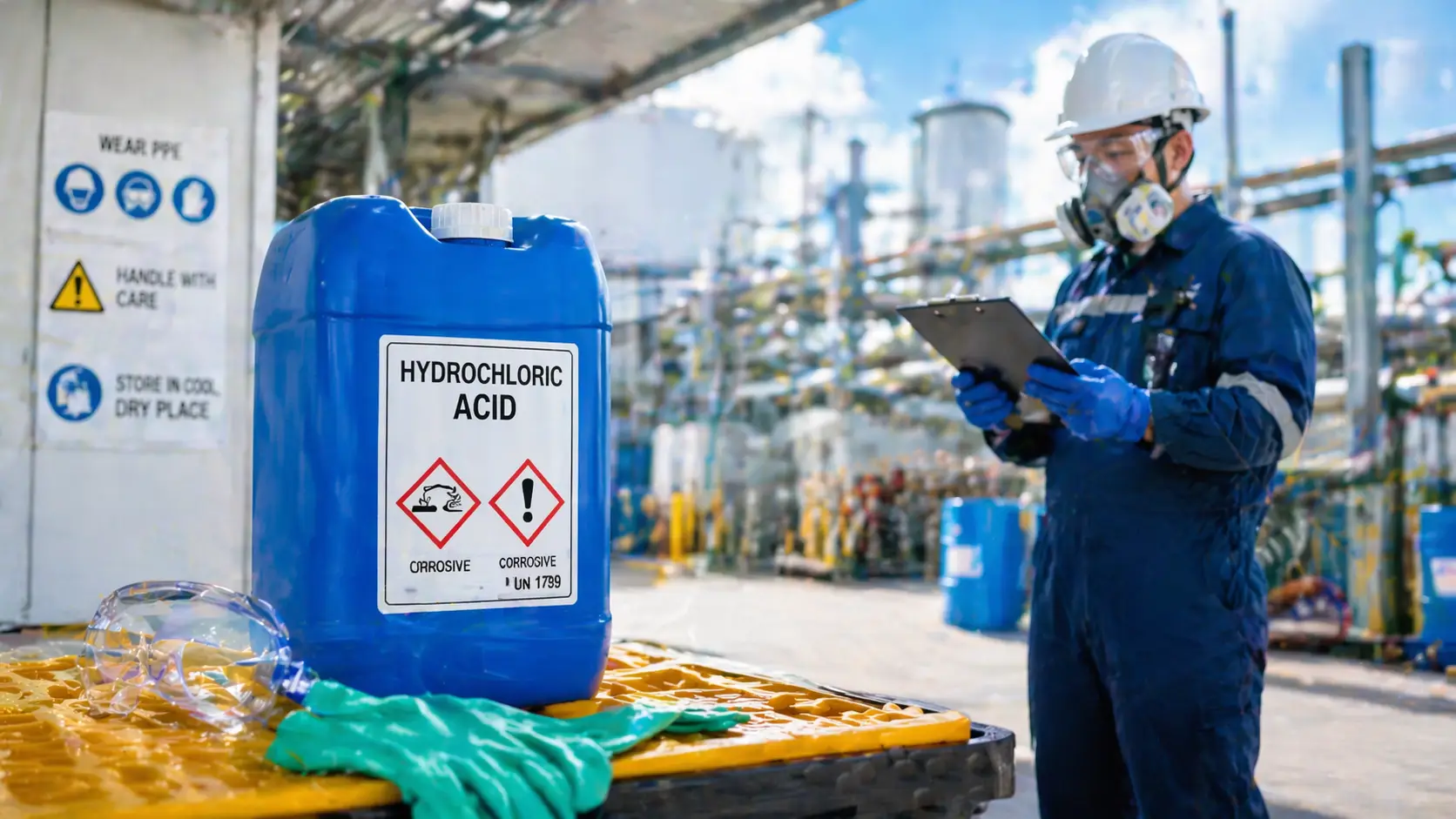
On the regulatory front, compliance is non-negotiable. In India, the handling and storage of Hydrochloric Acid are governed by multiple regulations including the Factories Act, 1948, the Hazardous Waste (Management, Handling and Transboundary Movement) Rules, and state-specific pollution control board norms. Your facility must have the requisite licenses for storage (depending on quantity), trained personnel, proper labeling, appropriate personal protective equipment (PPE) like acid-resistant suits, face shields, and respirators, and engineered controls like fume scrubbers and secondary containment systems.
Your supplier plays a key role in this compliance ecosystem. They must transport the chemical using authorized carriers with proper hazard placards (Corrosive, Class 8). They should also be able to advise on or provide compliant packaging. Furthermore, for bulk procurement, understanding the terms of incoterms is vital—clarifying who is responsible for risk and cost at each stage of transport prevents disputes and ensures safety protocols are uninterrupted. A lapse in any of these areas can result in severe penalties, operational shutdowns, or catastrophic accidents.
Conclusion
Sourcing Hydrochloric Acid for industrial applications in India is a multifaceted process that intertwines technical knowledge, market awareness, diligent supplier vetting, and an unwavering commitment to safety. In a competitive market, the cheapest option is rarely the most cost-effective when total cost of ownership—factoring in risks of contamination, supply disruption, or regulatory fines—is considered. A strategic approach, leveraging detailed product specifications, insights into market trends, and a rigorous checklist for supplier evaluation, establishes a foundation for secure and efficient procurement.
The evolution of digital B2B marketplaces has provided procurement professionals with powerful tools to streamline this process, offering transparency, verification, and access to a national network of qualified suppliers. By prioritizing partnerships with suppliers who demonstrate technical expertise, robust safety protocols, and reliable logistics, industrial buyers can secure not just a chemical, but a pillar of stability for their production processes. This diligent approach ensures that the essential benefits of HCl are harnessed effectively while mitigating the inherent risks associated with its use.
Disclaimer: The information provided in this article is for general informational and market insight purposes only. It is not intended to serve as technical, safety, or professional advice for the handling, storage, or use of Hydrochloric Acid. Conditions and regulations may vary. Readers must independently verify all information, consult the latest official Safety Data Sheets (SDS), adhere to all local and national regulations, and seek guidance from qualified chemical safety professionals and engineers for their specific applications and circumstances. For precise product specifications and expert consultation, please contact our team directly.