Every week brings new developments that influence chemical pricing, procurement decisions and industrial supply chains. This week was particularly significant because several events affected key markets ranging from crude oil and polymers to coatings and aluminium feedstocks.
For buyers, traders and manufacturers, these developments provide valuable signals regarding pricing direction and procurement strategy for the second half of 2026.
1. Crude Oil Fell Below Key Levels as Hormuz Risks Eased
The biggest macroeconomic development this week came from energy markets.
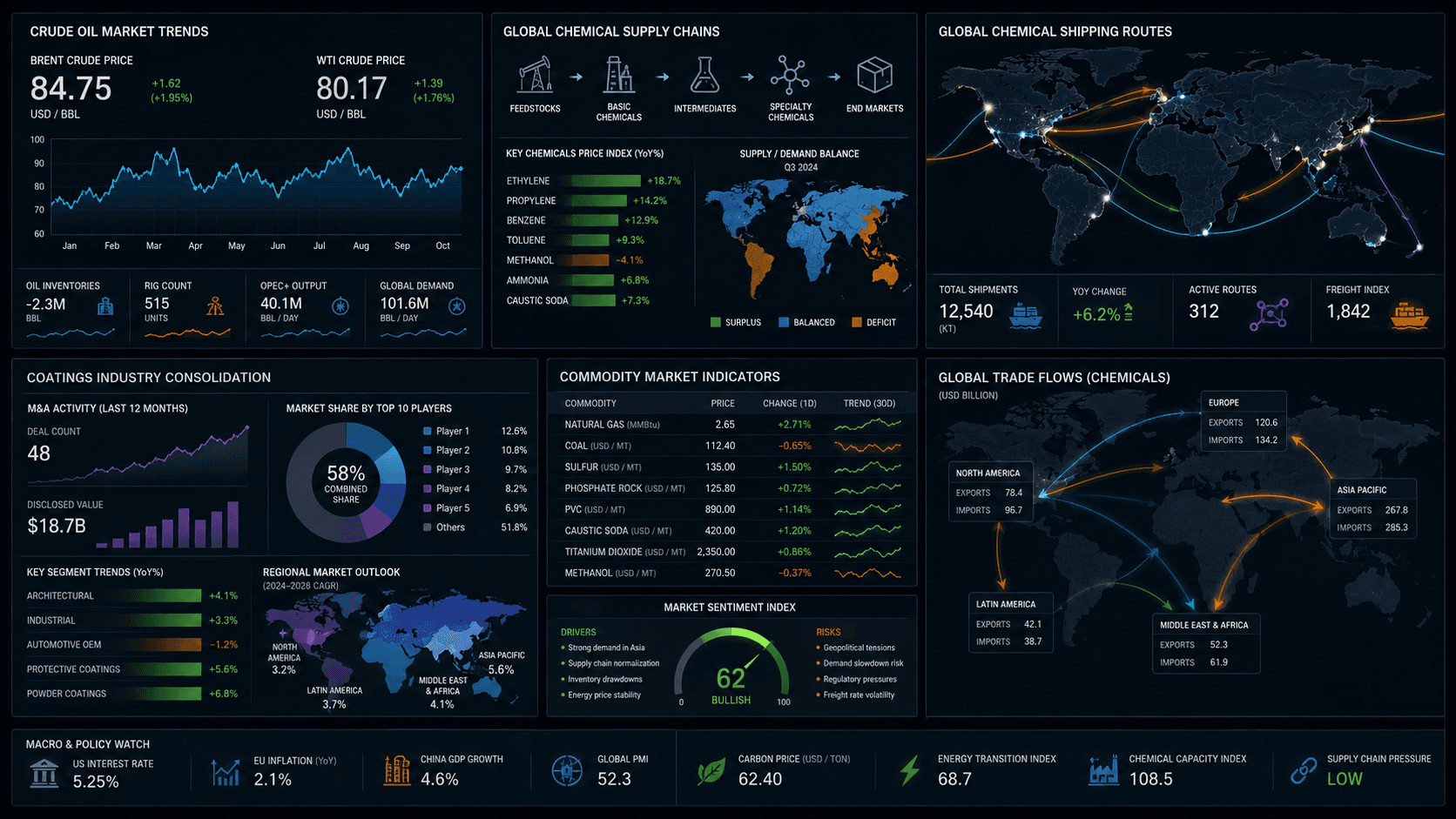
WTI crude oil declined to approximately USD 85.94 per barrel, its lowest level since April, as diplomatic progress between the United States and Iran improved market sentiment. Increased tanker traffic through the Strait of Hormuz also reduced concerns regarding immediate supply disruptions.
For chemical markets, lower crude prices could eventually influence:
Naphtha costs.
Aromatics pricing.
Olefins production economics.
Polymer feedstocks.
Solvent markets.
While downstream chemical prices typically lag energy markets, procurement teams should monitor whether this crude oil correction begins flowing through into petrochemical pricing during the coming weeks.
2. The AkzoNobel-Axalta Merger Moved Closer to Reality
A major development in the coatings industry occurred after both Sherwin-Williams and Nippon Paint ended efforts related to acquiring AkzoNobel.
This effectively clears the path for the proposed AkzoNobel-Axalta combination.
For chemical suppliers, the implications are substantial because larger coatings companies generally possess greater purchasing leverage across:
Titanium dioxide.
Acrylic resins.
Epoxy resins.
Specialty solvents.
Performance additives.
The coatings sector continues moving toward consolidation, meaning suppliers may increasingly face fewer customers with stronger negotiating power.

3. Guinea's Bauxite Export Caps Raised Alumina Concerns
Guinea confirmed export restrictions targeting approximately 150 million tonnes annually, creating concerns throughout the aluminium value chain.
The country remains one of the world's most important suppliers of bauxite, the primary raw material used to produce alumina and ultimately aluminium.
Potential impacts include:
Higher bauxite prices.
Increased alumina production costs.
Pressure on Chinese refiners.
Increased raw material procurement risk.
Because aluminium is widely used in transportation, packaging and construction, cost increases may eventually influence multiple industrial sectors.
4. Indian Polyethylene Buyers Became More Cautious
Another important development involves India's temporary import duty waiver.
With the waiver scheduled to expire on June 30, many polyethylene importers are reportedly becoming more cautious regarding new purchasing commitments.
Market participants are evaluating:
Potential post-waiver costs.
Import economics.
Inventory requirements.
Supplier negotiations.
The approaching deadline could affect polyethylene purchasing behavior during the remainder of June and potentially influence regional trade flows in the third quarter.
5. China's New VOC Rules Are Changing Solvent Demand
China's updated coatings VOC standard officially took effect on June 1.
The regulation is expected to encourage greater adoption of lower-VOC and water-based coating technologies across portions of the market.
For chemical suppliers, this could gradually influence demand patterns involving:
Solvent-based coatings.
Waterborne coatings.
Specialty additives.
Acrylic dispersions.
Low-VOC formulation technologies.
Although changes will occur gradually, the direction of travel remains clear: environmental regulations continue encouraging a shift toward more sustainable coating technologies.
What Procurement Teams Should Watch Next Week
The market themes emerging from this week's developments point toward three major areas of focus:
Energy and Feedstocks
Watch whether lower crude oil prices begin affecting:
Naphtha.
Aromatics.
Solvents.
Polymer feedstocks.
Trade and Regulation
Monitor:
India's import duty decisions.
Chinese VOC implementation impacts.
Future tariff developments globally.
Industry Consolidation
The coatings sector remains one of the most active areas for merger and acquisition activity, with potential implications for chemical suppliers throughout the value chain.
The Bottom Line
This week highlighted how quickly chemical market fundamentals can shift. Falling crude oil prices suggest potential relief for petrochemical buyers, while coatings industry consolidation, bauxite export restrictions and new environmental regulations introduce fresh uncertainty into several industrial value chains.
For procurement teams, the key takeaway is that energy markets, regulatory developments and corporate transactions are increasingly interconnected. Companies that closely monitor these signals will be better positioned to anticipate pricing movements, manage supply risks and identify opportunities as the market evolves through the second half of 2026.
Stay tuned for next week's market brief as we continue tracking the developments shaping global chemical trade and procurement.
Titanium Dioxide (NR950 Rutile) - China CAS: 13463-67-7