Freight Rates Remain Elevated
One of the clearest indicators that the crisis is not over can be found in freight markets.
Spot freight rates between China and Jebel Ali remain dramatically above pre-crisis levels.
Despite the ceasefire announcement:
Freight premiums remain elevated.
Capacity shortages continue.
Vessel positioning remains disrupted.
Charter rates remain volatile.
The logistics system is still adjusting to months of disruption.
This means chemical importers should not expect transportation costs to normalize immediately.
Container Capacity Has Not Returned
Another challenge involves displaced shipping capacity.
Large portions of global container capacity were repositioned during the crisis as carriers adjusted schedules and routing decisions.
Current estimates suggest approximately:
250,000 TEU of weekly container capacity remains displaced.
Restoring capacity requires more than reopening trade routes.
Shipping lines must:
Reposition vessels.
Rebuild schedules.
Rebalance equipment.
Restore service reliability.
These processes typically take months rather than weeks.
UAE Energy Officials Expect a Long Recovery
Perhaps the most important signal comes from regional energy officials.
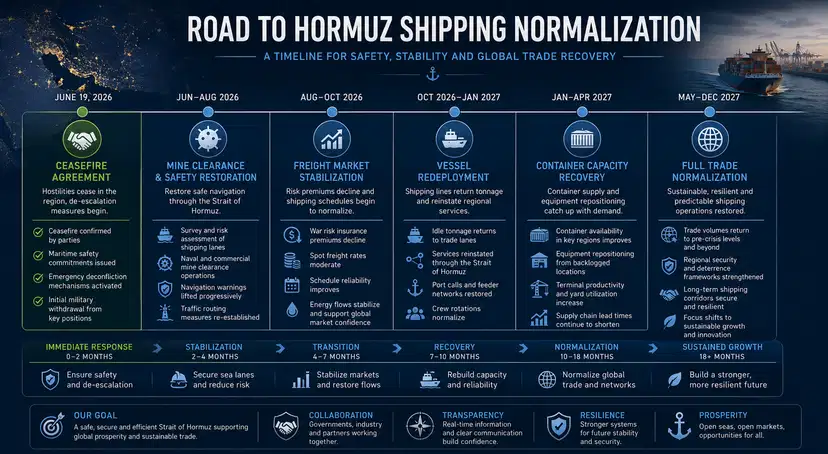
Industry projections suggest that full normalization of Hormuz traffic may not occur until 2027.
This reflects the complexity of restoring:
Shipping confidence.
Insurance coverage.
Vessel availability.
Port operations.
Trade flows.
For chemical buyers, this means elevated logistics costs could remain part of procurement planning well into next year.
Why Chemical Buyers Should Remain Cautious
History shows that shipping disruptions often outlast the geopolitical events that caused them.
Even when military tensions decline, logistics systems require time to recover.
Key risks still facing chemical buyers include:
Extended lead times.
Freight volatility.
Capacity constraints.
Insurance surcharges.
Route adjustments.
Companies that assume a rapid return to pre-crisis logistics conditions may underestimate ongoing procurement risks.
What Procurement Teams Should Do Now
Rather than expecting immediate normalization, buyers should focus on resilience.
Recommended actions include:
Maintain Extended Lead Times
Procurement planning should continue assuming longer transit times than historical averages.
Protect Strategic Inventory
Reducing inventory too aggressively could expose operations to renewed logistics disruptions.
Review Contract Structures
Freight escalation clauses and supply flexibility provisions remain important.
Diversify Supply Sources
Regional diversification continues to provide valuable protection against logistics concentration risk.
Monitor Freight Markets Weekly
Shipping conditions remain highly dynamic and require continuous monitoring.
Which Chemical Markets Remain Most Exposed?
The sectors most sensitive to Hormuz-related logistics disruptions include:
Methanol.
Urea.
Polyethylene.
Polypropylene.
Aromatics.
Solvents.
Base petrochemicals.
Buyers in these categories should remain particularly vigilant regarding freight developments.
The Bottom Line
The June 19, 2026 ceasefire framework is unquestionably positive news for global trade and chemical shipping. It reduces immediate geopolitical risk and creates a pathway toward eventual normalization.
But the chemical industry should avoid assuming that normal conditions have already returned.
Mine risks remain unresolved, freight rates remain elevated, container capacity is still displaced and industry experts continue to caution against expectations of a rapid recovery. The logistics challenges created during the crisis will take time to unwind.
For chemical importers, traders and procurement professionals, the key message is simple: the ceasefire is the first step toward recovery—not the final step. Supply chain resilience, careful inventory planning and disciplined procurement strategies remain essential as the industry navigates the transition from disruption toward normalization.
Looking for market intelligence on freight, chemical logistics and procurement risk? Explore the latest supply chain insights and sourcing opportunities on our platform today.
Methanol CAS: 67-56-1