A dataset built from 50,688 chemical reactions may become one of the most important developments in chemical process innovation this decade. Released following a large-scale effort reported by Chemical & Engineering News in June 2026, the dataset focuses on improving AI-driven prediction of C–N coupling reactions, a cornerstone of pharmaceutical and specialty chemical manufacturing.
For chemical producers, API manufacturers and R&D leaders, the significance goes far beyond academic research. If AI can reliably predict catalyst selection and reaction conditions, companies could shorten development cycles, reduce laboratory costs and accelerate commercialization of new products. Some industry estimates suggest AI-assisted catalyst prediction could reduce process development timelines by 30% to 50%.
Why C–N Coupling Matters Across the Chemical Industry
C–N coupling refers to reactions that create carbon-nitrogen bonds. These bonds appear in a vast number of commercially important molecules.
The reaction class plays a central role in:
Pharmaceutical active ingredients.
Crop protection products.
Specialty performance chemicals.
Electronic materials.
Advanced polymer intermediates.
Because these reactions occur so frequently across industrial chemistry, even small improvements in catalyst selection can generate significant cost savings and productivity gains.
Many manufacturers spend months optimizing reaction conditions during process development. Catalyst selection often becomes one of the most time-consuming stages of the entire R&D cycle.
The Scale of the New AI Catalyst Dataset
The newly published dataset stands out because of its size and practical focus.
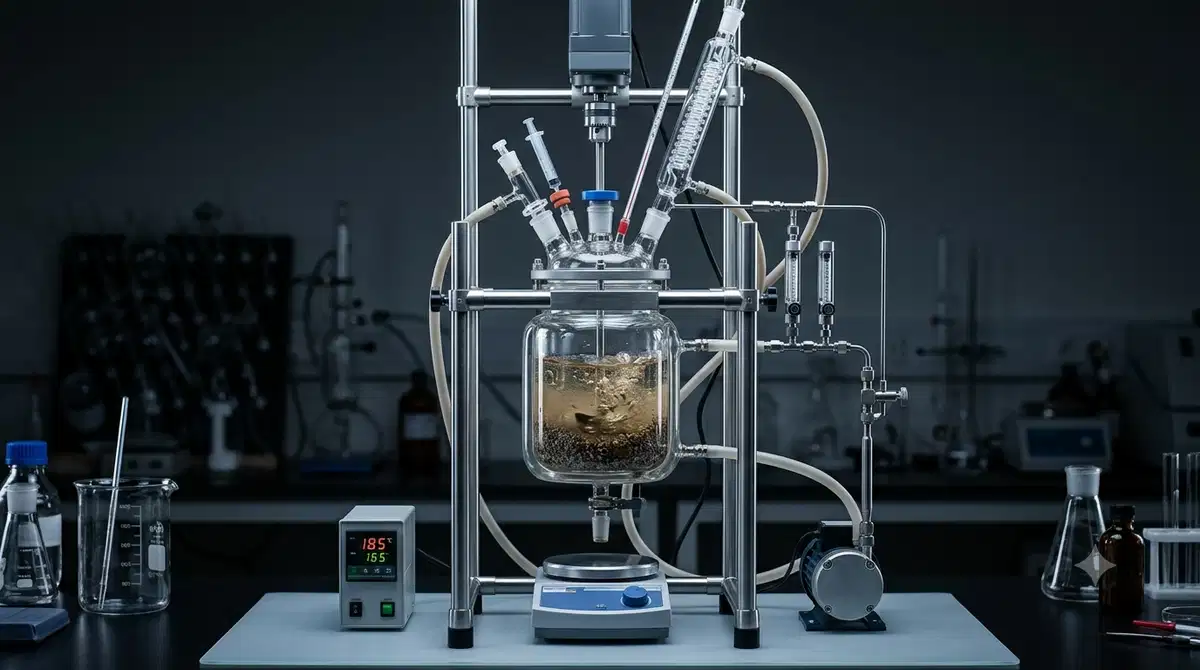
Researchers conducted 50,688 individual reactions to generate training data capable of improving machine learning models used in catalyst prediction. Unlike smaller academic datasets, this project was designed to capture a broad range of reaction outcomes and operating conditions.
The resulting database provides AI systems with a substantially larger foundation for identifying relationships between:
Catalyst choice.
Reaction yield.
Substrate combinations.
Process conditions.
Performance outcomes.
The more reaction data available to machine learning systems, the greater their ability to identify patterns that human researchers may overlook.
How AI Is Changing Catalyst Development
Traditional catalyst development relies heavily on experimentation.
Chemists typically evaluate numerous catalyst candidates, reaction temperatures, solvents and process parameters before identifying an optimal pathway. While scientific expertise remains essential, trial-and-error experimentation often consumes substantial resources.
AI introduces a different approach.
Instead of testing every possible combination, machine learning models can prioritize the most promising options before laboratory work begins.
Potential benefits include:
Faster reaction optimization.
Reduced raw material consumption.
Lower laboratory operating costs.
Improved probability of first-pass success.
More efficient use of research personnel.
This shift does not replace chemists. Rather, it enables researchers to focus on higher-value scientific decisions instead of repetitive screening activities.
Why Specialty Chemical Producers Should Pay Attention
Specialty chemical companies often compete through innovation, customization and speed to market.
Reducing development timelines creates several strategic advantages:
Faster commercialization of new products.
Improved responsiveness to customer requirements.
Lower process development expenses.
Greater flexibility in pursuing niche opportunities.
Enhanced competitiveness against larger producers.
For many specialty manufacturers, process development costs represent a meaningful portion of product launch expenditures. AI-assisted catalyst selection offers an opportunity to improve both speed and economics.
Companies operating in high-margin specialty segments may become some of the earliest commercial beneficiaries of this technology.
The Impact on Pharmaceutical API Manufacturing
The pharmaceutical sector may experience even greater benefits from AI-enabled catalyst prediction.
API manufacturing depends heavily on efficient synthetic routes. Delays during route development can affect project timelines, production economics and market opportunities.
Several potential advantages stand out:
Faster Process Development
Research teams could identify suitable reaction pathways earlier in development, reducing time spent on catalyst screening programs.
Improved Manufacturing Economics
More efficient catalysts often improve yields and reduce waste generation, lowering production costs.
Greater Process Reliability
AI systems trained on large reaction datasets may help identify conditions that improve reproducibility and reduce manufacturing risk.
Accelerated Scale-Up
When optimal catalyst systems are identified earlier, companies can move from laboratory development to pilot and commercial production more quickly.
For API producers facing increasing pressure to reduce costs while maintaining regulatory compliance, these gains could become highly valuable.
Sustainability Benefits Could Be Just as Important
The implications extend beyond speed and cost.
Many chemical companies have committed to sustainability targets involving emissions reduction, waste minimization and resource efficiency. Catalyst innovation plays a critical role in achieving those objectives.
AI-assisted catalyst discovery may support:
Lower energy consumption.
Reduced solvent usage.
Improved reaction selectivity.
Reduced byproduct formation.
Greater adoption of lower-cost catalyst systems.
The ability to identify effective catalysts more rapidly could accelerate the development of greener manufacturing pathways across multiple sectors.
This capability becomes particularly important as customers and regulators place greater emphasis on environmental performance.
How Chemical R&D Teams May Change Over the Next Five Years
The emergence of large-scale reaction datasets points toward a significant evolution in chemical research workflows.
Future R&D organizations will likely combine traditional chemistry expertise with advanced data science capabilities.
Several changes appear increasingly likely:
Greater integration of machine learning tools into laboratory operations.
Expanded use of predictive reaction modeling.
Increased demand for computational chemistry expertise.
Faster experimental design cycles.
More data-driven decision making throughout process development.
Companies that begin building these capabilities today may gain an advantage as AI adoption accelerates across the sector.
The competitive gap between organizations that effectively leverage AI and those that do not may widen considerably during the coming decade.
Challenges That Still Need to Be Addressed
Despite its promise, AI-driven catalyst prediction remains an evolving technology.
Several limitations remain:
Models depend heavily on data quality.
Certain reaction classes still lack sufficient datasets.
Laboratory validation remains essential.
Proprietary process requirements may limit direct applicability.
Regulatory considerations remain important in pharmaceutical applications.
Chemical companies should view AI as a powerful decision-support tool rather than a complete replacement for experimental research.
The most successful implementations will likely combine machine intelligence with experienced scientific judgment.
What Procurement and Business Leaders Should Monitor
While AI catalyst prediction primarily affects R&D functions, procurement and commercial teams should also pay attention.
Faster process development can influence:
Time-to-market for new products.
Competitive positioning.
Manufacturing economics.
Feedstock requirements.
Supplier qualification strategies.
Organizations that shorten development cycles may introduce products more quickly and adapt to changing market conditions with greater agility.
Procurement teams should begin evaluating how emerging AI-enabled chemistry platforms could affect future sourcing patterns and production technologies.
The Bottom Line for Chemical Innovators
The creation of a 50,688-reaction dataset for C–N coupling represents more than a scientific milestone. It signals a broader shift toward AI-assisted chemical development that could reshape how companies discover, optimize and commercialize new processes.
For specialty chemical producers and pharmaceutical API manufacturers, the potential impact is substantial. Shorter development timelines, lower catalyst discovery costs and more sustainable manufacturing pathways could create meaningful competitive advantages.
Companies that invest early in AI-enabled R&D capabilities may be better positioned to accelerate innovation while controlling development costs. As reaction datasets continue to expand and machine learning models improve, catalyst prediction is likely to become an increasingly important component of modern chemical research.
Acrylonitrile CAS: 107-13-1