
Glycerine markets entered 2026 with a unique combination of supportive supply fundamentals and persistent logistics challenges. While expanding biodiesel production is increasing crude glycerine availability, freight inflation and shipping disruptions continue to influence procurement costs across global trade routes.
As a critical ingredient used in pharmaceuticals, personal care products, food manufacturing and industrial formulations, glycerine remains one of the most versatile products in the oleochemical value chain. Buyers must now evaluate not only feedstock and production trends but also transportation risks that increasingly affect delivered pricing.
Why Glycerine Occupies a Strategic Position in Global Industry
Glycerine, also known as glycerol, is generated as a co-product during biodiesel production and the manufacturing of soaps and fatty acids.
Unlike many commodity chemicals that serve a narrow market segment, glycerine supports a broad range of industries. Demand remains resilient because different sectors require glycerine for distinct technical functions.
Key application sectors include:
Pharmaceuticals, where high-purity glycerine serves as an excipient, humectant and formulation ingredient.
Personal care, where it provides moisture retention in creams, lotions and soaps.
Food processing, where it functions as a sweetener, preservative and stabilizer.
Industrial manufacturing, where it supports resins, lubricants and specialty chemical formulations.
This diversified demand profile helps maintain steady consumption even during periods of economic uncertainty.
Biodiesel Production Continues to Drive Supply Growth
The largest structural influence on glycerine supply remains biodiesel production.
Every increase in biodiesel output generates additional volumes of crude glycerine. As governments continue supporting renewable fuel programs, glycerine availability often rises alongside biofuel production capacity.
Indonesia's expanding B40 biodiesel policy has become particularly important in 2026. The policy increases domestic consumption of palm-based biodiesel, leading to greater crude glycerine generation throughout the production chain.
For buyers, this development creates two simultaneous effects:
Increased crude glycerine availability.
More complex logistics requirements due to growing export activity and shipping demand.
While higher supply can moderate price pressure, transportation challenges can offset some of those benefits.

Q1 2026 Pricing Signals Point to a Balanced Market
The first quarter of 2026 reflected relatively stable glycerine market conditions compared with some other oleochemicals.
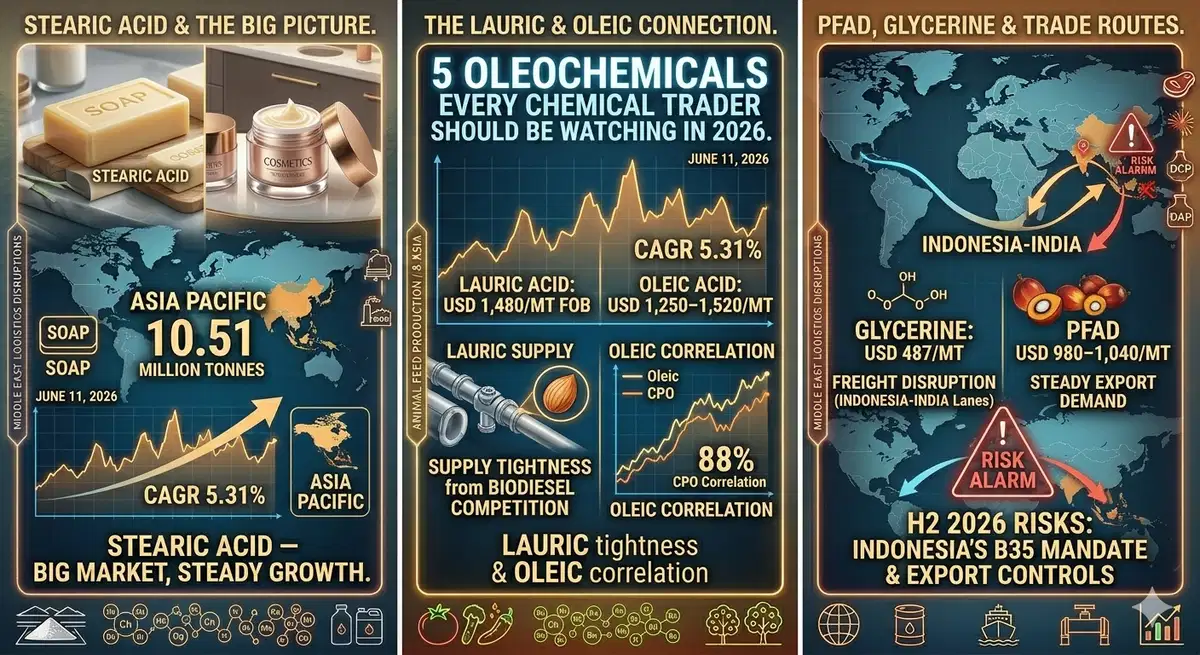
Average glycerine prices in Spain were reported near USD 487 per metric ton FOB, supported by consistent export demand and tight availability of prompt cargoes.
Several factors helped maintain pricing stability:
Reliable demand from multiple industries.
Steady biodiesel production.
Controlled inventory levels.
Tight prompt parcel availability.
Although prices did not experience extreme volatility, suppliers remained cautious due to evolving freight conditions and shifting trade flows.
Crude and Refined Glycerine Are Two Distinct Markets
One of the most important procurement considerations is understanding the difference between crude and refined glycerine.
Crude glycerine typically contains impurities, water and residual process materials. It serves as a feedstock for further refining or industrial applications where ultra-high purity is not required.
Refined glycerine undergoes extensive purification and meets stricter quality specifications.
The distinction affects pricing significantly.
Crude Glycerine
Lower acquisition cost.
Suitable for selected industrial uses.
Often traded in bulk volumes.
Requires additional processing for sensitive applications.
Refined Glycerine (99.7% USP Grade)
Significantly higher purity.
Suitable for pharmaceutical and personal care applications.
Higher regulatory compliance requirements.
Commands a substantial premium over crude grades.
Procurement teams should evaluate specifications carefully before comparing supplier quotations.
Freight Costs Have Become a Major Pricing Variable
In previous years, buyers often focused primarily on production economics. In 2026, freight and logistics increasingly influence final delivered costs.
Trade routes connecting Southeast Asia, India and Middle Eastern markets continue to experience disruptions that affect shipment schedules and transportation expenses.
Several logistics challenges remain visible:
Freight inflation.
Vessel rerouting.
Longer transit times.
Delayed cargo arrivals.
Higher insurance and operational costs.
These factors create uncertainty even when production volumes remain strong.
For importers, freight management has become nearly as important as feedstock sourcing itself.

Palm Feedstocks Continue to Shape Market Economics
Although glycerine itself is not directly priced like palm oil, palm-based feedstocks exert a strong influence on production economics.
Indonesia and Malaysia remain major centers for biodiesel, soap and oleochemical manufacturing. Changes in palm oil pricing, export policies and processing volumes can influence glycerine availability throughout the market.
Key market influences include:
Crude palm oil pricing.
Biodiesel blending mandates.
Palm oil export regulations.
Refining and oleochemical production rates.
Seasonal harvesting conditions.
Because of this relationship, many glycerine buyers now monitor palm oil developments as part of their procurement strategy.
How End-Use Industries Influence Demand
Not all glycerine demand responds equally to market conditions.
Pharmaceutical and food sectors generally prioritize quality, regulatory compliance and supply reliability over short-term price movements.
Personal care manufacturers often balance cost and quality requirements while maintaining strict product specifications.
Industrial consumers may demonstrate greater flexibility regarding purity levels and sourcing options.
These differences create multiple demand layers within the market, helping stabilize overall consumption.
Procurement Strategies for Glycerine Buyers
The current market environment rewards buyers who adopt a broader procurement perspective.
Successful sourcing strategies increasingly include:
Evaluating both product cost and freight exposure.
Securing multiple supplier relationships.
Verifying purity specifications before procurement.
Monitoring biodiesel production trends.
Building realistic delivery timelines into contracts.
Maintaining contingency inventory where feasible.
Companies that focus exclusively on headline pricing may overlook risks that emerge later through logistics delays or specification mismatches.

The Bottom Line for Procurement Teams
The glycerine market in 2026 reflects the growing interconnectedness of biofuels, oleochemicals and global logistics. Expanding biodiesel production, particularly under Indonesia's B40 program, continues to support crude glycerine availability while freight disruptions introduce new layers of cost uncertainty.
Buyers should distinguish carefully between crude and refined grades, evaluate logistics exposure alongside product pricing and monitor palm-based feedstock developments that influence overall market economics. Organizations that combine supply chain visibility with disciplined procurement planning will be best positioned to manage volatility and secure reliable supply.
Ready to source glycerine from verified global suppliers? Explore competitive offers on our platform today.
Refined Glycerine 99.5% Min USP BP CAS: 56-81-5