
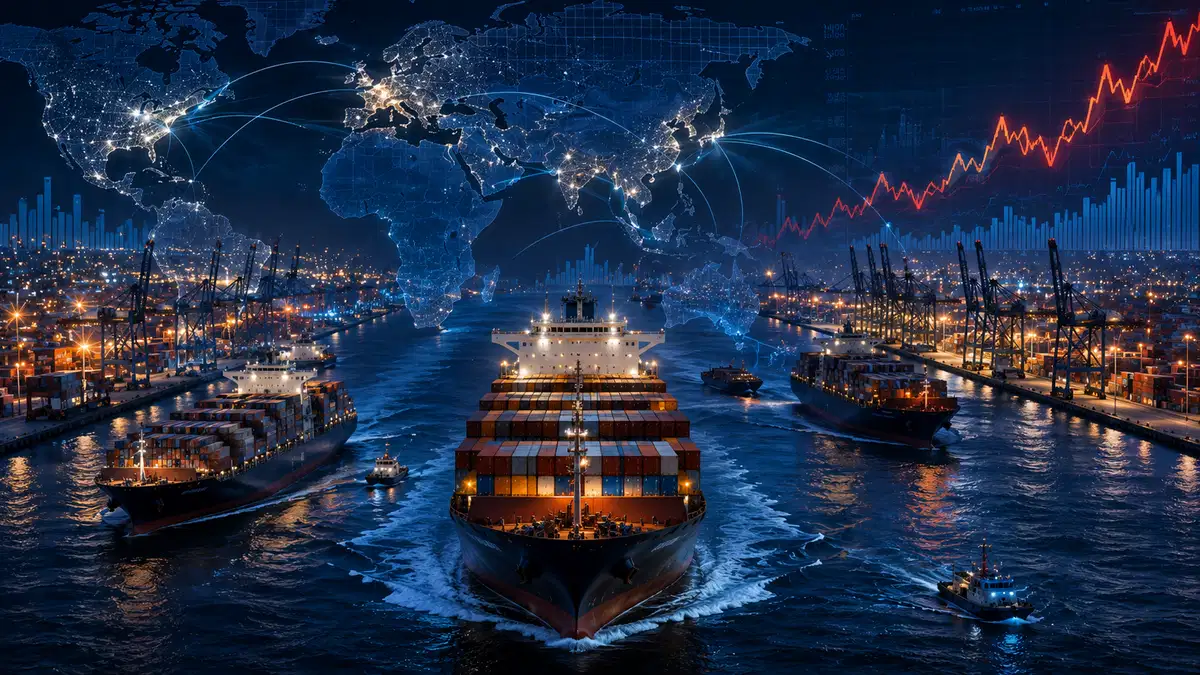
The June 19, 2026 Hormuz Memorandum of Understanding (MoU) provided global shipping markets with something they had been missing for months: optimism.
The agreement reduced immediate concerns about further escalation in the Middle East and created a framework for restoring stability to one of the world's most important maritime corridors.
Yet freight markets are telling a different story.
Despite the ceasefire announcement, container shipping rates remain near crisis-era levels. Freight surcharges continue to accumulate, vessel operating costs remain elevated and peak season demand is beginning to accelerate.
For importers, exporters and chemical traders, the critical question is no longer whether rates have peaked.
The real question is:
How long will it take for rates to normalize?
Freight Markets Remain Deeply Disrupted
While geopolitical tensions have eased, the shipping system remains far from normal.
Current market conditions show:
Shanghai–Los Angeles spot rates remain dramatically above February levels.
China–Jebel Ali rates remain elevated by more than 270%.
China–US West Coast rates continue trading significantly above pre-crisis benchmarks.
Vessel capacity remains displaced.
Fuel costs remain elevated.
The result is a freight market still operating under emergency conditions.
A ceasefire can reduce risk sentiment overnight.
Rebuilding logistics networks takes considerably longer.
The SCFI Tells the Story
One of the most closely watched indicators in global shipping is the Shanghai Containerized Freight Index (SCFI).
The index recently reached approximately 2,572 points, roughly double its level from late February.
This matters because the SCFI captures freight pricing trends across major global trade lanes.
Elevated SCFI levels indicate that:
Capacity remains constrained.
Demand remains strong.
Surcharges remain embedded.
Market normalization remains incomplete.
Historically, freight markets rarely correct rapidly after major supply chain disruptions.
Shipping Lines Are Still Absorbing Massive Costs
The financial impact on carriers remains substantial.
Major shipping companies continue facing extraordinary operating expenses.
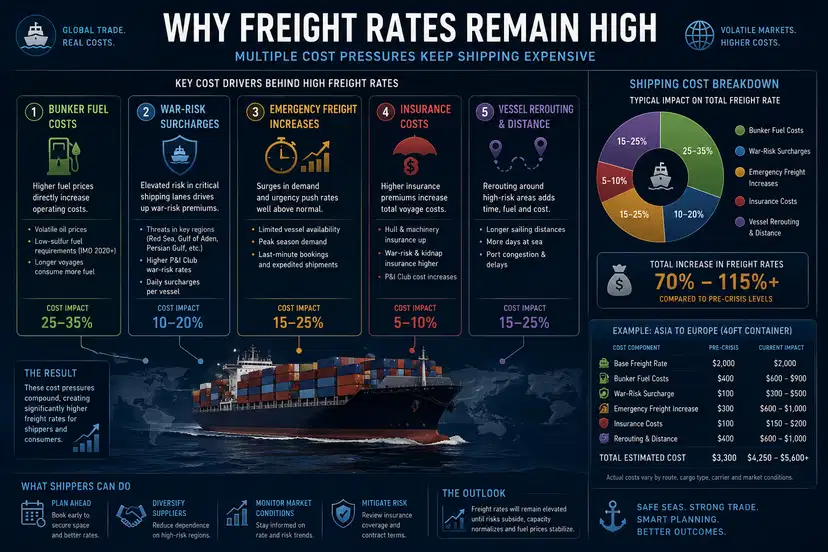
Key cost pressures include:
Longer sailing routes.
Higher bunker fuel consumption.
Security-related expenses.
Insurance premiums.
Equipment repositioning costs.
Industry estimates indicate that some global carriers continue absorbing hundreds of millions of dollars in additional monthly operating expenses.
These costs inevitably flow through to customers via freight surcharges and rate adjustments.
Why Surcharges Are Not Disappearing Yet
Many importers expected surcharges to decline immediately following the ceasefire announcement.
That has not happened.
Several cost layers remain active:
Emergency Bunker Surcharges.
War Risk Surcharges.
Emergency Freight Increases.
Peak Season Surcharges.
Equipment Imbalance Charges.
In many cases, these surcharges are cumulative rather than mutually exclusive.
This means freight invoices remain substantially higher than pre-crisis levels even when base freight rates stabilize.
July 1 Fuel Resets Could Delay Relief
Another factor complicating the outlook is the upcoming bunker fuel reset cycle.
Fuel costs remain one of the largest expenses for container carriers.
As new fuel pricing mechanisms take effect, shipping lines may continue adjusting rates to recover higher operating costs.
This creates a situation where:
Geopolitical risks may decline.
Freight rates may remain elevated.
Surcharges may persist.
The disconnect between improving headlines and stubbornly high freight costs is likely to frustrate many importers.
Peak Season Demand Is Arriving at the Worst Possible Time
Normally, freight markets experience stronger demand during the second half of the year.
In 2026, peak season effects are arriving while logistics systems are still recovering from the Hormuz disruption.
Many importers have accelerated purchasing decisions to avoid:
Future tariff risks.
Potential supply disruptions.
Further freight increases.
Inventory shortages.
This demand pull-forward is helping keep vessel utilization high.
Even if supply conditions improve, strong demand may prevent a rapid rate correction.
Why Q4 Is the Earliest Realistic Window for Meaningful Relief
Several factors suggest freight normalization will take time.
Key constraints include:
Capacity Repositioning
Carriers must restore normal vessel deployment patterns.
Equipment Rebalancing
Containers remain unevenly distributed across global trade lanes.
Insurance Market Adjustments
Risk premiums typically decline gradually rather than immediately.
Contract Renegotiations
Long-term freight contracts require time to adjust to new market conditions.
Together, these factors suggest that significant rate reductions before Q4 2026 remain unlikely.
What Chemical Importers Should Expect
Chemical buyers face additional challenges because many products move in specialized logistics systems.
These include:
ISO tanks.
Hazardous cargo containers.
Specialized bulk vessels.
Chemical tankers.
As a result, freight inflation often has a greater impact on chemical supply chains than on general consumer goods.
Procurement teams should continue budgeting for:
Elevated freight costs.
Extended lead times.
Higher inventory carrying costs.
Continued logistics volatility.
Procurement Strategy for H2 2026
The most successful importers are focusing on resilience rather than attempting to perfectly time freight markets.
Recommended actions include:
Lock Capacity Early
Secure shipping allocations before peak season pressure intensifies.
Extend Forecast Horizons
Provide suppliers and logistics partners with longer planning visibility.
Review Freight Clauses
Understand exposure to surcharge mechanisms.
Maintain Inventory Buffers
Avoid becoming dependent on just-in-time deliveries during a volatile market environment.
Diversify Logistics Routes
Reduce reliance on single trade corridors where possible.
The Bottom Line
The June 19 Hormuz ceasefire framework was an important geopolitical breakthrough, but it did not instantly repair the global freight market. Container shipping remains burdened by elevated fuel costs, displaced vessel capacity, persistent surcharges and strengthening peak-season demand.
The SCFI remains far above historical norms, carriers continue facing exceptional operating expenses and importers are accelerating orders to manage future uncertainty. Together, these factors suggest that meaningful freight relief is unlikely before Q4 2026.
For chemical traders, importers and procurement professionals, the key takeaway is clear: the freight crisis is entering a recovery phase, but recovery should not be confused with normalization. Elevated logistics costs remain a reality for the remainder of H2 2026.
Looking for freight intelligence, chemical logistics insights and procurement strategies? Explore the latest market analysis and supply chain opportunities on our platform today.
Isomalt (E953) CAS: 64519-82-0