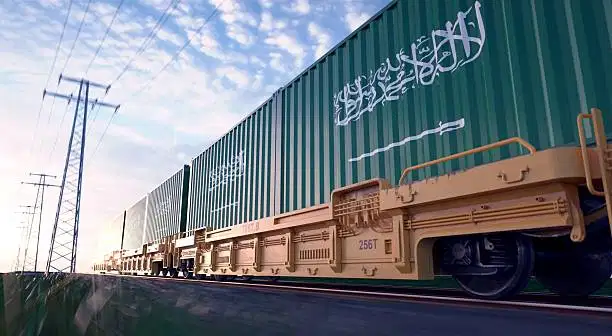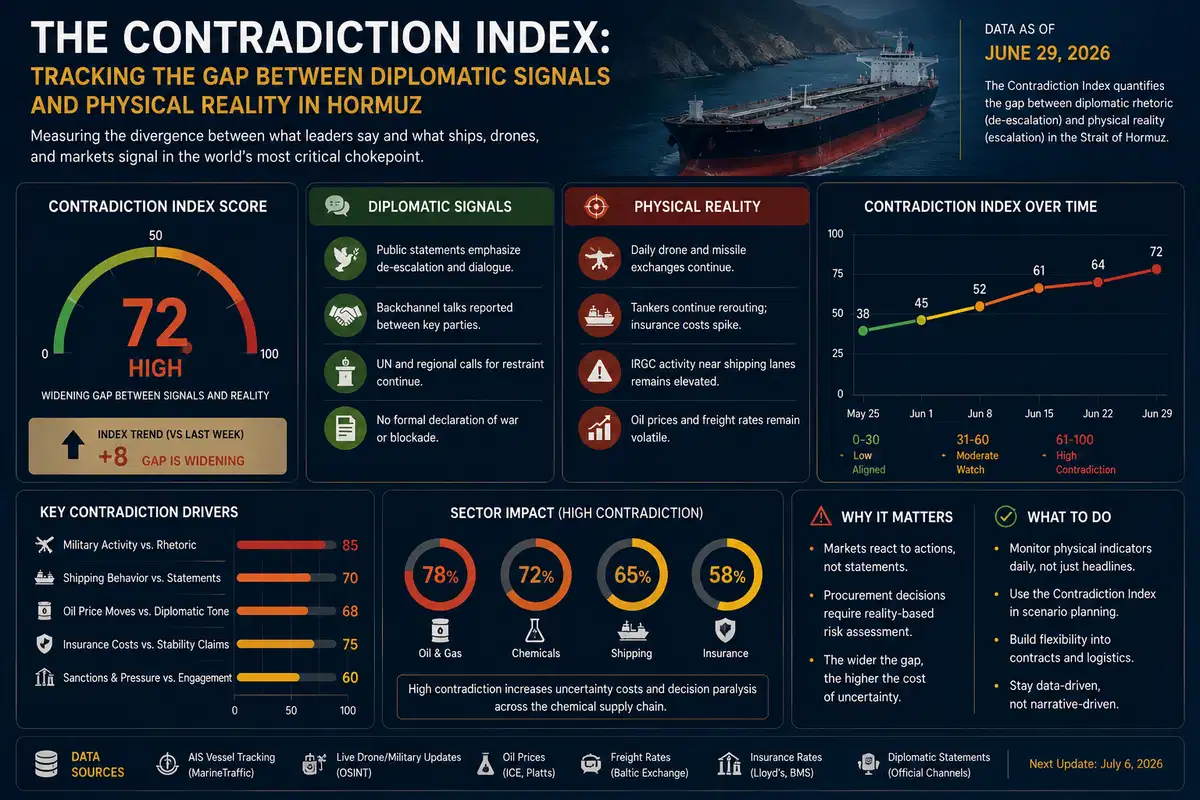

China Chemical Watch: Overcapacity Meets Opportunity as Hormuz Supply Gap Creates Export Window
Introduction
China’s chemical industry enters mid-2026 in a structurally unusual position. After several years of weak domestic margins, oversupply in key petrochemical chains, and subdued internal demand growth, producers are still operating in an environment of overcapacity pressure. However, the geopolitical disruption caused by the Hormuz crisis has temporarily reshaped global trade flows, creating a rare export-driven profit window.
This combination—domestic oversupply plus external supply disruption—has temporarily reversed pricing dynamics across several chemical segments, from bulk olefins to specialty and downstream derivatives.

Structural Overcapacity in China’s Chemical Sector
Over the past three years, China’s chemical industry has faced persistent challenges:
Key overcapacity areas:
Ethylene and derivatives
Methanol production chains
PTA (Purified Terephthalic Acid)
Soda ash
Selected specialty chemicals
Underlying causes:
Rapid capacity expansion during earlier investment cycles
Slower-than-expected domestic consumption growth
Weak downstream industrial margins
Fragmented demand recovery in construction and manufacturing sectors
As a result, many plants entered 2026 with compressed profitability and aggressive competition for export markets.
Citric Acid Anhydrous (E330) CAS: 77-92-9
The Hormuz Crisis: A Temporary External Shock
The geopolitical disruption in the Hormuz region has created a significant but temporary supply gap in global petrochemical trade flows.
Key impacts:
Reduced Gulf-origin chemical exports
Higher freight and insurance costs on Middle East shipments
Supply uncertainty in Europe, India, and parts of Asia
Short-term inventory tightening across multiple chemical chains
This disruption has not reduced global demand—but it has shifted sourcing away from traditional Gulf suppliers toward alternative exporters, especially China.
China’s Export Window Opens
China has become a key beneficiary of this temporary supply imbalance.
Key export gains in 2026:
Methanol (including MTO-linked flows)
PTA
Soda ash
Citric acid
Selected intermediate chemicals
Chinese producers are actively filling gaps left by constrained Middle Eastern supply chains.
Methanol-to-Olefins (MTO) Units Running at High Utilization
One of the most important segments benefiting from this shift is China’s MTO sector.
Why MTO matters:
Converts methanol into olefins (ethylene, propylene derivatives)
Provides flexibility in feedstock sourcing
Integrates coal/coal-chemical value chains
2026 situation:
MTO units are operating at elevated utilization rates
Export-linked derivative demand has improved margins
Domestic demand remains weak, but export pull is strong
This creates a rare situation where coal-to-chemical routes are temporarily more competitive due to external supply disruptions.
PTA and Polyester Chain Exports
PTA is another major beneficiary of shifting global trade flows.
Drivers of PTA export strength:
Tightened Middle East supply
Stable global polyester demand
Increased freight-driven arbitrage opportunities
China’s PTA producers are leveraging integrated supply chains to capture export demand in:
Europe
South Asia
Southeast Asia
However, margins remain sensitive to feedstock (paraxylene) pricing and downstream demand cycles.
Soda Ash and Citric Acid: Bulk Chemicals Filling Supply Gaps
Bulk chemicals have also benefited from the disruption.
Soda ash:
Used in glass, detergents, and chemicals
European energy costs have weakened local production
China is increasing export allocations
Citric acid:
Strong demand in food and beverage
Minimal direct Hormuz production impact
Export pricing influenced by freight rather than production costs
Both chemicals illustrate how logistics-driven shortages are enabling Chinese exporters to temporarily capture higher margins.
Domestic Demand: Still the Weak Link
Despite export opportunities, China’s internal demand recovery remains muted.
Weakness areas:
Construction-related chemical demand
Industrial manufacturing slowdown in some segments
Inventory overhang from previous production cycles
Cautious downstream procurement behavior
This imbalance reinforces reliance on export markets to absorb excess capacity.
Pricing Dynamics: Short-Term Strength, Long-Term Uncertainty
Current (June 2026) dynamics:
Export prices elevated due to global supply disruption
Domestic prices relatively flat
Margin improvement driven by external demand pull
Strong competition among Chinese exporters to secure contracts
Key uncertainty:
The June 19 Hormuz MoU signals gradual normalization of supply from the Gulf region.
Implication:
Middle East producers are expected to re-enter global markets
Freight premiums may ease
Chinese pricing power may weaken in H2 2026
Strategic Dilemma for Chinese Producers
Chinese chemical companies now face a timing decision:
Option 1: Lock in export contracts now
Pros:
Secure high-margin sales
Reduce inventory risk
Capitalize on current supply gaps
Cons:
May miss further short-term price spikes
Option 2: Hold inventory for potential further gains
Pros:
Benefit from continued tightness before normalization
Capture higher spot pricing
Cons:
Risk of sudden supply normalization
Exposure to price correction if Gulf supply returns faster than expected
Global Trade Flow Rebalancing
The current situation is temporarily reshaping global chemical trade routes:
Key shifts:
Gulf → Asia/Europe exports decline
China → Europe/South Asia exports increase
Freight arbitrage becomes a key pricing factor
Buyers diversify sourcing across regions
However, this rebalancing is expected to be transitional rather than structural.
Market Outlook
The China chemical sector in mid-2026 is defined by a rare combination of internal overcapacity and external opportunity. While domestic fundamentals remain weak, geopolitical disruption has temporarily improved export margins across multiple chemical chains.
As the Hormuz situation gradually stabilizes under diplomatic agreements, global supply normalization is expected to reduce China’s short-term pricing advantage. The key risk for producers is not demand collapse, but rapid reversal of export arbitrage conditions.
Key Takeaways
China continues to face significant chemical overcapacity across major product chains.
The Hormuz crisis has created a temporary export opportunity window.
MTO, PTA, soda ash, and citric acid exports are benefiting most.
Domestic demand recovery remains weak, increasing reliance on exports.
The June 19 Hormuz MoU may gradually normalize global supply conditions.
Chinese producers face a strategic choice between locking in gains or holding for higher prices.
Current export strength is largely logistics-driven rather than structural demand growth.
The opportunity window is likely temporary rather than long-term.