
Borax Decahydrate (Technical Grade) - Argentina CAS: 1303-96-4

Borax Decahydrate (Technical Grade) - Argentina CAS: 1303-96-4

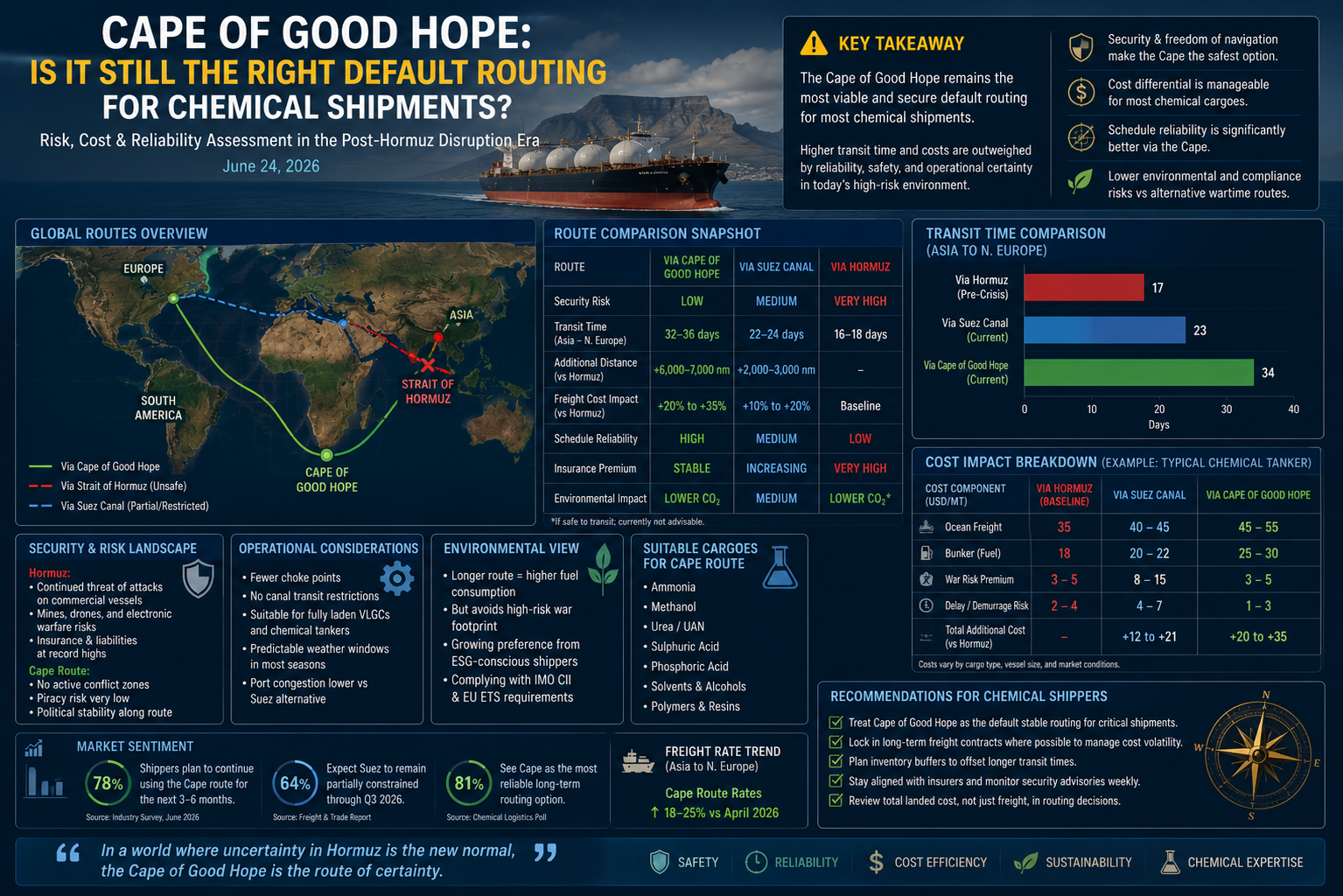
Global shipping has entered a more nuanced operational phase as convoy operations begin supporting selected Gulf transits. While the world's largest container carriers continue relying on Cape of Good Hope routing, convoy participation is creating a different recovery pathway for chemical tankers and bulk carriers already positioned inside the Gulf.

The Red Sea shipping crisis remains one of the defining structural constraints on global chemical logistics. Even as Gulf shipping gradually recovers, Asia–Europe freight cannot return to pre-crisis economics while the Red Sea remains an active security concern.

The first major monthly bunker adjustment factor reset of 2026 reflects Brent’s fall to $73.05, delivering a tangible freight cost cut for Cape of Good Hope routes. Chemical shippers can expect a 10‑20% drop in Cape surcharges, translating to $150‑$350 per TEU on major legs. It’s a partial relief, but a crucial lever for Q3 contract talks.

Although Gulf shipping has improved significantly since the peak of the Hormuz crisis, hundreds of vessels remain awaiting transit. Understanding the commercial priority system governing departures is essential for chemical buyers tracking delayed cargoes and planning H2 2026 deliveries.

Methanol buyers are facing a critical Q3 planning challenge as Strait of Hormuz transit remains far below normal levels. Physical shipping data now matters more than diplomatic signals when assessing supply availability and pricing risk.

Shippers face a critical routing decision in Q3 2026, weighing the Cape Route’s faster transit against the Hormuz Corridor’s higher insurance costs. Freight rates, geopolitical risk, and delivery windows differ, impacting fertilizer shipping profitability.
We're committed to your privacy. Tradeasia uses the information you provide to us to contact you about our relevant content, products, and services. For more information, check out our privacy policy.