API Supply Chain Emergency: Amoxicillin, Doxycycline, and the Jordan–Middle East Dependency Alert
The global pharmaceutical supply chain is facing growing pressure as geopolitical instability creates new risks for essential medicine availability. A recent concern highlighted in industry discussions is the heavy dependence on Jordan for the production and export of critical antibiotic ingredients and formulations. Combined with disruptions across Middle Eastern trade routes, procurement teams are being forced to rethink sourcing strategies and supplier resilience.
Jordan’s Critical Position in Antibiotic Supply
According to industry reporting referencing a USP (United States Pharmacopeia) assessment shared with Pharmaceutical Executive in April 2026, Jordan plays an unexpectedly important role in global antibiotic availability. The report indicated that Jordan accounts for approximately:
48% of global Amoxicillin Oral Suspension production
24% of global Doxycycline Hyclate Capsule production
Both medicines are considered essential antibiotics and are widely used across hospitals, clinics, and community healthcare systems.
Amoxicillin is one of the most commonly prescribed antibiotics worldwide for bacterial infections, especially in pediatric care. Doxycycline remains critical across multiple treatment categories, including respiratory, bacterial, and emergency infectious disease responses.
Middle East Disruption Creates Supply Chain Pressure
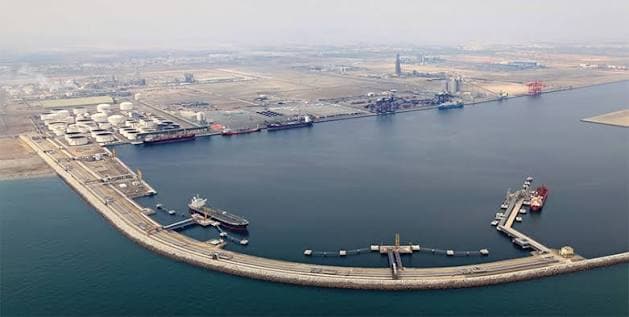
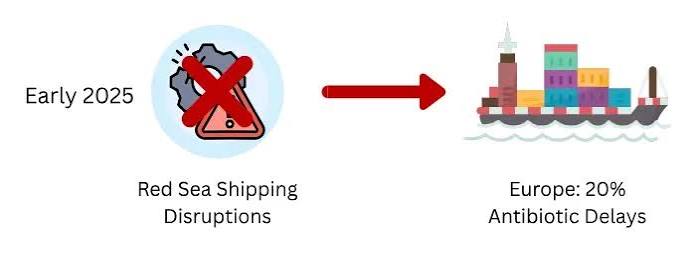
Current regional instability and disruption risks around major shipping routes, including the Strait of Hormuz, have increased concerns over pharmaceutical logistics.
Even when manufacturing capacity remains available, transportation delays, insurance costs, customs uncertainty, and export bottlenecks can reduce effective supply availability.
For pharmaceutical procurement teams, this creates two major concerns:
Supply continuity risk
Cost escalation risk
Industry analysts, including Moody’s, have warned that medicine shortages and rising procurement costs may become increasingly visible across international markets.
Hidden Dependency: The Upstream Raw Material Challenge
Switching suppliers may appear to be a simple solution—but reality is more complex.
Many alternative API manufacturers across different regions continue to depend on upstream raw materials, intermediates, and Key Starting Materials (KSMs) sourced from China.
This creates a layered dependency model:
Raw Chemicals → KSMs → Intermediates → API → Final Drug Product
As a result, changing the final supplier does not always reduce supply chain concentration risk.
A supplier located outside Jordan may still depend on the same upstream chemical ecosystem.
Why Drug-Specific Risk Mapping Matters
Traditional procurement strategies often focus only on direct suppliers. However, pharmaceutical resilience increasingly requires visibility across multiple supply tiers.
Drug-specific API dependency mapping should include:
Geographic concentration analysis
API and KSM source tracing
Logistics corridor exposure assessment
Alternate supplier validation
Inventory buffer planning
Regulatory transfer readiness
Procurement leaders should identify not only who manufactures an API but also where precursor materials originate.
Strategic Actions for Procurement Teams
To reduce exposure and improve resilience, procurement organizations should consider:
Diversify Beyond Tier-1 Suppliers
Develop sourcing networks across multiple countries and validate alternate manufacturing partners.
Map Upstream Dependencies
Track KSM and intermediate origins to uncover hidden concentration risks.
Build Strategic Inventory
Maintain critical stock levels for high-risk antibiotics.
Strengthen Supplier Intelligence
Monitor geopolitical developments and logistics performance continuously.
Prioritize Essential Medicines
Create dedicated risk frameworks for antibiotics and life-saving therapies.
Conclusion
The growing dependence on Jordan for essential antibiotic production highlights a broader challenge across pharmaceutical supply chains: concentration risk is no longer limited to final manufacturing locations.
Procurement teams must move beyond simple supplier diversification and adopt deeper API and KSM visibility. As geopolitical uncertainty and logistics disruption continue to reshape global trade, proactive risk mapping may become one of the most important tools for protecting medicine availability and controlling procurement costs.
For pharmaceutical and chemical sourcing leaders, resilience is no longer optional—it is becoming a competitive necessity.